ToF 3D Sensors Boost Robotics Competitions Research and Education Labs
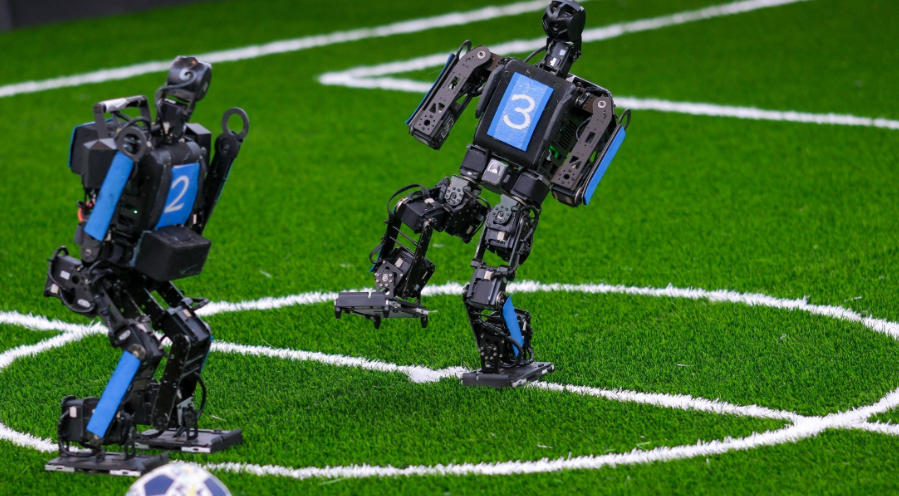
How Can ToF 3D Sensors Improve Robotics Competitions Research and Education
As robotics education and research continue to evolve there is growing demand for affordable real-time high-precision 3D spatial sensing solutions. Traditional 2D cameras or simple range sensors often limit students and researchers in tasks such as autonomous navigation obstacle avoidance SLAM mapping and drone research. In this environment ToF 3D sensors and ToF depth cameras with their ability to produce fast accurate 3D depth maps and point clouds have emerged as a cornerstone technology for robotics competitions research projects and educational labs.
Why ToF Is Ideal for Education Research and Robotics Competitions
Universities and research institutions often have to balance performance cost and learning accessibility. For many labs and student-led teams high-end LiDAR is too expensive while basic ultrasonic or infrared sensors lack rich spatial data needed for advanced robotics tasks. TOF (Time-of-Flight) offers a sweet spot:
-
Affordable and compact modules make it feasible to equip multiple student robots or drone platforms without breaking budget
-
Real-time 3D depth sensing enables immediate feedback critical for dynamic tasks like obstacle avoidance autonomous navigation and SLAM experiments
-
Short- to medium-range performance from a few centimeters to several meters is well-suited for indoor labs competition fields and classroom environments
These advantages make ToF a powerful enabler for hands-on learning rapid prototyping and research experimentation

Typical Applications of ToF in Competitions and Research Projects
Autonomous Navigation and Obstacle Avoidance for Robots and Drones
In robotics competitions or drone challenges participants often need robots to navigate cluttered unpredictable environments while avoiding obstacles in real time. Equipped with ToF 3D sensors robots can continuously scan surroundings build depth maps detect obstacles and plan safe paths all with low latency and high frame rate
This transforms basic robotics assignments into complex autonomous tasks pushing students to apply algorithms related to path planning motion control and sensor data processing
SLAM Mapping and 3D Spatial Perception Projects
For research labs and university courses focusing on environment mapping localization and spatial awareness ToF depth data becomes the foundation of 3D reconstruction SLAM Simultaneous Localization and Mapping and point-cloud based modeling. These capabilities help students understand spatial perception sensor fusion and real-world robotics challenges such as noise handling calibration and data synchronization
Furthermore ToF modules with sufficient resolution allow recognition of fine details supporting tasks like object detection gesture recognition or interactive robotics which enriches the scope of student projects
Multi-Robot Collaboration and Team Competitions
In team-based robotics competitions or research involving multi-robot systems ToF sensors enable real-time shared spatial perception. Robots can exchange depth data collaboratively map environments coordinate movements and avoid collisions allowing for complex tasks like search-and-rescue simulations cooperative navigation or interactive swarm behaviors
This fosters teamwork systems engineering thinking and real-world engineering practices among students and researchers
Low-Cost Robotics Education and STEAM Integration
Because ToF modules are often affordable and compact educational institutions can integrate them into curriculum without excessive cost. Students can use common platforms such as Arduino Raspberry Pi or standard microcontrollers to access depth data write code in Python or C++ and implement experiments in robotics vision obstacle avoidance gesture control or environmental mapping
This hands-on approach enhances learning motivation encourages cross-disciplinary integration and supports STEAM education frameworks
Technical Challenges and How to Address Them
Despite the advantages integrating ToF sensors in competitions and research does come with challenges:
-
Depth Noise and Environmental Interference Infrared pulses used by ToF can be affected by ambient light reflective surfaces or transparent materials causing inaccurate depth readings. Effective strategies include temporal and spatial filtering sensor fusion and regular sensor calibration
-
Calibration and Synchronization in Multi-Sensor Systems When combining ToF data with other sensors precise calibration and time synchronization are necessary to avoid drift in SLAM or inaccurate mapping
-
Module Selection Based on Use Case Different competition or research scenarios require different ToF modules short-range high-framerate for indoor robots or drones vs medium-range for larger arenas or field tests educators must match sensor specifications range resolution frame rate to project needs
By planning carefully applying proper filters and fusion methods and selecting modules wisely these challenges can be mitigated unlocking the full potential of ToF in robotics education and research

Recommendations for Educators Competition Coordinators and Research Teams
To maximize the educational and research value of ToF technology consider the following strategies:
-
Incorporate ToF into robotics curricula and competitions embedding ToF-based projects autonomous navigation SLAM mapping gesture-controlled robots drone obstacle avoidance
-
Encourage interdisciplinary projects combining ToF with AI vision control systems data analysis and electronics design cultivating skills in robotics programming mathematics and system design
-
Leverage open-source tools and sample code to lower the learning curve and focus on design and experimentation
-
Promote multi-robot and group projects using ToF real-time 3D perception to enable cooperative robotics multi-robot mapping formation control swarm coordination
-
Focus on sensor fusion and robust algorithms combining ToF with other sensors implementing filtering calibration and synchronization ensuring reliability in varied conditions and improving data quality for complex tasks
With these practices ToF can transform traditional robotics labs into modern high-impact platforms for innovation learning and competition

Future Outlook ToF and 3D Perception Driving Next-Gen Robotics
As ToF 3D sensor technology continues to advance higher resolution better depth accuracy lower noise improved environmental robustness and AI algorithms for perception mature we can expect:
-
Wide adoption of ToF in robotics competitions and academic research replacing or complementing traditional 2D vision and ultrasonic sensors
-
Growth of low-cost educational robotics kits featuring ToF sensors making 3D spatial perception accessible to high schools colleges and DIY communities
-
Integration with AI for advanced perception gesture recognition object detection environment understanding human-robot interaction autonomous decision-making
-
Multi-robot swarm and drone research fully leveraging ToF for coordination mapping and navigation tasks
-
Enhanced cross-disciplinary STEAM education where students learn programming electronics AI geometry control theory and system engineering through real-world robotics projects
In short ToF-based 3D sensing is poised to become a foundational skill and tool in the next generation of robotics education research and competition
Conclusion
For educators researchers and robotics enthusiasts seeking a balance between cost performance and educational value ToF 3D sensors offer a highly effective path forward. They bring real-time depth perception 3D spatial awareness and real-world robotics functionality into classrooms and labs. By integrating ToF into curricula projects and competitions and combining it with robust algorithms and interdisciplinary collaboration institutions can empower students and researchers to explore robotics AI and 3D perception in a hands-on scalable and future-oriented way
Robosense 32-line 3D LiDAR sensor RS-Helios-5515 unmanned ranging navigation obstacle avoidance V2R RS-Helios-1615 Laser radar

After-sales Support:
Our professional technical team specializing in 3D camera ranging is ready to assist you at any time. Whether you encounter any issues with your TOF camera after purchase or need clarification on TOF technology, feel free to contact us anytime. We are committed to providing high-quality technical after-sales service and user experience, ensuring your peace of mind in both shopping and using our products.






Please upload banner from store admin blog pages