
ToF 3D Sensors for Smart Warehousing Efficient Path Planning Automation
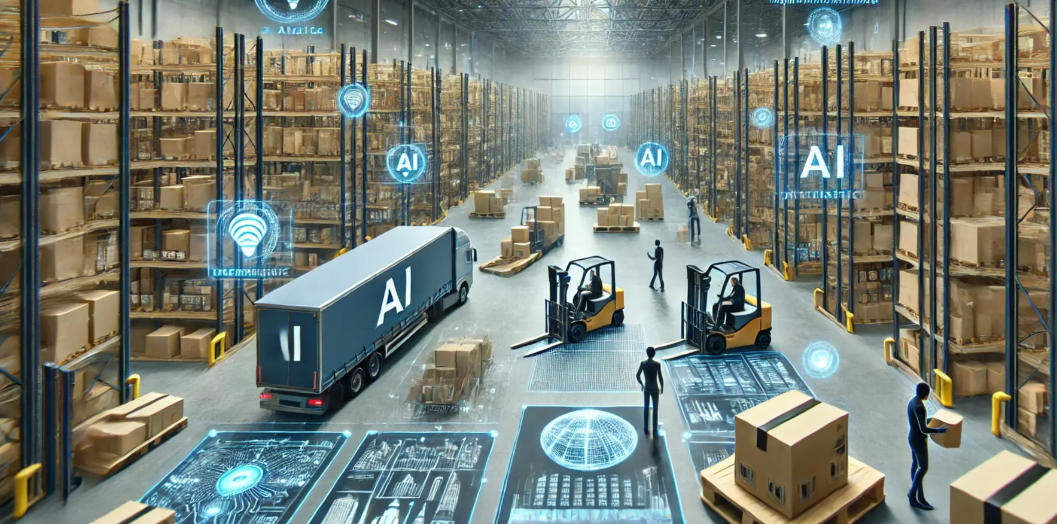
How Do ToF 3D Sensors Improve Path Planning and Efficiency in Smart Warehousing
With the rapid rise of automated warehouses, robotics‑driven logistics, and high‑volume fulfillment centers, demands on precision navigation, dynamic obstacle avoidance, and efficient inventory management have never been higher. Conventional sensors like ultrasonic modules, basic infrared sensors, or simple 2D imaging often fall short when warehouses become dense, shelves are closely spaced, and goods are constantly moving. In this context ToF 3D sensors and ToF depth cameras emerge as a powerful solution — enabling real‑time 3D spatial perception, precise path planning, dynamic obstacle avoidance, and intelligent warehouse automation.
Why Traditional Sensors Fail in Modern Warehouses
Modern warehouses typically feature tight aisles, high‑density shelving, dynamically changing layouts, moving workers, forklifts, pallets, and packages. In such environments:
-
Basic distance sensors or 2D cameras struggle with depth resolution and accurate distance measurement, especially when objects overlap or textures are poor.
-
Obstacle detection is often unreliable when packages are stacked irregularly or when lighting conditions vary, leading to misdetections, collisions, or navigation failures.
-
Static path planning fails when environment changes — requiring real‑time re‑planning and adaptive navigation that older sensors cannot support reliably.
These challenges make traditional sensing solutions inadequate for the demands of warehouse automation, sorting, and robotics‑driven logistics.

The Core Role of ToF in Smart Warehousing & Path Planning
Real‑Time Depth Sensing and Dynamic Obstacle Avoidance
ToF 3D sensors emit light pulses and measure their return to compute accurate depth maps and 3D point clouds of the surrounding environment. This allows warehouse robots — such as automated guided vehicles (AGVs), autonomous mobile robots (AMRs), and robotic forklifts — to:
-
Detect obstacles including shelving, pallets, boxes, moving personnel or equipment in real time.
-
Navigate narrow aisles, complex shelving arrangements, and cluttered storage zones with millimeter‑level depth accuracy.
-
Perform dynamic path re‑planning: when an obstacle appears or layout changes, robots can calculate alternate routes immediately, ensuring continuous operation without collisions or delays.
This real‑time 3D perception and adaptive navigation dramatically improve safety, efficiency, and reliability of warehouse operations.
Precise Goods Recognition, Picking, and Inventory Handling
Beyond navigation, TOF (Time-of-Flight) enables accurate measurement of goods — including their size, shape, stacking height, orientation, and position. In practice this enables:
-
Automated picking and placing: robotic arms or manipulators can determine grasp points, adjust orientation, and place items precisely even when packages are irregularly shaped or stacked.
-
Reliable pallet and box recognition: for varied container sizes and materials, ToF depth data allows detection of dimensions and placement, facilitating automated sorting and handling.
-
High‑accuracy inventory tracking: warehouses can monitor stock levels, detect stacking anomalies or misplacements, and maintain dynamic inventory databases with minimal manual intervention.
These capabilities support highly automated warehousing, minimizing human errors, handling damage, and increasing throughput.
Efficient Path Optimization and Warehouse Layout Management
Warehouse systems leveraging ToF data can go beyond reactive navigation. By aggregating depth maps and object position data over time, operators can:
-
Optimize aisle traffic flows — analyzing common robot paths, frequent obstacle zones, or congestion spots, then re‑planning layout or scheduling to maximize throughput.
-
Automate dynamic scheduling — assigning tasks to robots based on real‑time environment, workload, and warehouse state, improving resource utilization and reducing idle time.
-
Support flexible and adaptive warehouse configurations — as storage needs change, robots equipped with ToF do not rely on fixed markers; they can dynamically navigate new layouts or reconfigured shelf arrangements.
This flexibility is especially valuable for e‑commerce, just‑in‑time logistics, and warehouses handling diverse or frequently changing inventory.
Scalability, Cost‑Effectiveness, and 24/7 Automation
Compared to expensive long‑range scanning systems or complex stereo‑vision setups, ToF 3D sensors offer a cost‑effective, compact, and robust solution suitable for large‑scale deployment:
-
They are often smaller, consume less power, and integrate more easily into AGVs or robotic platforms.
-
They can operate under diverse lighting conditions, including low‑light or warehouse night shifts, making them reliable for 24/7 operations.
-
Their relative affordability enables deployment in many robots or workstations — scaling warehouse automation without excessive capital cost.
This scalability supports automation for large fulfillment centers and helps companies adapt quickly to demand surges (e.g. peak seasons).

Challenges and Considerations for Warehouse Deployment with ToF
While ToF brings many advantages, real-world warehouse deployment must consider a few challenges:
-
Reflections and occlusions: metal shelving, glossy pallets, plastic wrap, or transparent packaging can cause reflections, multipath interference, or depth‑reading errors — requiring filtering, calibration, or sensor fusion (e.g. combine ToF with RGB cameras or IMU).
-
Environmental factors: dust, temperature fluctuations, and variations in ambient lighting may affect ToF sensor performance — demanding robust design, dust protection, and adaptive exposure or filtering.
-
Processing and latency demands: high‑resolution depth data or dense point clouds generate large data volumes; path planning and obstacle avoidance algorithms must be optimized, possibly using edge computing or GPU/FPGA acceleration, to ensure real‑time response.
Despite these challenges, many warehouses successfully integrate ToF with careful hardware selection, sensor fusion, and optimized software design.
Recommendations for Warehouse Operators and Logistics Engineers
To maximize the benefits of ToF in smart warehousing, consider the following best practices:
-
Equip AGVs, AMRs, and forklifts with ToF 3D sensors positioned to maximize field‑of‑view and minimize blind spots.
-
Combine ToF depth data with AI‑based detection, sensor fusion (e.g. cameras, RFID/barcode), and real‑time path planning algorithms for robust perception under complex conditions.
-
Use depth data to build a dynamic 3D warehouse map and integrate with warehouse management systems (WMS) for inventory tracking, space optimization, and scheduling automation.
-
Implement maintenance routines for sensor calibration and environmental adaptation (dust, lighting, temperature control) to sustain long‑term reliability.
-
Leverage collected depth and usage data for continuous optimization — layout redesign, path optimization, congestion prediction, and warehouse workflow improvements.
By adopting these strategies, warehouses can significantly improve efficiency, safety, accuracy, and flexibility — moving toward fully automated, intelligent logistics operations.
Future Outlook — ToF + AI + Logistics Automation: The Next‑Gen Smart Warehouse
As ToF 3D sensor technology continues to advance — offering higher resolution, better depth accuracy, improved noise reduction, and lower power consumption — and as AI algorithms for perception, object recognition, and path planning evolve, the future of warehousing looks increasingly autonomous and intelligent:
-
Warehouses will increasingly adopt autonomous robots for picking, palletizing, sorting, and inventory management — with ToF as a core perception technology.
-
Multi‑sensor fusion systems (ToF + RGB camera + RFID/Barcode + LiDAR) will deliver full‑scale environment modeling, robust object recognition, and reliable automation even in challenging lighting or stacking conditions.
-
Edge computing and cloud‑based warehouse management will enable real‑time data analytics, predictive maintenance, demand forecasting, and dynamic scheduling — all driven by 3D perception data.
-
As automation scales and costs decrease, even small and medium warehouses can upgrade to “smart warehousing,” democratizing efficient logistics and supporting rapid fulfilment demands.
In summary, ToF 3D sensors will play a foundational role in the evolution of warehousing — transforming traditional storage and logistics into dynamic, intelligent, and efficient systems.
AllSENSOR 20M Outdoor Fully Solid-State LiDAR S150

After-sales Service: Our professional technical support team specializes in TOF camera technology and is always ready to assist you. If you encounter any issues during the usage of your product after purchase or have any questions about TOF technology, feel free to contact us at any time. We are committed to providing high-quality after-sales service to ensure a smooth and worry-free user experience, allowing you to feel confident and satisfied both with your purchase and during product use.






Please upload banner from store admin blog pages