
ToF Technology Advancing Robotics Education and AI STEAM Learning
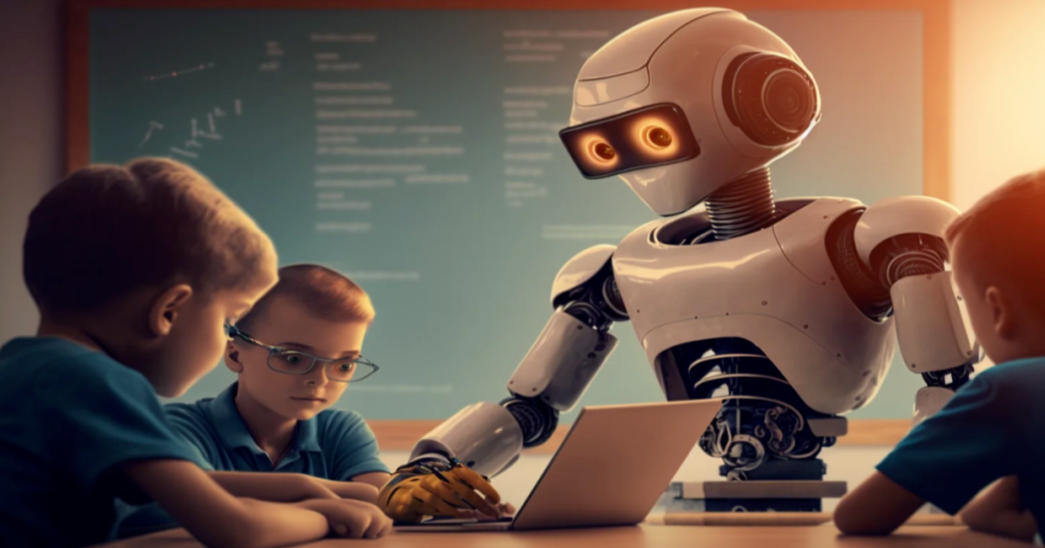
How Does ToF Technology Improve Robotics Education and AI STEAM Learning
In an age where artificial intelligence and robotics are rapidly advancing, educational institutions are seeing growing demand for affordable, interactive intelligent robots. More and more schools, coding bootcamps, and technical training centers are exploring how to incorporate advanced 3D depth sensing sensors into their robotics curricula enabling students to go beyond learning programming languages and to actually understand how robots 'see' and interpret the physical world. Among these powerful sensing technologies, TOF (Time-of-Flight)depth sensors have emerged as a vital method for educational robotics injecting new energy into STEAM and AI robotics education.
What Does Modern Robotics Education Require
Robotics education today is inherently interdisciplinary. It demands an integrated curriculum that links programming, electronics, mechanical design, sensor technology, artificial intelligence, and mathematical logic. Specifically, a comprehensive robotics education should cover:
-
Fundamentals of programming and algorithms — students master languages such as Python or C++ learn control logic data structures and algorithms forming a solid base for robot logic and automation control
-
Electronics and sensor basics — understanding how sensors like ToF ultrasonic sensors or infrared modules and circuit components operate and applying this knowledge practically so robots can sense and react to their surroundings
-
Mechanical engineering and structural design — learning mechanical structures motion design and 3D modeling enabling students to build stable functional flexible robotic platforms
-
Artificial intelligence data processing and computer vision — employing machine learning depth sensing and vision systems so robots can recognize reason and make decisions autonomously
-
Project-based learning and collaborative teamwork — encouraging hands-on design projects system thinking cross-disciplinary collaboration and creative problem-solving
Taken together robotics education becomes more than just coding. It evolves into a full STEAM educational model helping students grasp not only programming logic but spatial thinking sensor fusion mechanical design and real-world engineering practices.

I. From Simple Code to Intelligent Perception Educational Revolution
In traditional programming courses robot education often relied on virtual simulation platforms or simple sensors like infrared or ultrasonic modules. These tools have clear limitations low accuracy coarse spatial sensing limited reliability under different lighting conditions and poor real-time feedback. By contrast ToF-based robotics kits unlock a new dimension students can visualize real-time depth data gaining an intuitive understanding of how robots perceive distance shape and spatial structure.
With ToF depth sensors integrated into classroom robotics platforms students can engage in practical exercises such as distance measurement real-time obstacle detection autonomous navigation and environment mapping. This hands-on mode bridges the gap between abstract programming logic and concrete physical behavior helping learners internalize algorithmic thinking spatial awareness and system-level design through direct experimentation.
II. Core Advantages of ToF in Educational Robotics
1. Precise Navigation Localization and 3D Environment Mapping
ToF sensor modules measure the time it takes for emitted light pulses often near-infrared to bounce back from objects. By calculating this 'time of flight' the system derives accurate distance information enabling real-time 3D depth maps of the environment
In a robotics class students can use this depth data to perform path planning autonomous positioning and SLAM Simultaneous Localization and Mapping. With frameworks such as Python or ROS they can transform raw ToF data into control commands programming robots that analyze surroundings detect obstacles and plan optimal routes autonomously. This represents a leap from simple movement scripts to spatial reasoning and environmental awareness
Compared to older detection methods like ultrasonic or IR sensors ToF-based navigation is more reliable and robust. It works well under varying lighting or surface conditions delivers higher resolution and longer range and offers superior resistance to environmental interference making it ideal for complex indoor mapping or multi-robot cooperative localization
Hence ToF transforms robotics courses from basic navigation experiments to advanced studies involving real-time 3D perception spatial computing and autonomous decision-making cultivating skills that align with modern robotics and AI demands
2. Real-Time Obstacle Detection and Adaptive Motion Control
In robotics programming and sensor application courses ToF sensors provide high-frame-rate high-precision depth data enabling robots to respond in real-time to dynamic environments
For example when a ToF sensor detects an obstacle within a certain threshold the robot can immediately execute a stop or evade maneuver via its control algorithm. This immediate feedback and decision mechanism helps students connect distance data control logic and motion commands learning essential algorithmic concepts such as data filtering threshold logic PID control and motion planning
Advanced students might fuse ToF point-cloud data with other sensor inputs combining camera vision infrared detection or gyroscope data to build complex obstacle avoidance systems or adaptive navigation algorithms for narrow dynamic passages. This pushes robotics education beyond simple actions into integrated systems thinking dynamic response and motion prediction
3. Human-Robot Interaction Gesture Recognition and AI-Based Perception
Modern AI and robotics education increasingly emphasizes human-robot interaction and ToF depth cameras play a central role here. Because ToF sensors deliver high-resolution depth data in real time they can be used in interactive teaching labs for gesture detection user interaction and intelligent response
For instance students can capture hand contours and motion trajectories via ToF modules then feed the data into machine learning or computer vision models to recognize gestures such as wave stop or move forward. The robot can then respond move speak or perform a task giving students a tangible engaging example of end-to-end perception-to-action pipelines
This interactive AI-driven approach to robotics education increases classroom engagement and helps students understand the full chain from sensor data acquisition to processing to control execution. As ToF modules become smaller cheaper and more accessible ToF plus AI interactive projects are expected to become mainstream in educational robotics enabling learners to master sensor fusion computer vision and intelligent robotics development through hands-on experience

III. Challenges in Applying ToF Technology in Classroom Environments
While ToF offers significant advantages applying it in educational contexts introduces some challenges that educators should consider
Cost and Stability Quality ToF modules that deliver reliable consistent depth data may be expensive or subject to performance variation which can pose budget challenges for schools or training centers
Software and Platform Compatibility Robotics courses often involve multiple teaching platforms Arduino Python ROS visual block programming etc Ensuring that ToF modules are supported by SDKs and libraries compatible with these environments is crucial for seamless integration and usability
Curriculum Integration ToF-based projects require thoughtful curriculum design Educators must develop project-based modules and structure lessons to guide students from basics to advanced sensor-based robotics which often demands extra preparation and expertise
Scalability and Maintenance For larger classes or labs managing multiple ToF-equipped robots sensors and experimental platforms can be complex from hardware maintenance to calibration to data consistency Without proper planning this may hinder long-term deployment
IV. Practical Recommendations for Educators How to Bring ToF Into Your Robotics Curriculum
To maximize the benefits of ToF technology in robotics education and to make it a powerful tool rather than just a novelty educators and institutions might follow these strategies
Use Visual Programming Tools for Beginners For students new to coding traditional text-based programming can be a barrier Educators can use block-based visual programming environments together with microcontroller boards or development kits that support built-in ToF sensors By dragging and dropping logic blocks students can quickly grasp fundamental sensor logic lowering the entry barrier while teaching essential depth-sensing concepts
Adopt Project-Based Learning with Graduated Complexity Rather than isolated exercises teachers should design progressive robotics projects starting from simple distance measurement or obstacle avoidance robots then advancing to autonomous navigation multi-sensor fusion gesture-controlled robots or AI-based perception tasks Through hands-on projects students integrate hardware software and logic building real robots that perform meaningful tasks fostering creativity systems thinking and practical engineering skills
Blend AI Computer Vision and STEAM Concepts ToF sensors can be used not only for robotics movement but also for AI and vision experiments Educators can guide students to collect depth data and feed it into simple neural networks classification models or gesture recognition systems This helps students understand how perception data processing and decision-making work together cultivating a deeper understanding of AI computer vision and real-world robotic applications
Create Open Experimental Labs and Share Resources Schools and training centers may set up open labs equipped with ToF-based robotics kits cameras and sensors By offering sample code project templates and guidance documents educators can make experimentation reproducible and scalable This encourages student-led exploration fostering research thinking data analysis and innovation
By following these recommendations ToF technology can evolve from a cool demo component into a core pillar of modern robotics education integrating programming sensor fusion AI and hands-on engineering into a cohesive learning path

V. What’s Next The Future of ToF AI STEAM in Education
As ToF sensing continues to improve in accuracy affordability and ease of integration future educational robots will become smarter more interactive and capable of advanced perception and decision-making ToF-enabled depth perception combined with AI algorithms sensor fusion and machine learning will allow students to explore spatial intelligence mastering 3D perception real-time decision-making and autonomous behavior through hands-on learning
The convergence of ToF AI STEAM education promises to accelerate the development of intelligent learning environments where students not only write code but build robots that can sense perceive and interact with the physical world This interdisciplinary approach will help cultivate a new generation of innovators with strong foundations in systems engineering creative thinking and real-world problem solving
Conclusion
The integration of ToF Time-of-Flight technology has revolutionized robotics and programming education From enabling accurate navigation obstacle detection and gesture-based interaction to supporting AI-driven perception and spatial computing ToF-based robotics education offers a powerful platform for immersive STEAM learning
Using ToF-equipped robots and depth sensors students gain more than coding skills they develop spatial intelligence sensor understanding system-level thinking and practical engineering capabilities This empowers learners to explore how robots interpret the real world and lays a solid foundation for building intelligent systems in the future
AllSENSOR 20M Outdoor Fully Solid-State LiDAR S150

After-sales Service: Our professional technical support team specializes in TOF camera technology and is always ready to assist you. If you encounter any issues during the usage of your product after purchase or have any questions about TOF technology, feel free to contact us at any time. We are committed to providing high-quality after-sales service to ensure a smooth and worry-free user experience, allowing you to feel confident and satisfied both with your purchase and during product use.






Please upload banner from store admin blog pages