
SLAM and ToF Sensors Explained for Indoor and Outdoor Robot Navigation
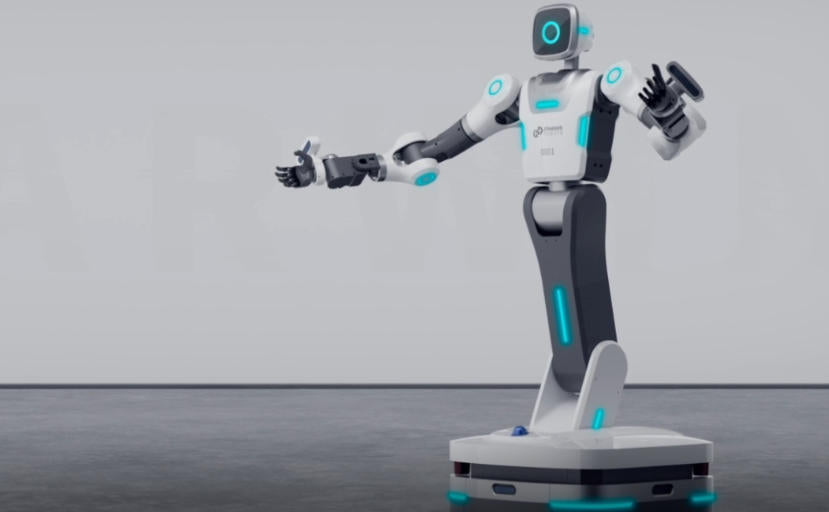
How Do SLAM and ToF Sensors Enable Robots to Navigate Indoors and Outdoors
As mobile robotics continues to advance, enabling robots to move seamlessly between indoor and outdoor environments has become a major milestone in autonomous navigation technology. Unlike traditional robots designed for controlled indoor spaces, modern autonomous robots must operate across factories, campuses, streets, construction sites, and agricultural fields. This transition requires robots to handle diverse lighting conditions, weather changes, uneven terrain, dynamic obstacles, and long-duration missions.
By combining SLAM navigation algorithms, ToF depth sensing technology, and multi-sensor fusion frameworks, robots are now capable of reliable indoor and outdoor navigation with high accuracy, robustness, and adaptability.
What Is Time of Flight ToF Technology
TOF (Time-of-Flight) is a three dimensional depth sensing technology widely used in modern robot perception systems. A ToF sensor measures distance by calculating the time it takes for emitted light to travel to an object and return to the sensor.
The basic working principle includes emitting infrared or laser pulses, receiving the reflected signal, and computing distance based on the speed of light. This process produces real time depth maps and three dimensional spatial data that are critical for navigation and obstacle detection.
Compared with traditional vision sensors, ToF cameras provide direct and scale accurate depth information, making them especially valuable for autonomous navigation in complex environments.

Evolution of Indoor and Outdoor Robot Navigation Technologies
Indoor Navigation Systems
Indoor robot navigation has traditionally relied on structured environments and fixed infrastructure. Common approaches include LiDAR based localization visual markers magnetic strips QR codes and prebuilt maps.
Indoor environments are typically enclosed with limited variability and mostly static obstacles. As a result path planning and localization are relatively stable and predictable.
Outdoor Navigation Systems
Outdoor navigation introduces far greater complexity. Robots must adapt to changing terrain lighting weather traffic and human activity. Core technologies for outdoor robot navigation include GNSS positioning systems such as GPS visual SLAM algorithms deep learning based perception LiDAR point cloud mapping and ToF depth sensing.
Among these technologies ToF sensors play an increasingly important role by providing accurate depth perception in conditions where traditional cameras struggle.
Role of ToF Sensors in Outdoor Robot Navigation
ToF sensors are essential for enabling outdoor robots to perceive and understand their surroundings accurately. By generating dense depth maps and three dimensional point cloud data ToF technology enhances environmental perception and supports robust navigation.
In outdoor scenarios ToF sensors improve obstacle detection by identifying pedestrians vehicles curbs ditches and uneven ground. When combined with LiDAR and RGB cameras ToF enables multi sensor fusion that significantly improves situational awareness.
In environments with low texture strong reflections shadows or variable lighting ToF depth data compensates for the limitations of visual SLAM ensuring consistent perception and mapping accuracy.
How ToF Enhances SLAM Localization and Mapping
SLAM navigation relies on accurate sensor input to maintain stable localization and build reliable maps. ToF depth data can be directly integrated into SLAM pipelines to improve real time pose estimation and three dimensional map reconstruction.
In dynamic outdoor environments ToF sensors update distance measurements rapidly allowing SLAM systems to adapt to moving obstacles and changing scenes. This reduces localization drift and improves long term navigation stability.
By providing accurate depth scale ToF also helps resolve scale ambiguity issues commonly found in monocular visual SLAM systems.
Path Planning and Dynamic Obstacle Avoidance with ToF
Accurate depth perception is critical for safe navigation. ToF sensors enable robots to construct precise three dimensional obstacle models that support dynamic path planning and real time collision avoidance.
In outdoor multi robot scenarios ToF based distance measurements help maintain safe separation between robots pedestrians and vehicles. This capability is essential for delivery robots inspection robots and autonomous service vehicles operating in public spaces.
Adaptation to Weather and Lighting Conditions
Outdoor environments present extreme variability in lighting and weather. ToF sensors are less sensitive to illumination changes and can operate reliably under strong sunlight shadows nighttime conditions rain fog or snow.
When fused with cameras and LiDAR ToF sensors create a redundant perception system that ensures continuous operation even when one sensor modality is compromised.

Environmental Perception and Adaptability
Indoor Perception
Indoor robots primarily need to detect static obstacles humans and other robots. Common sensors include cameras ultrasonic sensors LiDAR and ToF depth cameras.
Outdoor Perception
Outdoor robots face unpredictable environments with moving vehicles pedestrians animals and changing terrain. Advanced perception systems integrate HDR vision LiDAR IMU and ToF sensors to achieve robust real time understanding.
ToF depth sensing enhances SLAM map accuracy and improves obstacle detection performance in complex outdoor scenes.
Power Systems and Endurance Requirements
Indoor robots typically operate in controlled environments with short duty cycles. Outdoor robots require significantly longer endurance and higher energy efficiency.
Key solutions include high energy density lithium batteries solid state batteries hydrogen fuel cells and energy recovery systems such as regenerative braking.
Efficient energy management is essential for long range outdoor autonomous navigation.
Path Planning Algorithms for Indoor and Outdoor Robots
Indoor path planning often relies on classical algorithms such as A star Dijkstra and grid based planning due to structured layouts.
Outdoor navigation requires adaptive and real time path planning. Techniques such as deep reinforcement learning neural networks and distributed multi robot coordination are used to handle dynamic environments.
ToF and LiDAR fusion provides accurate depth and spatial data enabling rapid obstacle detection and route adjustment.

Motion Control and Stability in Outdoor Environments
Outdoor robots must handle uneven terrain slopes debris and varying friction. Advanced motion control systems combine all terrain wheels tracked designs suspension systems high precision IMUs and attitude control algorithms.
IMUs provide continuous motion data especially in GPS denied areas. When fused with SLAM ToF and LiDAR sensors IMU data significantly improves stability and navigation accuracy.
Control algorithms such as PID MPC and learning based control allow robots to actively compensate for tilting slipping and load changes.
Key Application Scenarios
Autonomous delivery robots use SLAM and ToF to navigate campuses sidewalks and pedestrian zones safely.
Agricultural robots rely on ToF depth sensing to detect crops terrain and field boundaries.
Construction inspection robots use SLAM ToF and LiDAR to operate safely on complex job sites.
Logistics AMRs and AGVs perform outdoor yard transport with stable navigation and collision avoidance.
Technical Challenges of Indoor Outdoor Navigation Integration
Outdoor environments introduce higher perception complexity requiring robust sensor fusion.
Navigation systems must adapt from fixed infrastructure to real time SLAM based localization.
Battery life and energy efficiency become critical for extended outdoor missions.
Obstacle avoidance must handle humans vehicles and unpredictable motion.
Robots must support all terrain mobility and stable control on uneven surfaces.
Conclusion
The integration of SLAM navigation ToF depth sensing LiDAR and intelligent control systems has made seamless indoor and outdoor robot navigation a reality. By combining accurate localization robust perception adaptive path planning and stable motion control autonomous robots can operate safely and efficiently across complex environments.
As these technologies continue to mature indoor outdoor autonomous mobile robots will play a transformative role in logistics industrial automation smart agriculture inspection and smart city applications.
AllSENSOR 20M Outdoor Fully Solid-State LiDAR S150

After-sales Service: Our professional technical support team specializes in TOF camera technology and is always ready to assist you. If you encounter any issues during the usage of your product after purchase or have any questions about TOF technology, feel free to contact us at any time. We are committed to providing high-quality after-sales service to ensure a smooth and worry-free user experience, allowing you to feel confident and satisfied both with your purchase and during product use.





Please upload banner from store admin blog pages