
Why ToF 3D Vision Is Essential for Case Recognition in ACR Robots

Why Do ACR Robots Need ToF 3D Vision for Accurate Case Recognition?
Enabling the Next Generation of Smart Warehouse and Logistics Automation
With the rapid expansion of e-commerce fulfillment, the transition toward flexible manufacturing, and continuously rising labor costs, the global warehousing and logistics industry is accelerating toward automation, intelligence, and unmanned operation. In this transformation, ACR robots (Autonomous Case-handling Robots) have become a core execution unit in high-density storage, automated picking, and intelligent intralogistics systems.
As warehouse environments grow increasingly complex—featuring mixed SKUs, variable packaging, dynamic stacking, and 24/7 operations—traditional case recognition methods based on barcodes, QR codes, or rigid rule-based logic are reaching their limits. In response, TOF (Time-of-Flight) 3D vision technology is emerging as a key perception solution, enabling markerless, high-precision, and intelligent case recognition and localization for modern ACR systems.
What Is an ACR Robot?
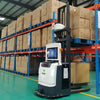
An ACR (Autonomous Case-handling Robot) is a mobile robotic system designed specifically for warehouse and logistics automation, focusing on the autonomous transportation, handling, and placement of cartons, totes, and bins.
ACRs typically integrate multiple sensing technologies, including ToF depth cameras, LiDAR, RGB cameras, and IMUs, enabling:
-
Markerless autonomous navigation
-
Precise self-localization
-
Real-time obstacle detection and avoidance
Unlike traditional AGVs that rely on magnetic strips or fixed markers, ACR robots offer rapid deployment, high layout flexibility, and scalable multi-robot coordination, supporting stable 24/7 unmanned operation. They are widely deployed in e-commerce fulfillment centers, third-party logistics (3PL), pharmaceutical cold chains, and manufacturing intralogistics, making them a cornerstone of modern smart warehouse systems.

1. Market Background and Development Trends of ACR Case-Handling Robots
Global Market: Rapid Expansion of ACR Adoption
Driven by smart warehousing, intelligent logistics, and autonomous warehouse solutions, the global ACR market is entering a phase of accelerated growth. As warehouse robotics and AMR/AGV technologies mature, ACRs are increasingly recognized as essential equipment for automated storage and retrieval systems due to their strengths in:
-
High-density storage support
-
Fast inbound and outbound handling
-
Flexible material transport across dynamic layouts
China Market: Innovation Engine for Global ACR Technology
China has emerged not only as a major application market for ACR robots but also as a global innovation hub for ToF 3D vision, robot perception, and SLAM-based navigation technologies.
With continued expansion in new retail, intelligent manufacturing, consumer electronics, and pharmaceutical logistics, ACR deployments in China are growing rapidly in both scale and technical sophistication. By combining ToF depth cameras, AI algorithms, and autonomous navigation systems, Chinese manufacturers are delivering globally competitive smart warehousing solutions.
2. Why ToF 3D Vision Has Become the Core Technology for ACR Case Recognition
In smart warehousing and automated logistics systems, case recognition accuracy directly determines operational efficiency, stability, and automation level. As warehouses evolve from standardized, rule-based environments to highly dynamic and diversified scenarios, traditional recognition approaches struggle to meet real-world demands.
Against this backdrop, ToF-based 3D vision systems have become the core perception technology for ACR robots.
Limitations of Traditional Case Recognition Methods
Many existing ACR solutions still rely on:
-
Barcode or QR code scanning
-
Fixed rule-based size matching
-
2D camera-based vision recognition
While effective in simple scenarios, these approaches reveal significant limitations in real warehouse environments.
1. Strong Dependence on Lighting Conditions
Traditional 2D vision systems are highly sensitive to lighting variations:
-
Glare, shadows, and reflective packaging cause recognition failures
-
Nighttime or uneven illumination requires auxiliary lighting
-
Worn or contaminated labels reduce barcode readability
This instability poses major challenges for 24/7 unmanned warehouse operation.
2. Lack of True Height and Volume Perception
Barcodes and 2D images provide only planar information and cannot directly capture:
-
Actual case height
-
Stack layers
-
True occupied volume
In high-density vertical storage scenarios, this limitation leads to reduced space utilization, inaccurate path planning, and increased risk of grasping errors or collisions.
3. High Orientation Constraints and Low Flexibility
Traditional recognition assumes cases are:
-
Properly aligned
-
Uniform in size
-
Free from occlusion
In reality, warehouses frequently encounter tilted, rotated, or partially overlapped cases—conditions that significantly degrade 2D vision and rule-based system performance.
4. Poor Scalability for Multi-SKU and Mixed-Size Operations
Modern e-commerce and retail logistics environments handle thousands of SKUs with diverse packaging formats. Template-driven and rule-based recognition systems are costly to maintain and difficult to scale, limiting responsiveness to fast-changing business demands.
5. Limited Intelligence and Spatial Understanding
Traditional systems focus on basic 'recognize and execute' logic and lack deeper spatial reasoning:
-
No assessment of graspability
-
No understanding of spatial relationships
-
Weak integration with AI, SLAM, and path planning
This severely restricts the evolution of ACRs toward intelligent autonomous robots.
As multi-size cases, high-density storage, dynamic environments, and unmanned operation become standard, traditional case recognition methods can no longer satisfy requirements for accuracy, robustness, and intelligence. This has accelerated the adoption of ToF 3D vision as the foundational sensing technology for ACR systems.

Advantages of ToF 3D Vision for ACR Robots
ToF (Time-of-Flight) 3D vision technology emits modulated infrared light and calculates its return time to generate true-scale depth data and high-resolution 3D point clouds.
Key advantages for ACR applications include:
-
High-precision 3D case recognition and localization
-
Markerless identification without barcodes or labels
-
Real-time measurement of case height, volume, and orientation
-
Strong resistance to ambient light interference
-
Low latency suitable for high-speed warehouse operations
These capabilities provide ACRs with perception closer to human spatial vision, forming the basis for intelligent handling and decision-making.
3. ToF + Deep Learning: Technical Implementation for ACR Case Recognition
1. 3D Data Acquisition
ToF 3D cameras mounted on ACRs continuously scan cases, generating dense point cloud data that accurately reconstruct real-world geometry.
2. Deep Learning–Based Feature Extraction
Using CNNs and PointNet-based neural networks, the system extracts key geometric features such as edges, contours, placement angles, and surface structures.
3. Precise Localization and Dimension Calculation
True depth data enables accurate calculation of case coordinates, height, volume, and graspable regions, directly supporting robotic manipulation.
4. Intelligent Correction and Optimization
The system dynamically detects deviations, performs pose correction, fine-tunes motion paths, and optimizes storage strategies in real time.
5. Execution and System Integration
Recognition outputs are seamlessly integrated with ACR control systems, WMS, and WCS, enabling end-to-end automation across inbound, storage, and outbound workflows.
4. Typical Application Scenarios Enabled by ToF 3D Vision
Automated High-Bay Warehouses
ToF 3D vision enables precise spatial perception in vertically dense environments, supporting safe automated storage and retrieval while maximizing space utilization.
E-commerce and Retail Logistics
High SKU diversity and fluctuating demand require fast, reliable recognition. ToF enables accurate handling without reliance on labels, even under occlusion and stacking complexity.
Manufacturing Intralogistics
In electronics, pharmaceuticals, and automotive production, ToF-powered ACRs support flexible line feeding and dynamic replenishment, improving production stability.
Intelligent Logistics Centers
With real-time 3D mapping and obstacle detection, ACRs operate safely in large-scale, multi-robot environments, enabling 24/7 unmanned logistics operations.

5. Future Trends: ToF as the 'Spatial Eye' of ACR Systems
Key development trends include:
-
Deep integration of ToF + AI + SLAM
-
Advanced multi-sensor fusion (ToF + LiDAR + RGB)
-
Transition from rule-based control to intelligent decision-making
-
Evolution from 2D layouts to fully 3D intelligent warehouse management
Conclusion
ToF 3D vision technology is redefining the perception capabilities of ACR robots.
By providing accurate, real-time, and stable 3D spatial understanding, ToF enables higher case recognition accuracy, smarter handling decisions, and scalable automation.
Looking ahead, the combination of ACR robots + ToF 3D vision + AI will form an indispensable technology stack for the future of smart warehousing, intelligent logistics, and unmanned warehouses.
Zhisensor D330 Series Industrial 3D Depth Camera – High Precision, Stereo Vision, RGB & Infrared, GigE Interface

After-sales Service: Our professional technical support team specializes in TOF camera technology and is always ready to assist you. If you encounter any issues during the usage of your product after purchase or have any questions about TOF technology, feel free to contact us at any time. We are committed to providing high-quality after-sales service to ensure a smooth and worry-free user experience, allowing you to feel confident and satisfied both with your purchase and during product use.





Please upload banner from store admin blog pages