ToF vs LiDAR 3D Sensors for Smart Automation Robotics Vision
How Do ToF 3D Sensors Compare to LiDAR for Smart Automation and Robotics
In the age of smart automation, industrial robotics, autonomous systems and intelligent devices the choice of 3D sensing technology becomes a core decision. Two leading options dominate: TOF (Time-of-Flight) sensors and LiDAR systems. Each has strengths and trade-offs in range, cost, resolution, power consumption and real-world performance. Understanding how ToF and LiDAR differ helps engineers and system designers choose the right 3D sensor tech for robotics, automation, navigation, or spatial perception tasks.
What Are ToF and LiDAR
ToF sensors calculate distance by emitting near-infrared pulses and measuring the time light takes to travel to an object and return. They generate real-time depth maps and are widely used in short to mid-range spatial sensing. ToF modules are typically compact, low-power, provide depth data at high frame rate, and work well in close-range environments.
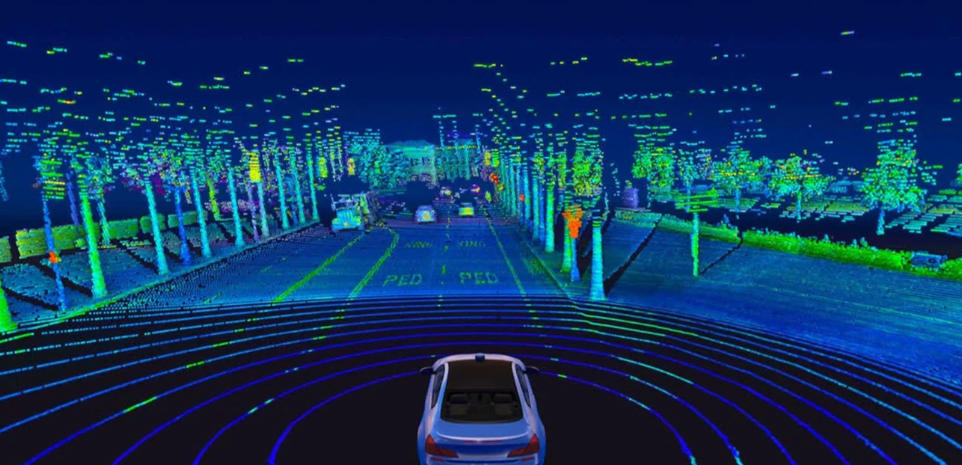
LiDAR systems emit laser pulses or scanning beams over long distances, generating detailed 3D point clouds. They excel at large-scale mapping, long-range spatial scanning, environmental mapping, autonomous navigation, and SLAM Simultaneous Localization and Mapping. LiDAR delivers high-precision, high-resolution spatial data often necessary for robotics, self-driving, surveying or industrial inspection.

Key Differences: Range, Resolution, Cost, Integration
Here is a high-level comparison between ToF and LiDAR for smart automation and robotics:
| Feature / Requirement | ToF Sensors | LiDAR Systems |
|---|---|---|
| Typical Range | Short to medium few cm up to several meters | Long-range tens to hundreds of meters depending on specification |
| Depth Data Output | Real-time full-frame depth maps | High-resolution point clouds or scanned 3D maps |
| Frame Rate & Latency | High frame rate low latency ideal for dynamic environments and real-time response | Scanning-based may have higher latency depending on scanning frequency and processing load |
| Power / Size / Cost | Compact low-power cost-effective suitable for embedded devices consumer robotics automation arms | Generally larger higher power consumption higher cost suited for industrial or outdoor applications |
| Best Use Cases | Short-range obstacle detection human-machine interaction indoor robotics small robots smart devices | Long-range environment mapping autonomous navigation outdoor robotics surveying city-scale SLAM |
In short, ToF is typically better for short-range low-cost high-speed sensing, whereas LiDAR is better for long-range high-precision large-scale 3D mapping and spatial awareness.
Typical Application Scenarios
Indoor Automation Robotics Smart Devices
For indoor robots, collaborative robots, smart automation arms, warehouse robots or IoT devices, ToF sensors are often ideal because of their:
-
compact size and low power enabling integration in small form-factor robots and devices
-
real-time depth maps facilitating obstacle detection safe navigation around humans pick-and-place tasks gesture recognition or human-robot interaction
-
lower cost making large-scale deployment feasible across many devices important for scalable automation
Therefore for factory automation lines, indoor robots, smart home robotics, or short-range industrial tasks, ToF offers a cost-effective efficient 3D sensing solution.
Outdoor Long-Range Navigation Autonomous Vehicles Surveying
For applications requiring wide-area perception detailed environment mapping, or long-distance detection — such as autonomous vehicles drones outdoor robots terrain surveying or smart city mapping — LiDAR remains the standard because of its:
-
long detection range and high-resolution point clouds capable of detecting distant obstacles terrain 3D structures or complex environments
-
robust spatial mapping useful for SLAM navigation obstacle avoidance and environment reconstruction in large or dynamic spaces
In such contexts, despite higher cost and power, LiDAR’s precision and range make it indispensable for safe reliable operation.

Hybrid & Sensor Fusion: Combining ToF LiDAR Camera Radar for Best of All Worlds
Rather than seeing ToF and LiDAR as strict alternatives, many modern systems adopt sensor fusion, combining multiple 3D sensing modalities to leverage their respective strengths. For example:
-
Use ToF sensors for short-range close-interaction dynamic obstacle detection human-robot interaction or indoor navigation
-
Use LiDAR for long-range environment scanning mapping outdoor navigation and high-precision spatial awareness
-
Combine with RGB cameras mmWave radar or other sensors to add texture color and robustness under dust low light or adverse weather conditions
Such fusion enables a full-spectrum spatial intelligence engine capable of near-field interaction far-field mapping and robust perception across conditions. Many robotics autonomous systems and smart automation solutions adopt this hybrid approach to balance cost performance range and reliability.
How to Choose: Guidelines for Designers & Engineers
When deciding between ToF, LiDAR or a fusion approach, consider the following:
-
Working distance & environment — For indoor short-range or close-interaction tasks ToF is ideal. For outdoor long-range mapping or navigation LiDAR or LiDAR + ToF is preferred
-
Size, power & cost constraints — For compact devices low-power robots or consumer products ToF gives the best trade-off. For high-precision systems where cost is less of a concern LiDAR may be worth it
-
Real-time response vs mapping detail — If you need fast feedback and real-time depth perception ToF wins. If you need detailed 3D maps or high spatial resolution LiDAR wins
-
Complexity and integration needs — ToF systems are generally simpler to integrate. LiDAR often demands more complex scanning computation and power systems
-
Scalability and deployment scale — For large fleets of small robots or devices ToF is scalable due to lower cost. For specialized high-precision robotics or autonomous vehicles LiDAR may justify higher costs
Often the optimal solution is a sensor fusion architecture combining ToF for close-range tasks with LiDAR for long-range mapping and adding other sensors as needed for robustness.

Future Outlook: 3D Sensor Fusion Driving Smart Automation
As sensor technology advances, we foresee continued integration and improvement in both ToF and LiDAR tech including:
-
New compact ToF 3D modules with improved resolution longer range and better lighting tolerance expanding ToF’s applicability beyond typical short-range roles
-
More affordable and miniaturized LiDAR solid-state MEMS flash LiDAR to reduce cost size and power consumption while preserving range and precision
-
Growth of hybrid sensor solutions ToF + LiDAR + RGB + radar + AI enabling systems that see near and far space understand context and adapt dynamically
-
Wider adoption in smart factories autonomous robotics smart cities industrial automation drones AR/VR and intelligent logistics where versatile reliable 3D perception is essential
This evolution will push automation from simple 2D vision and rule-based control toward fully 3D spatial awareness adaptive decision making and intelligent environment interaction.
Conclusion
There is no one-size-fits-all answer when choosing between ToF and LiDAR 3D sensors for smart automation and robotics. Each technology has its unique strengths:
-
ToF sensors excel in short-range real-time low-cost low-power applications ideal for indoor robots smart devices human-robot interaction and systems needing fast feedback
-
LiDAR delivers long-range high-precision detailed 3D environmental mapping essential for autonomous vehicles outdoor robots surveying and environments where spatial detail and range matter
For most advanced applications, a sensor fusion strategy combining ToF, LiDAR and other modalities offers the best balance providing near-field depth far-field mapping and robust perception across conditions.
Choosing the right 3D sensing setup depends on your specific use case environment range cost latency power and required precision. With careful design and integration ToF and LiDAR technologies especially when combined can power the next generation of smart automation robotics and spatially intelligent systems.
SLAMTEC RPLIDAR A3M1 360° LiDAR Sensor 25M Range, 16000 Samples

After-sales Support:
Our professional technical team specializing in 3D camera ranging is ready to assist you at any time. Whether you encounter any issues with your TOF camera after purchase or need clarification on TOF technology, feel free to contact us anytime. We are committed to providing high-quality technical after-sales service and user experience, ensuring your peace of mind in both shopping and using our products.






Please upload banner from store admin blog pages