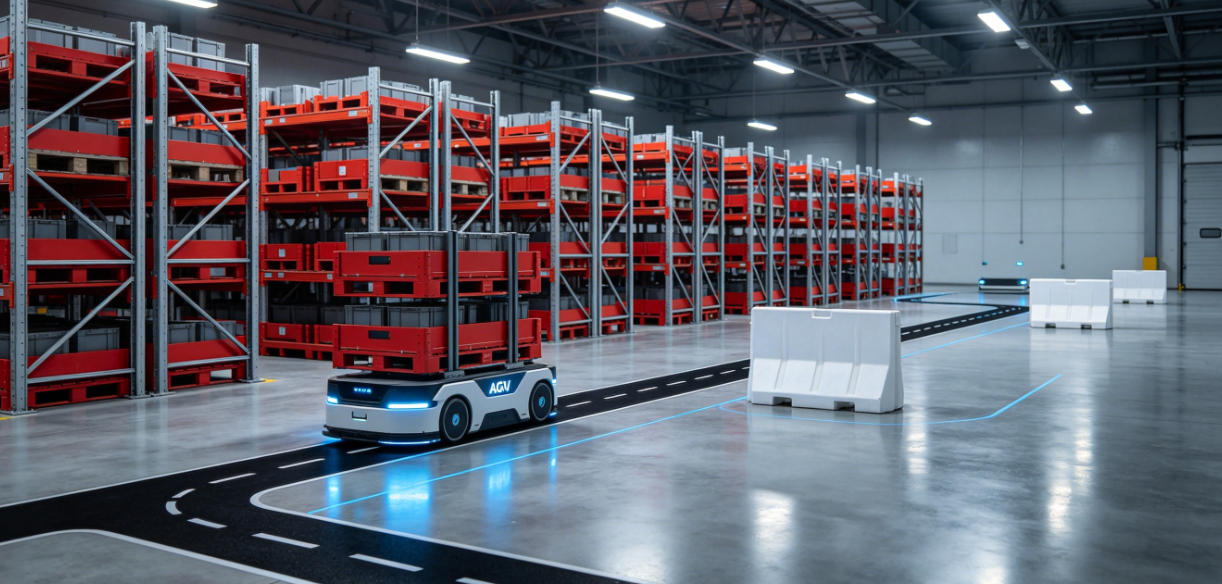
AGV vs AMR: Navigation, Differences & Use Cases Explained Guide

AGV vs AMR: Navigation, Differences & Use Cases Explained Guide

What Is the Difference Between AGV and AMR in Industrial Robotics and Warehouse Automation?


Introduction: AGV and AMR in Modern Industrial Automation

In today’s rapidly evolving world of smart manufacturing, warehouse automation, and industrial logistics, both AGVs (Automated Guided Vehicles) and AMRs (Autonomous Mobile Robots) play a critical role in material handling and intralogistics.

As companies move toward Industry 4.0, understanding the differences between AGVs and AMRs is essential for choosing the right automation solution. While both are used for transporting goods, their navigation technology, flexibility, intelligence level, and deployment cost are fundamentally different.

This article provides a complete comparison of AGV vs AMR systems, including navigation methods, advantages, limitations, and real-world applications.


What Is an AGV (Automated Guided Vehicle)?

An AGV (Automated Guided Vehicle) is a robotic transport system that follows predefined paths or fixed routes within a controlled environment.

How AGVs Navigate

AGVs rely on infrastructure-based guidance systems such as:

  • Magnetic tape or magnetic strips
  • QR codes or optical markers
  • Embedded floor wires
  • Reflective sensors or guide rails

This means AGVs require a structured environment to operate effectively.

Key Characteristics of AGVs

  • Fixed route navigation
  • Limited flexibility in path changes
  • High reliability in repetitive tasks
  • Requires infrastructure installation
  • Works best in stable environments

Common AGV Applications

  • Automotive manufacturing lines
  • Assembly material transport
  • Repetitive warehouse routing
  • Heavy-load industrial logistics

AGV vs AMR: Navigation, Differences & Use Cases Explained Guide

What Is an AMR (Autonomous Mobile Robot)?

An AMR (Autonomous Mobile Robot) is an intelligent mobile robot capable of navigating dynamically without relying on fixed infrastructure.

How AMRs Navigate

AMRs use advanced technologies such as:

  • SLAM (Simultaneous Localization and Mapping)
  • LiDAR sensors
  • RGB-D depth cameras
  • AI-based path planning
  • Sensor fusion systems

This allows AMRs to understand their environment and make real-time decisions.

Key Characteristics of AMRs

  • Fully autonomous navigation
  • Dynamic obstacle avoidance
  • Flexible route planning
  • No need for physical infrastructure
  • High adaptability to changing environments

Common AMR Applications

  • Smart warehouse automation
  • E-commerce fulfillment centers
  • Hospital logistics and delivery
  • Flexible manufacturing environments


AGV vs AMR: Key Differences

1. Navigation Method

  • AGV: Follows fixed paths using physical markers
  • AMR: Uses SLAM and AI to navigate dynamically

AGVs are predictable, while AMRs are adaptive.


2. Flexibility

  • AGV: Limited flexibility; route changes require reconfiguration
  • AMR: High flexibility; automatically recalculates paths


3. Infrastructure Requirements

  • AGV: Requires floor modifications (tape, wires, markers)
  • AMR: No infrastructure needed


4. Intelligence Level

  • AGV: Rule-based movement system
  • AMR: AI-powered decision-making system


5. Obstacle Handling

  • AGV: Stops or waits when obstacles appear
  • AMR: Dynamically avoids obstacles in real time


6. Deployment Cost

  • AGV: Lower initial vehicle cost but higher infrastructure cost
  • AMR: Higher initial cost but lower deployment and scaling cost


AGV vs AMR Performance Comparison


AGV and AMR Navigation Technologies

AGV Navigation Technology

AGVs depend on deterministic navigation systems such as:

  • Magnetic guidance systems
  • Laser reflectors
  • Line-following sensors

These systems ensure high precision but lack adaptability.


AMR Navigation Technology

AMRs rely on advanced autonomous technologies:

  • SLAM-based mapping systems
  • Real-time LiDAR scanning
  • Depth perception via RGB-D cameras
  • AI path optimization algorithms

This enables AMRs to operate in dynamic and unpredictable environments.


Use Cases: AGV vs AMR in Real Industries

1. Smart Warehouses

  • AGVs: Suitable for repetitive transport between fixed stations
  • AMRs: Best for dynamic picking, sorting, and fulfillment


2. Manufacturing Plants

  • AGVs: Efficient for assembly line transport
  • AMRs: Flexible for mixed production environments


3. E-commerce Logistics

  • AGVs: Limited adaptability for changing order flows
  • AMRs: Ideal for high-volume, fast-changing environments


4. Healthcare and Hospitals

  • AGVs: Used for scheduled deliveries
  • AMRs: Used for autonomous medicine and supply delivery


Advantages of AGVs

  • High reliability in structured environments
  • Lower complexity
  • Predictable operation
  • Proven industrial use cases


Advantages of AMRs

  • Fully autonomous navigation
  • No infrastructure required
  • Real-time obstacle avoidance
  • Scalable and flexible deployment
  • AI-driven decision-making

AGV vs AMR: Navigation, Differences & Use Cases Explained Guide

Challenges of AGVs and AMRs

AGV Challenges

  • High infrastructure dependency
  • Limited flexibility
  • Difficult to scale in dynamic environments

AMR Challenges

  • Higher initial investment
  • Requires advanced sensor systems
  • More complex software integration


Future Trends in AGV and AMR Technology

The future of mobile robotics is moving toward:

  • Hybrid AGV-AMR systems
  • AI-powered fleet management
  • 3D vision-based navigation
  • Cloud-connected robotics platforms
  • Digital twin simulation for logistics

These innovations will drive the next generation of intelligent warehouse automation systems.


30m 40m 50m LiDAR navigation obstacle avoidance scanner AGV car obstacle avoidance path planning Industrial grade LiDAR


Conclusion

Both AGVs and AMRs play important roles in modern industrial automation, but they serve different needs.

  • AGVs are best for structured, repetitive, and predictable environments
  • AMRs are ideal for dynamic, flexible, and intelligent automation scenarios

As industries continue evolving toward smart logistics and Industry 4.0, AMRs are becoming increasingly dominant due to their autonomy, adaptability, and AI-powered navigation capabilities.


Leave a comment

Please note, comments must be approved before they are published

What are you looking for?