
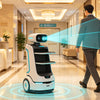
Robotic Imaging & 3D Robot Vision Guide for Industrial Automation

Robotic Imaging & 3D Robot Vision Guide for Industrial Automation

How Does 3D Robot Vision Work in Modern Robotic Imaging and Industrial Automation Systems?


Introduction: The Rise of 3D Robot Vision in Automation

In modern industrial automation, smart manufacturing, and AI robotics, robotic imaging and 3D robot vision systems have become essential technologies for enabling machines to perceive and understand their environment.

Unlike traditional 2D machine vision systems, 3D robot vision provides spatial awareness, allowing robots to detect depth, shape, position, and motion in real time. This capability is critical for applications such as:

  • Autonomous warehouse robotics
  • Industrial pick-and-place automation
  • Smart factory inspection systems
  • Autonomous mobile robots (AMRs)
  • Logistics sorting and pallet handling

This article provides a complete guide to robotic imaging technology, 3D vision systems architecture, and real-world industrial applications.


What Is Robotic Imaging?

Robotic imaging refers to the process of capturing and interpreting visual data using cameras and sensors mounted on robotic systems. It enables robots to “see” their surroundings and make intelligent decisions.

Modern robotic imaging systems typically include:

  • RGB cameras for color information
  • Depth sensors (ToF, stereo vision, LiDAR)
  • AI vision processors
  • Edge computing modules
  • Motion control systems

These components work together to support real-time machine vision for robotics automation.

Robotic Imaging & 3D Robot Vision Guide for Industrial Automation

What Is 3D Robot Vision?

3D robot vision is an advanced form of machine vision that enables robots to perceive the environment in three dimensions.

It provides:

  • Depth perception
  • Spatial mapping
  • Object localization
  • Pose estimation
  • Real-world coordinate understanding

This makes it essential for robot navigation in dynamic industrial environments.


How 3D Robot Vision Systems Work

A typical 3D vision system for robotics follows a structured pipeline:

1. Image and Depth Capture

Sensors such as RGB-D cameras, LiDAR, or ToF sensors collect visual and depth data.

2. Data Processing

AI algorithms process raw sensor data to:

  • Filter noise
  • Extract features
  • Generate depth maps or point clouds

3. Object Detection and Recognition

Computer vision models identify:

  • Objects
  • Shapes
  • Positions
  • Orientations

4. 3D Reconstruction

The system builds a spatial model of the environment using:

  • Point clouds
  • Voxel grids
  • Mesh reconstruction

5. Motion Planning and Control

Robots use this data to:

  • Plan movement paths
  • Avoid obstacles
  • Execute tasks precisely

Robotic Imaging & 3D Robot Vision Guide for Industrial Automation

Key Technologies Behind Robotic Imaging

1. RGB and Stereo Vision Systems

Stereo vision uses two cameras to estimate depth by comparing image disparity.

Advantages:

  • Low cost
  • High resolution
  • Suitable for structured environments

Limitations:

  • Sensitive to lighting conditions
  • Reduced accuracy in textureless surfaces


2. Depth Cameras (RGB-D and ToF)

Depth cameras combine RGB imaging with depth sensing.

They are widely used in:

  • Warehouse robotics
  • Gesture recognition systems
  • AR/VR applications
  • Human-robot interaction

Advantages:

  • Real-time depth output
  • Compact design
  • Easy integration into robotics systems


3. LiDAR-Based 3D Vision

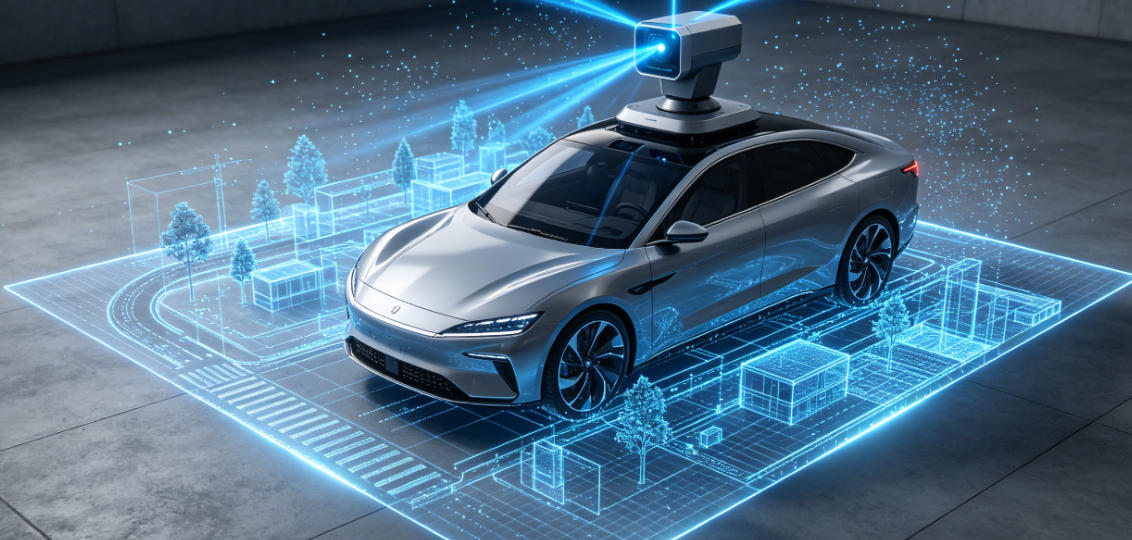
LiDAR uses laser pulses to generate high-precision 3D point clouds.

Advantages:

  • Long-range sensing
  • High accuracy
  • Strong performance in low-light environments

Common applications include:

  • Autonomous driving
  • Outdoor robotics
  • Large-scale mapping


4. AI and Deep Learning in Vision Systems

AI enhances robotic imaging by enabling:

  • Object detection and classification
  • Semantic segmentation
  • Pose estimation
  • Scene understanding

This is essential for intelligent robotic perception systems.


Applications of 3D Robot Vision

1. Smart Manufacturing

3D vision systems are widely used in industrial automation for:

  • Assembly line guidance
  • Quality inspection
  • Defect detection
  • Component alignment

This improves production accuracy and manufacturing efficiency.


2. Warehouse Automation and Logistics

In logistics, robotic imaging enables:

  • Automated picking systems
  • Pallet recognition
  • Inventory scanning
  • AMR navigation support

This is a key part of smart warehouse robotics systems.


3. Autonomous Mobile Robots (AMRs)

AMRs rely on 3D vision for:

  • SLAM navigation
  • Obstacle avoidance
  • Path optimization
  • Real-time environment mapping

This enables fully autonomous operation in dynamic environments.


4. Industrial Inspection Systems

3D robot vision is used for:

  • Surface defect detection
  • Dimensional measurement
  • Quality assurance inspection
  • Product verification

This is essential for machine vision inspection automation.


5. Agriculture and Outdoor Robotics

Applications include:

  • Crop monitoring
  • Automated harvesting
  • Terrain mapping
  • Precision spraying systems


Benefits of 3D Robot Vision Systems

  • Enhanced spatial awareness
  • Higher automation accuracy
  • Real-time decision-making capability
  • Improved safety in human-robot environments
  • Reduced operational costs

These benefits make 3D vision a core component of Industry 4.0 automation systems.


Challenges in Robotic Imaging Technology

1. Environmental Conditions

Lighting variations and reflective surfaces can impact accuracy.

2. Computational Requirements

3D data processing requires high-performance computing hardware.

3. System Calibration

Multi-sensor systems require precise alignment and calibration.

4. Data Complexity

3D point clouds require large storage and processing capacity.


Future Trends in 3D Robot Vision

The future of robotic imaging is driven by:

  • AI-powered real-time 3D perception
  • Multi-sensor fusion (LiDAR + RGB-D + IMU)
  • Edge AI computing for robotics
  • Semantic 3D mapping systems
  • Fully autonomous robotic decision-making
  • Digital twin integration for simulation

These innovations will accelerate the development of fully intelligent robotics systems.


C200 25 meters TOF LiDAR sensor for indoor and outdoor AGV intelligent car obstacle avoidance radar

Conclusion

Robotic imaging and 3D robot vision are transforming modern automation by enabling robots to perceive, analyze, and interact with the physical world in real time.

By combining depth sensing technologies, AI vision algorithms, and advanced robotics control systems, industries can achieve higher levels of automation in:

  • Smart factories
  • Warehouse logistics
  • Industrial inspection
  • Autonomous robotics

As technology evolves, 3D robot vision systems will remain a foundational technology for the future of intelligent automation and robotics.

Leave a comment

Please note, comments must be approved before they are published

What are you looking for?