Best Short-Range Distance Sensors: Laser, ToF & How to Choose
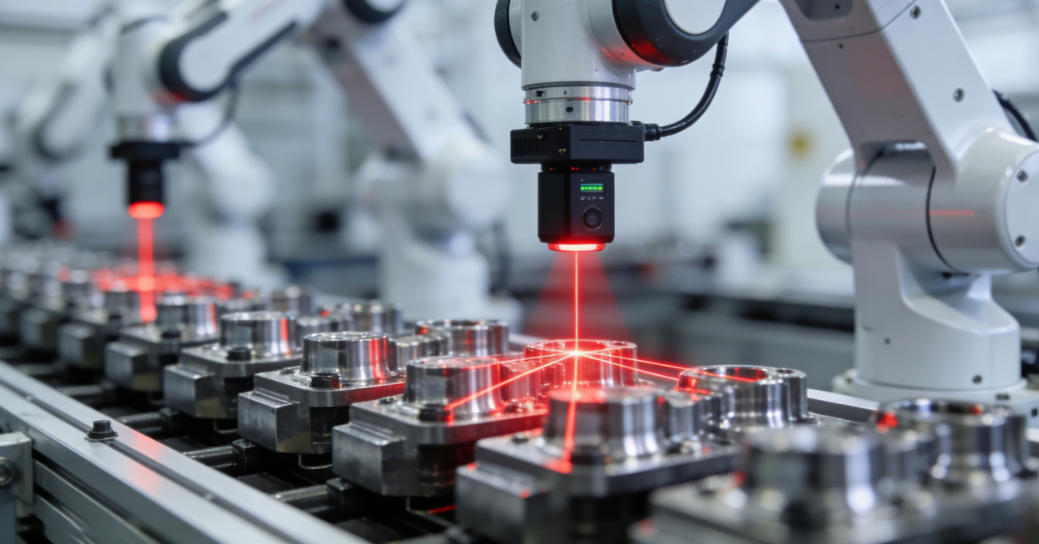
How to Choose the Best Ranging Sensors for Laser and ToF Applications?
Why Choosing the Right Short-Range Sensor Matters
In automation, robotic obstacle avoidance, industrial measurement systems, smart devices, and IoT, distance sensor types are key hardware components. Different applications have varying requirements for sensor range, accuracy, response speed, and stability, which directly affect the optimal sensor choice.
Especially in short-range measurement scenarios, many projects demand high precision, strong repeatability, excellent interference resistance, compact size, and easy integration. Among these, laser distance sensor short range is becoming the mainstream solution for high-performance short-distance measurement.
This guide introduces common short-range sensor types, their advantages, limitations, and selection tips to help you identify the best sensor for your application.
Common Short-Range Distance Sensor Types
The main technologies for short-range measurement include:
- Laser distance sensors
- Ultrasonic sensors
- Capacitive distance sensors
- Optical/Infrared sensors
- ToF (Time-of-Flight) sensors
Below is a detailed analysis of each distance sensor type, including working principle, features, and typical use cases.
1. Laser Short-Range Distance Sensor (Laser Distance Sensor Short Range)
Laser short-range sensors emit a laser beam towards the target and measure the reflected light to calculate accurate distances. Due to the focused beam, small spot size, and strong directionality, laser sensors achieve superior precision and resolution in short-range measurements.
Core Advantages:
- High accuracy and resolution: can reach 0.1mm or better
- Fast response: real-time distance measurement
- Strong resistance to light interference: stable in complex lighting conditions
- High repeatability: ideal for industrial automation and high-precision measurement
Typical Applications:
- Edge positioning in automated assembly lines
- Precision mechanical measurement
- Robotic pick-and-place operations
- High-accuracy product inspection
Laser short-range sensors are often integrated with control systems, PLCs, and vision systems for closed-loop control and intelligent feedback.
2. Ultrasonic Distance Sensors
Ultrasonic sensors emit ultrasonic waves and measure the echo time to calculate distance. Sound waves are easy to measure and control, making ultrasonic sensors one of the earliest technologies for short-range detection.
Key Features:
- Insensitive to color or surface texture
- Simple installation and calibration
- Relatively low cost
Limitations:
- Lower accuracy: usually millimeter to centimeter level
- Weak response to inclined or small targets
- Sensitive to air temperature and humidity
Ultrasonic sensors are suitable for low-precision short-range measurements and obstacle detection, such as automatic doors and obstacle-avoiding robots.

3. Capacitive Distance Sensors
Capacitive sensors detect distance or proximity by measuring changes in an electric field, commonly used for near-field detection or liquid/solid level monitoring.
Advantages:
- Effective for non-metallic materials
- Fast response
- Compact structure
Applications:
- Proximity detection
- Object presence detection
- Material interface monitoring
However, capacitive sensors are sensitive to environmental humidity and have a narrow measurement range.
4. Optical/Infrared Distance Sensors
Optical/IR sensors emit a light beam and detect reflected signal intensity to determine distance or object presence.
Features:
- Simple structure, low cost
- Fast response
- Flexible installation and integration
Drawbacks:
- Sensitive to target surface reflectivity
- Susceptible to environmental light interference
They are commonly used for short-range object detection, counting, or presence detection, rather than high-precision continuous measurement.
5. ToF (Time-of-Flight) Sensors
ToF sensors emit modulated light and measure the round-trip time to calculate distance. Compared with traditional optical/IR sensors, ToF offers better resistance to ambient light interference and is an emerging option for short-range measurement.
Advantages:
- Real-time measurement
- Per-pixel depth sensing
- Strong resistance to background light
- Supports wider field of view
ToF sensors are used in short-range applications requiring 3D depth, such as smart obstacle avoidance, gesture recognition, and 3D modeling.
Performance Comparison of Short-Range Sensors
| Sensor Type | Accuracy | Response Speed | Cost | Environmental Stability | Typical Applications |
|---|---|---|---|---|---|
| Laser Short-Range | ⭐⭐⭐⭐ | ⭐⭐⭐⭐ | ⭐⭐⭐ | ⭐⭐⭐⭐ | High-precision measurement |
| Ultrasonic | ⭐⭐ | ⭐⭐ | ⭐⭐⭐⭐ | ⭐⭐⭐ | Obstacle detection |
| Capacitive | ⭐⭐ | ⭐⭐⭐ | ⭐⭐⭐⭐ | ⭐⭐ | Proximity sensing |
| Optical/IR | ⭐ | ⭐⭐⭐⭐ | ⭐⭐⭐⭐ | ⭐ | Presence detection |
| ToF | ⭐⭐⭐ | ⭐⭐⭐ | ⭐⭐ | ⭐⭐⭐⭐ | 3D depth sensing |
How to Choose the Right Short-Range Distance Sensor
Different distance sensor types have different performance characteristics. Choosing the right sensor directly impacts measurement accuracy, system efficiency, and cost. Consider the following factors:
1. Measurement Accuracy Requirements
- High precision (±0.1mm–±0.5mm): e.g., precision industrial parts measurement, robotic pick-and-place; choose laser distance sensor short range or high-precision ToF.
- Medium precision (1–5mm): suitable for standard industrial assembly or product size measurement; choose high-performance ultrasonic or medium-precision optical sensors.
- Low precision (>5mm): for object presence detection, optical/IR or standard ultrasonic sensors are sufficient.
Define your application goal clearly to avoid overpaying for unnecessary precision.
2. Target Object Characteristics
- Color and reflectivity: dark or black objects absorb light, affecting optical/laser sensor signals; ToF or high-power laser short-range sensors are more robust.
- Surface texture and shape: smooth or slanted surfaces may deflect reflected light; a focused laser beam with fast response is recommended.
- Transparent or translucent materials: ultrasonic or capacitive sensors may struggle; laser or ToF is more reliable.
3. Environmental Conditions
- Lighting interference: strong sunlight or flickering lights affect optical/IR sensors; laser and ToF are more stable.
- Temperature and humidity: ultrasonic sensors are sensitive to air conditions and may require temperature compensation.
- Dust and smoke: laser beams penetrate better, but high-IP enclosures may be necessary.
Analyzing the environment ensures stable measurement.
4. Response Time and System Integration
- High response speed (millisecond level): suitable for dynamic scenes such as robotic obstacle avoidance, high-speed production lines, and AGVs.
- Interfaces and integration: choose sensors with UART, I2C, Analog, or Modbus for easy integration.
- Signal processing: some laser and ToF sensors include filtering and anti-shake algorithms to reduce backend computing load.
5. Cost Considerations
- Low-cost requirements: optical, IR, or standard ultrasonic sensors for mass production and basic detection.
- Mid-to-high performance: laser short-range and ToF sensors for high-precision, real-time industrial projects.
- Long-term ROI: high-precision laser sensors have longer life and smaller errors, justifying higher initial cost.
6. Additional Considerations
- Installation space and form factor: compact devices need small, easy-to-install laser or ToF sensors.
- Safety and laser class: ensure compliance with Class 1–3 laser safety standards.
- Multi-sensor fusion: combine laser, ultrasonic, and ToF for redundant measurements and higher reliability.

Future Trends of Laser Short-Range Sensors
With the rise of smart manufacturing, Industry 4.0, robotics, and automation, short-range measurement increasingly demands high accuracy, fast response, and reliability. Laser distance sensor short range is becoming the dominant technology.
Key future trends:
1. Higher Resolution and Accuracy
- Accuracy will improve from millimeters to sub-millimeter or micron-level, meeting needs for precision machinery, microelectronics, and robotic handling.
- Higher-resolution point cloud output enables finer 3D modeling and high-precision inspection.
2. More Compact Sensor Designs
- Miniaturized sensors fit embedded devices and compact robots.
- Easier integration in smart terminals, drones, production lines, and mobile robots.
3. Stronger Resistance to Light and Interference
- Optimized laser source and optics maintain stability in strong light, reflective surfaces, or complex backgrounds.
- Improved resistance to EMI, dust, and vibration for industrial reliability.
4. Deep Integration with Vision Systems and AI
- Combine with industrial cameras, RGB sensors, and deep learning for multi-dimensional perception.
- Enable object recognition, defect detection, path planning, and gesture interaction.
- Multi-sensor fusion (Laser + ToF + RGB) enhances robustness and measurement accuracy.
5. Smart Factory and Automated System Solutions
- Sensors become core modules in smart factories, industrial robots, AGVs/AMRs.
- Integration with PLC, MES, and AI platforms enables end-to-end intelligent measurement, analysis, and control.
- Standardized interfaces and SDKs support remote monitoring, data collection, and predictive maintenance.
6. Low Power and Long Lifespan
- Future laser short-range sensors aim for low power, eco-friendly, and long-lasting operation.
- Built-in power management and auto-calibration ensure stable performance under high-frequency measurement.
Overall, laser distance sensor short range will continue advancing in accuracy and performance, playing a key role in smart manufacturing, industrial automation, robotics, warehouse automation, and automated inspection systems.
Conclusion
There is no 'one-size-fits-all' sensor for short-range measurement. Understanding distance sensor types, their strengths and limitations, and application requirements for accuracy, response, and environment is crucial for proper selection.
For high-precision, stable, and fast-response short-range measurement, laser distance sensor short range is the top choice. Combined with ToF or other hybrid solutions, it can achieve richer measurement and sensing capabilities.
RPLIDAR A2 A3 S1 S2 lidar Metal Protective Radar Lidar Cover

After-sales Support:
Our professional technical team specializing in 3D camera ranging is ready to assist you at any time. Whether you encounter any issues with your TOF camera after purchase or need clarification on TOF technology, feel free to contact us anytime. We are committed to providing high-quality technical after-sales service and user experience, ensuring your peace of mind in both shopping and using our products.





Please upload banner from store admin blog pages