
Time of Flight Camera Guide: ToF Principles,Types, Uses & Applications
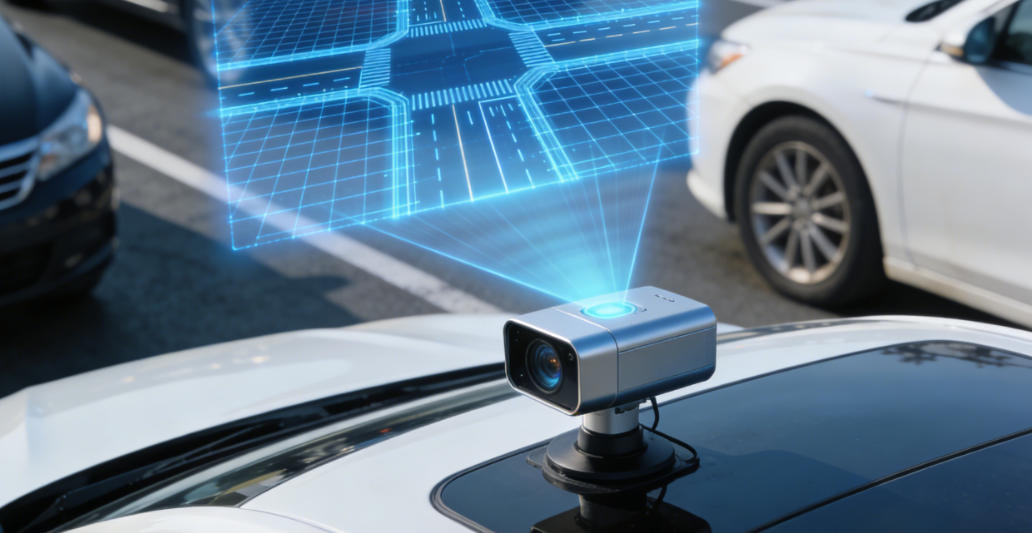
What Is Time of Flight Sensing?
With the rapid development of 3D vision, artificial intelligence, industrial automation, and smart manufacturing, the time of flight camera has become a key technology in depth sensing. So, what is time of flight sensing?
Simply put, time of flight (ToF) technology measures the distance to an object by calculating the time it takes for light to travel from the emitter to the target and back. Based on this principle, a time of flight tof camera can provide precise depth information for every pixel in an image, generating high-quality 3D depth maps and point cloud data.
In the industry, this technology is also commonly referred to as:
- tof kamera
- time of flight camera sensor
- time-of-flight camera
- tof time of flight technology
How Does a Time of Flight Camera Work?
1. Basic Working Principle
A time-of-flight camera is a 3D imaging device based on active optical ranging. Its core principle is to emit infrared light and measure the time it takes for the light to travel and return, thereby determining depth information.
In operation, the camera emits high-frequency modulated infrared light (typically generated by LEDs or lasers). When the light hits an object, it reflects back and is captured by the sensor.
The system calculates the distance between the camera and the object by precisely measuring the round-trip time of the light signal.
The core logic includes:
- The speed of light is constant (approximately 3×10⁸ m/s)
- Flight time can be measured with high-precision timing circuits
- Each pixel independently calculates distance to generate a full depth map
Based on this mechanism, the time of flight camera sensor enables per-pixel depth measurement and rapid generation of high-precision 3D point cloud data. This makes the time of flight tof camera especially suitable for real-time applications such as robotics navigation, industrial inspection, and dynamic object tracking.
Additionally, compared to traditional stereo vision systems, the time-of-flight camera does not require complex image matching algorithms, significantly reducing computational load and making it ideal for embedded systems and edge computing devices.

2. Two Main Types of ToF Technology
Depending on the measurement method, tof time of flight technology can be divided into two main categories: Direct ToF (dToF) and Indirect ToF (iToF). Each has its own advantages in terms of accuracy, cost, and application scenarios.
(1) Direct ToF (dToF)
Direct ToF measures distance by emitting short light pulses and directly calculating the time it takes for photons to return.
Features:
- Uses single-photon detection technology (SPAD) or high-sensitivity sensors
- Extremely high time resolution
- Capable of long-range measurement (up to tens of meters or more)
Advantages:
- High measurement accuracy
- Strong resistance to interference
- Suitable for complex environments
Typical Applications:
- Autonomous driving and ADAS systems
- LiDAR-assisted perception
- Industrial 3D inspection and measurement
- Drone obstacle avoidance
Due to its high performance, dToF is becoming a key direction for advanced time of flight camera systems and next-generation depth sensors.
(2) Indirect ToF (iToF)
Indirect ToF calculates distance by emitting continuously modulated light and measuring the phase difference between emitted and reflected signals.
Features:
- Uses modulated light waves (sine or square waves)
- Calculates distance indirectly via phase shift
- Simpler system architecture
Advantages:
- Lower cost and scalable production
- Lower power consumption
- Compact and easy to integrate
Typical Applications:
- Smartphone 3D cameras
- Facial recognition systems
- AR/VR devices
- Smart home interaction systems
Currently, most consumer-grade tof kamera and RGBD cameras use iToF solutions, offering a good balance between performance and cost.
3. Components of a ToF Camera System
A complete time of flight camera system typically includes:
- Infrared light source (LED or laser)
- Optical lens system
- Depth sensor chip
- Signal processing circuitry
- Depth computation algorithms
These components work together to enable tof kamera to achieve high-frame-rate, low-latency depth sensing.
Key Advantages of ToF Cameras
Compared to traditional 2D vision systems, the time of flight tof camera offers significant advantages in depth sensing, real-time performance, and system integration.
High-Precision Depth Data
The time of flight camera sensor provides direct distance measurements for each pixel, enabling true per-pixel depth sensing without relying on complex stereo matching algorithms.
Advantages include:
- More accurate and reliable depth information
- Millimeter-level precision in certain scenarios
- Stable performance in low-texture or repetitive environments
This makes tof kamera highly suitable for industrial inspection, measurement, and 3D reconstruction.
Strong Real-Time Performance
Because the time-of-flight camera directly captures depth data, it eliminates complex processing steps and significantly improves speed.
Key benefits:
- High frame rates (30 fps or higher)
- Low latency depth output
- Real-time response to dynamic changes
This makes the time of flight tof camera ideal for:
- Robot navigation and obstacle avoidance
- Autonomous driving perception
- Motion tracking
- Smart logistics systems
Strong Resistance to Ambient Light
The time of flight camera uses active infrared illumination, making it less dependent on ambient lighting conditions.
Advantages include:
- Stable operation in low-light environments
- Less sensitive to indoor lighting variations
- Usable in semi-outdoor conditions
Although strong sunlight can still affect performance, overall tof time of flight technology is more robust than structured light systems.
Simple System Structure
Unlike stereo vision or structured light systems, the time-of-flight camera uses a single sensor to achieve depth perception.
Benefits include:
- Simpler hardware design
- Easier calibration
- Higher system stability
- Compact size for easy integration
This makes the time of flight camera sensor ideal for compact devices such as robots, drones, and smart terminals.
Low Computational Load
Traditional 3D vision systems require intensive image processing, while the time of flight tof camera outputs depth data directly.
Advantages:
- Reduced CPU/GPU usage
- Lower algorithm complexity
- Higher overall system efficiency
- Better suitability for edge computing
This makes tof kamera highly effective for embedded and AI edge devices.

Main Applications of Time-of-Flight Cameras
With the rapid growth of time-of-flight camera news, ToF technology is widely used across multiple industries:
Industrial Automation and Machine Vision
- 3D measurement
- Automated sorting and picking
- Quality inspection
Robotics and SLAM Navigation
- Real-time mapping
- Obstacle detection
- Path planning
Consumer Electronics
- Facial recognition
- Gesture control
- AR/VR interaction
Autonomous Driving and Smart Transportation
- Distance sensing
- Pedestrian detection
- Environmental perception
Smart Security and People Counting
- People counting
- Behavior analysis
- Area monitoring
ToF vs Other Depth Sensing Technologies
| Technology | ToF Camera | Stereo Vision | Structured Light |
|---|---|---|---|
| Accuracy | High | Medium | High (short range) |
| Real-time | High | Medium | Medium |
| Light Resistance | Strong | Strong | Weak |
| Complexity | Low | High | Medium |
| Applications | Wide | Wide | Limited |
Limitations of ToF Technology
Despite its advantages, tof time of flight technology also has some limitations:
Strong Light Interference
Bright sunlight may reduce measurement accuracy
Multi-Path Reflection
Complex surfaces may introduce errors
Device Interference
Multiple ToF devices may interfere with each other
Resolution Limitations
Some ToF sensors have lower resolution than RGB cameras
How to Choose the Right Time of Flight Camera
When selecting a time of flight camera, consider the following factors:
Measurement Range
- Short range: structured light
- Medium to long range: ToF
Accuracy Requirements
Industrial applications require high-precision sensors
Environment
- Outdoor: choose strong anti-light ToF solutions
- Indoor: high-precision systems
Frame Rate
Real-time applications require high-speed cameras
Software Support
Choose cameras with SDK, ROS, and AI platform compatibility
Future Trends of ToF Technology
With the integration of AI and 3D vision, time-of-flight camera technology continues to evolve:
- Higher-resolution ToF sensors
- AI-enhanced depth processing
- Multi-sensor fusion (ToF + LiDAR + RGB)
- Edge computing and real-time processing
In the future, time of flight camera sensor will play an even greater role in smart manufacturing, smart cities, autonomous systems, and medical imaging.
Conclusion
This guide helps you understand:
- What is time of flight sensing
- The working principles of time of flight tof camera
- Different ToF technologies and advantages
- Real-world applications and selection tips
As demand for 3D vision continues to grow, the time-of-flight camera has become a key technology in intelligent sensing systems. If you are looking for a reliable and efficient depth solution, tof kamera is one of the most promising choices available today.
Modern depth sensing solutions rely on time of flight sensor technology, where an image sensor works with systems that cameras modulate to measure light travel time accurately. Advanced time of flight cameras provide fast and reliable depth data, supporting applications such as robotics, 3D vision, and smart devices.
IHawk Structured Light Camera P100E 8M

After-sales Service: Our professional technical support team specializes in TOF camera technology and is always ready to assist you. If you encounter any issues during the usage of your product after purchase or have any questions about TOF technology, feel free to contact us at any time. We are committed to providing high-quality after-sales service to ensure a smooth and worry-free user experience, allowing you to feel confident and satisfied both with your purchase and during product use.




Please upload banner from store admin blog pages