
4D Radar vs LiDAR: Key Differences in Autonomous Driving & Robotics
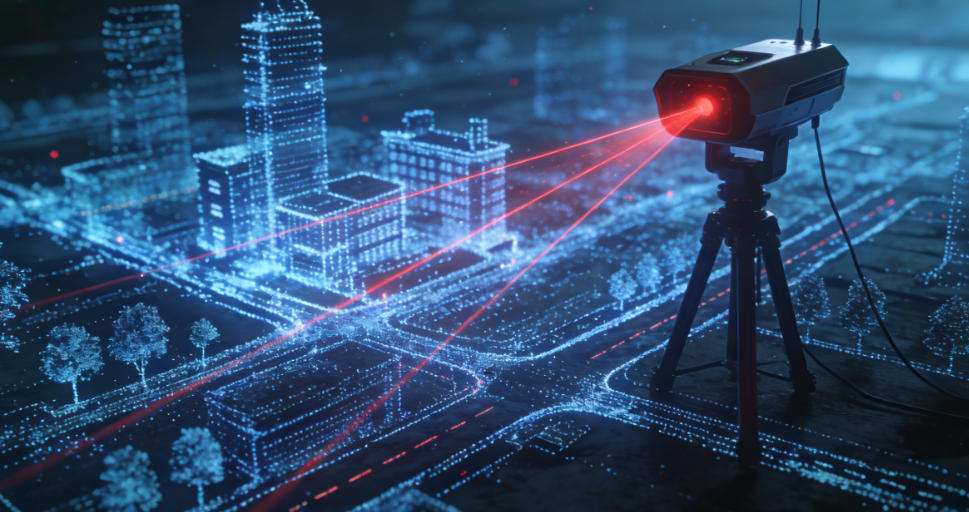
What Is the Difference Between LiDAR and Radar in Autonomous Vehicles and Robotics?
With the rapid development of autonomous driving, robotic navigation, and smart security, environmental sensing technologies have become essential. Two of the most widely used sensor solutions are 4D millimeter-wave radar (4D millimeter-wave radar) and LiDAR (Light Detection and Ranging). Many people search: what is the difference between lidar and radar? what is the difference between radar and lidar?
While both technologies enable machines to 'see the world,' they differ significantly in working principles, accuracy, and practical applications. This article provides a detailed analysis of the key differences and explains their advantages and use cases.
What is 4D Millimeter-Wave Radar?
4D millimeter-wave radar uses electromagnetic waves to detect the environment and can provide distance, angle, and velocity information (x, y, z + velocity) simultaneously. This gives it unique advantages in dynamic scenarios.
It is mainly applied to:
- Long-range detection for autonomous driving systems
- Multi-target tracking
- Velocity analysis in complex environments
- Security monitoring and motion detection
Key features include:
- Strong long-range detection capabilities
- Better adaptability to harsh weather conditions (rain, fog, dust)
- Direct output of velocity data via Doppler effect
This explains why radar’s environmental adaptability is often a major comparison point when searching 'what is the difference between lidar and radar'.
What is LiDAR?
LiDAR (Light Detection and Ranging) is a technology that uses laser pulses to measure distances and build high-resolution 3D models of the environment. It generates dense point clouds for precise three-dimensional reconstruction.
LiDAR’s main advantages include:
- Centimeter-level accuracy for 3D mapping
- Ability to detect object details and edges
- Construction of precise environmental models (3D point cloud)
- Suitable for high-precision autonomous driving and robotic navigation
Because laser wavelengths are much shorter than millimeter waves, LiDAR provides superior spatial resolution and detail capture.

what is the difference between radar and lidar? Core Technical Comparison
Here’s a clear breakdown to answer the most common questions:
1. Working Principle Differences
This addresses what is the difference between lidar and radar:
- Radar uses radio waves
- LiDAR uses laser light pulses
Radar analyzes distance and speed through reflected signals, while LiDAR constructs a 3D environment using the Time of Flight (ToF) of laser pulses.
2. Accuracy and Resolution
-
LiDAR Advantages:
- Provides high-resolution 3D point clouds
- Can detect geometric shapes and object edges
- Suitable for detailed mapping and modeling
-
Radar Advantages:
- Better at detecting velocity
- More stable for fast-moving objects
- Lower spatial resolution compared to LiDAR
Summary:
✅ LiDAR is more 'precise and detailed,'
✅ Radar is more 'stable and reliable.'
3. Performance in Harsh Weather
Many users searching what is the difference between radar and lidar care about environmental performance:
-
Radar:
- Penetrates rain, fog, and dust
- Less sensitive to lighting conditions
-
LiDAR:
- Performance drops in rain or fog
- Susceptible to light scattering errors
Therefore, radar is often considered the most reliable sensor in all-weather autonomous systems.
4. Detection Range and Velocity Sensing
-
4D Millimeter-Wave Radar:
- Typically detects longer distances
- Provides real-time velocity measurements
-
LiDAR:
- Shorter detection range
- Velocity requires algorithmic estimation
This is why radar is preferred in high-speed scenarios.
5. Cost and Commercial Adoption
-
Radar:
- Lower manufacturing costs
- Widely deployed in automotive and industrial systems
-
LiDAR:
- Higher costs
- Mostly used in high-precision autonomous driving and robotics
With technology advancements, solid-state LiDAR costs are decreasing, but radar still maintains a cost advantage.
4D Millimeter-Wave Radar vs LiDAR: Key Applications
Radar Applications:
- ADAS (Advanced Driver Assistance Systems)
- High-speed moving object detection
- Security radar systems
- Industrial automation monitoring
LiDAR Applications:
- High-precision mapping
- Robotic path planning and navigation
- 3D modeling and digital twins
- Urban mapping and topography analysis

How to Choose? Which Sensor is Right for Your Project?
Many engineers ask:
what is the difference between lidar and radar and which one should I use?
The answer is simple:
- If the project requires all-weather, high stability, and long-range velocity detection → choose Radar
- If high-precision 3D mapping and detail detection are required → choose LiDAR
In modern sensing systems, sensor fusion is the standard approach:
🔹 Radar + LiDAR + Camera combination
🔹 Optimizes both reliability and accuracy
Future Trends in Radar and LiDAR
Future developments in sensing technology include:
- 4D imaging radar (high-resolution millimeter-wave radar)
- Solid-state LiDAR technology
- AI-driven sensor fusion systems
Both technologies will coexist, providing robust and reliable perception capabilities.
Summary: what is the difference between lidar and radar?
In one sentence:
✅ Radar excels at 'long-range detection, environmental adaptability, and stable velocity sensing.'
✅ LiDAR excels at 'high-precision imaging, spatial mapping, and detail analysis.'
In modern intelligent systems, Radar and LiDAR complement each other, enabling safer, more accurate, and smarter perception capabilities.
autonomous driving robots environment perception and mapping 3D lidar sensor RS-LiDAR-16 RoboSense 16-beam miniature LiDAR

Our professional technical team specializing in 3D camera ranging is ready to assist you at any time. Whether you encounter any issues with your TOF camera after purchase or need clarification on TOF technology, feel free to contact us anytime. We are committed to providing high-quality technical after-sales service and user experience, ensuring your peace of mind in both shopping and using our products.





Please upload banner from store admin blog pages