
Lidar Technology & Sensors for Drones and Autonomous Vehicles
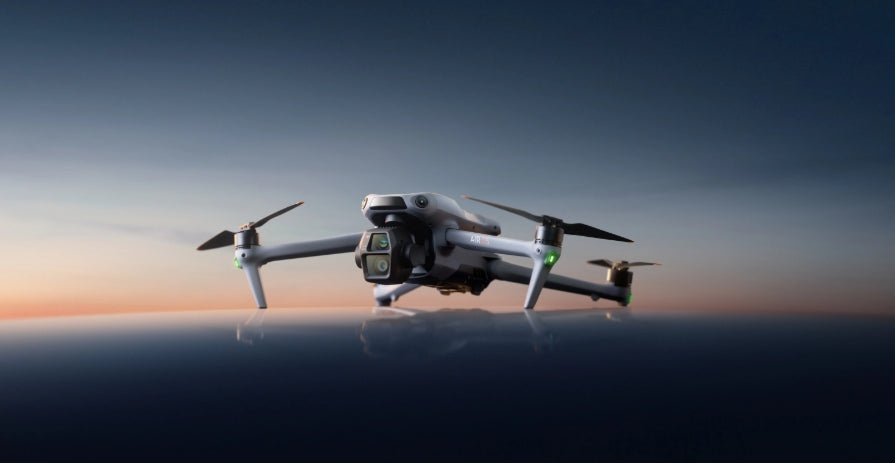
What Are the Best LiDAR Sensors for Small Drones and Autonomous Vehicles?
Lidar Technology & Sensors: How to Choose the Best LiDAR Sensors for Small Drones and Autonomous Vehicles?
With the rapid development of autonomous driving, drones, robotics, and smart transportation technologies, Lidar Technology & Sensors have become a critical technology for modern intelligent devices to achieve environmental perception. Whether it is small drones performing altitude control, obstacle avoidance, and aerial mapping, or autonomous vehicles sensing road environments, high-precision LiDAR Sensors are required to obtain accurate spatial information.
However, different applications have different requirements for LiDAR sensors. Small drones focus more on weight, power consumption, and fast response, while autonomous vehicles require longer detection range, wider environmental coverage, and reliable performance in all weather conditions.
So, Can you recommend the best lidar sensors for small drones vs. autonomous vehicles, and why?
For intelligent devices that require long-range detection, high accuracy, and lightweight design, choosing a well-balanced LiDAR Sensor is essential. Among available solutions, the Benewake TFA170-L 170m Lightweight LiDAR stands out with its 170m long-range measurement capability, lightweight structure, and high reliability, making it an ideal choice for drones, robots, automation equipment, and intelligent mobile platforms.
Can You Recommend the Best LiDAR Sensors for Small Drones vs. Autonomous Vehicles, and Why?
For small drones, the best LiDAR sensors should be lightweight, low-power, and capable of fast and accurate distance measurement for applications such as altitude control, obstacle avoidance, and aerial mapping. A compact ToF LiDAR sensor like the Benewake TFA170-L 170m Lightweight LiDAR is an excellent choice because it combines a 170m long-range detection capability with a lightweight design, making it suitable for UAVs and other small autonomous platforms.
For autonomous vehicles, the ideal LiDAR sensors require longer detection range, higher accuracy, and reliable 3D environmental perception to identify vehicles, pedestrians, and obstacles. Unlike cameras, LiDAR provides precise distance information and performs well in changing lighting conditions, making it widely used in autonomous driving, robotics, and smart transportation systems.

Why Do Drones and Autonomous Vehicles Need LiDAR Sensors?
Both drones and autonomous vehicles need real-time information about their surrounding environment. Traditional cameras can provide rich visual information, but they are easily affected by lighting changes, nighttime environments, rain, fog, and object color variations.
A LiDAR Sensor works by emitting laser pulses and measuring the return time to calculate distance, allowing devices to obtain accurate three-dimensional spatial information.
Based on Time of Flight (ToF) technology, LiDAR calculates distance by measuring the time difference between laser emission and signal return. This technology provides fast response, high measurement accuracy, and strong environmental adaptability.
Therefore, LiDAR is widely used in:
- Autonomous Vehicles
- UAV LiDAR Systems
- Drone Navigation
- Robot Navigation
- Industrial Automation
- Smart Transportation
Compared with traditional vision-based solutions, LiDAR does not depend on object color, texture, or lighting conditions. Even in low-light environments, complex backgrounds, or outdoor conditions, it can continuously provide stable and reliable distance data.
What Are the Differences Between LiDAR Requirements for Small Drones and Autonomous Vehicles?
Although drones and autonomous vehicles both use LiDAR for environmental perception, their requirements are different.
For small drones, the biggest limitations are payload capacity and battery life. Therefore, LiDAR sensors need to have a compact size, low power consumption, and lightweight structure.
At the same time, drones usually require fast environmental data collection for flight control, autonomous obstacle avoidance, and path planning.
Common drone LiDAR applications include:
- Altitude Holding
- Terrain Following
- Automatic Obstacle Avoidance
- UAV Mapping
- Low-Altitude Inspection
In contrast, autonomous vehicles operate in more complex environments and require longer detection distances, wider sensing coverage, and higher reliability.
Vehicle LiDAR systems are commonly used for:
- Pedestrian Detection
- Vehicle Recognition
- Road Environment Scanning
- Autonomous Driving Perception
- ADAS (Advanced Driver Assistance Systems)
Therefore, lightweight LiDAR is more important for small drones, while autonomous vehicles require high-performance sensing systems with wider coverage and stronger perception capabilities.
Best Lightweight LiDAR Sensor: Benewake TFA170-L 170m LiDAR
For drones, robots, and intelligent mobile devices, the Benewake TFA170-L is a long-range LiDAR Sensor based on ToF technology.
The sensor provides a maximum measurement range of up to 170 meters while maintaining a lightweight design, making it suitable for space-constrained intelligent devices that require long-distance measurement.
Key advantages of TFA170-L include:
- 170m Long Range Distance Measurement
- Lightweight LiDAR Design
- High-Precision ToF Distance Measurement
- Fast Response Capability
- Suitable for Drone and Robot Integration
Compared with traditional large LiDAR systems, lightweight LiDAR sensors are easier to install and integrate into drones, small robots, and embedded systems.
Core Advantages of TFA170-L LiDAR Sensor
1. 170m Long-Range Distance Measurement
For drones and autonomous vehicles, detection range directly affects system safety and performance.
A 170m detection capability allows intelligent devices to detect distant objects earlier, providing more response time for control systems.
In drone applications, it can support:
- Accurate Altitude Measurement
- Terrain Change Detection
- Flight Path Optimization
In robots and vehicles, it can assist with:
- Obstacle Detection
- Distance Monitoring
- Environmental Perception
Long-range LiDAR data improves the autonomous operation capabilities of intelligent devices.
2. Lightweight Design for Drone Applications
Weight is a critical factor for drones. Heavy sensors increase power consumption and reduce flight endurance.
The TFA170-L Lightweight LiDAR provides a balance between long-range measurement performance and reduced system load, making it ideal for:
- Drone LiDAR Projects
- UAV Navigation
- Aerial Mapping
- Autonomous Drone Systems
Lightweight LiDAR technology is becoming an important solution for improving drone intelligence.
3. High-Precision ToF LiDAR Technology
The TFA170-L uses Time of Flight technology to calculate distance by measuring the travel time of laser signals.
Compared with traditional distance sensors, ToF LiDAR provides:
- Longer Measurement Range
- Faster Response Speed
- More Stable Data Output
These advantages are especially important for drones, robots, and autonomous systems that require real-time control.

4. Adaptability to Complex Environments
Intelligent devices often need to operate in different environments.
Compared with visual sensors, LiDAR is less affected by:
- Dark Environments
- Lighting Changes
- Object Color Differences
This makes LiDAR suitable for:
- Outdoor Drones
- Autonomous Robots
- Industrial Vehicles
- Smart Inspection Systems
Main Applications of LiDAR in Small Drones
Adding LiDAR sensors to small drones enables more intelligent flight capabilities.
For altitude control, LiDAR can measure the distance between the drone and the ground in real time, helping maintain stable flight altitude. This is especially useful for agricultural drones, inspection drones, and mapping drones.
For drone obstacle avoidance, LiDAR can detect obstacles such as buildings, power lines, and trees in advance, allowing flight control systems to adjust routes and improve autonomous flight safety.
In addition, combined with drone platforms, LiDAR Mapping technology can be used for:
- Terrain Measurement
- Building Scanning
- 3D Modeling
- Environmental Monitoring
Main Applications of LiDAR in Autonomous Vehicles
Autonomous vehicles need continuous environmental information, and LiDAR Sensors are one of the most important perception technologies.
Through LiDAR data, vehicles can detect:
- Distance to Vehicles Ahead
- Pedestrian Locations
- Road Structures
- Surrounding Obstacles
When combined with cameras, radar, and AI algorithms, LiDAR can improve the safety and reliability of autonomous driving systems.
Beyond passenger vehicles, LiDAR is also widely used in:
- AGV Robots
- AMR Mobile Robots
- Autonomous Transport Vehicles
helping machines achieve autonomous navigation and intelligent operation.
What Are the Differences Between LiDAR Sensors, Cameras, and Radar?
Camera systems provide rich image information and are excellent for object recognition and visual analysis. However, their performance can be affected by lighting conditions.
Radar sensors have strong penetration capabilities and work well for detecting high-speed objects, but their spatial resolution is usually limited.
LiDAR, on the other hand, directly provides accurate distance measurements and 3D spatial information, making it highly valuable for autonomous vehicles, drones, and robotics.
Today, advanced intelligent systems often use sensor fusion technology, combining LiDAR, cameras, and radar to achieve more comprehensive environmental perception.
How to Choose the Right LiDAR Sensor for Drones and Vehicles?
When selecting a LiDAR Sensor, several factors should be considered.
First is measurement range. Drones and autonomous systems usually require long-distance detection to improve safety and performance.
Second is weight and size. Lightweight design is especially important for small drone applications.
Third is measurement accuracy and response speed. Real-time control systems require stable and fast data output.
Other important factors include:
- Power Consumption
- Operating Environment
- System Compatibility
- Integration Difficulty
An excellent LiDAR Sensor should be easy to integrate into:
- Drone Platforms
- Robot Systems
- Autonomous Vehicles
TFA170-L Lightweight LiDAR Sensor – 170m Range for UAV & Industry Use

Conclusion: Lidar Technology & Sensors Drive the Future of Intelligent Mobility
With the continuous growth of drones, autonomous vehicles, and robotics industries, Lidar Technology & Sensors are becoming essential technologies for accurate environmental perception.
For small drones, lightweight design, low power consumption, and fast response are the key factors when selecting a LiDAR Sensor. For autonomous vehicles, long-range detection, high reliability, and wide-area perception are more important.
The Benewake TFA170-L 170m Lightweight LiDAR combines 170m long-range measurement capability, lightweight construction, and high-precision ToF technology, making it suitable for various applications including drones, robots, and intelligent vehicles.
In the future, with the development of AI, autonomous driving, and intelligent robotics, LiDAR Sensors will continue to play an increasingly important role in unmanned systems, smart transportation, and industrial automation.




Please upload banner from store admin blog pages
Please select collection from store admin blog pages