
AgiBot Robot Explained: How Embodied AI Is Transforming Robotics
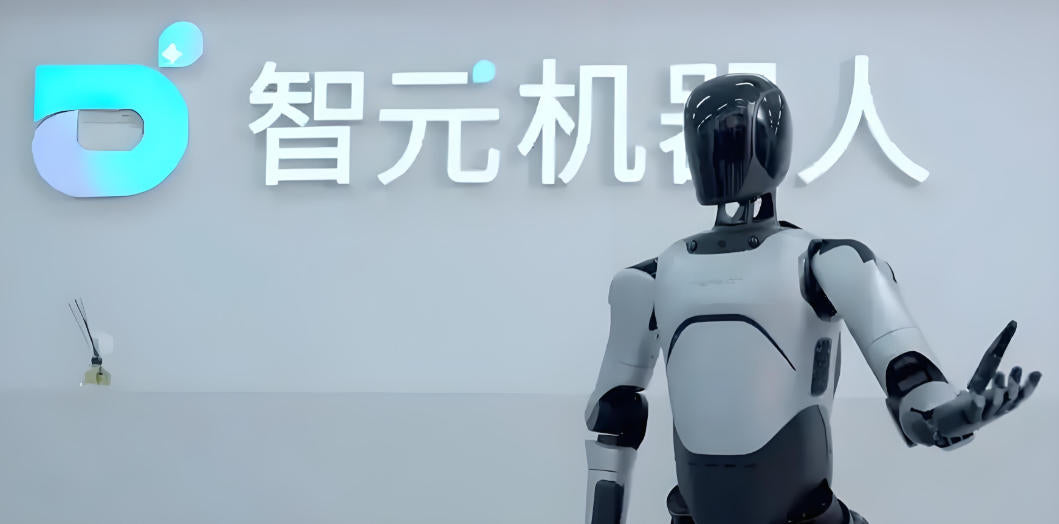
What Is AgiBot Robot and How Is It Building the Future of Embodied AI?
With the rapid advancement of artificial intelligence, robotics technology, and intelligent manufacturing, Embodied AI has emerged as one of the most important development directions in the global AI industry. Unlike traditional AI systems that exist mainly in digital environments, embodied intelligence enables robots to understand, interact with, and operate within the physical world.
From July 17 to 20, 2026, the 2026 World Artificial Intelligence Conference (WAIC 2026) will be held in Shanghai, China. For the first time, Embodied Intelligence will become one of the two major technology tracks alongside AI computing infrastructure, highlighting the growing importance of humanoid robots, AI robot systems, robotic intelligence, and real-world AI applications.
As one of China’s leading embodied AI robotics companies, AgiBot (Zhiyuan Robotics) will participate in WAIC 2026 with its complete ecosystem of robotic products, including humanoid robots, industrial robots, dexterous robotic hands, AI foundation models, robot control systems, and smart manufacturing solutions.
With more than 200 companies expected to showcase their latest AI technologies, WAIC 2026 will provide an important window into the future development of humanoid robotics, AI-powered automation, intelligent factories, and commercial robot applications.
What Is AgiBot? Understanding the Rise of China’s Embodied AI Robot Company
AgiBot, also known as Zhiyuan Robotics, is a technology company specializing in the development of embodied AI robots and next-generation intelligent robotic systems. The company focuses on connecting advanced artificial intelligence algorithms with physical robotic platforms, enabling machines to move beyond simple automation and achieve intelligent interaction with the real world.
By combining:
- AI foundation models
- Computer vision technology
- Robot perception systems
- Motion planning algorithms
- Intelligent control technology
- Advanced robotic hardware
AgiBot is developing a new generation of general-purpose robots designed for applications across industrial manufacturing, commercial environments, logistics, and household scenarios.
Traditional industrial robots typically perform repetitive tasks based on predefined programming. However, embodied AI robots represent a different approach. They are designed to perceive their surroundings, analyze complex situations, make autonomous decisions, and adapt their behavior according to changing environments.
This ability makes embodied intelligence one of the most promising areas in the future of artificial intelligence and robotics.
As industries worldwide move toward automation and digital transformation, humanoid robots, intelligent industrial robots, and AI-powered robotic systems are expected to become essential technologies for future smart factories and human-machine collaboration.

AgiBot at WAIC 2026: Demonstrating the Future of Embodied AI Robots
At the 2026 World Artificial Intelligence Conference (WAIC 2026), AgiBot will showcase its latest robotic technologies at Booth C101, Hall H3, located at the Shanghai World Expo Exhibition & Convention Center.
The exhibition area covers approximately 200 square meters and focuses on the theme:
“Robots + AI + Industrial Applications”
The showcase will demonstrate how embodied AI technology can move from laboratory research into practical industrial environments.
Visitors will experience how modern robots combine AI perception, autonomous decision-making, robotic control, and intelligent operation capabilities to complete increasingly complex tasks.
The displayed technologies will include:
- Full-size humanoid robots
- AI-powered industrial robots
- Embodied AI models
- Advanced robot dexterous hands
- Smart manufacturing solutions
- Robot vision and perception systems
- Intelligent automation platforms
Through real-time demonstrations, AgiBot will highlight how future robots can achieve:
- Autonomous environmental perception
- Intelligent task planning
- Precise object manipulation
- Human-machine collaboration
- Flexible industrial operation
These technologies represent a major step toward the commercialization of AI robots and general-purpose humanoid robots.
Expedition A3 Ultra: A Next-Generation Humanoid Robot With Advanced Motion Intelligence
One of the highlights of AgiBot’s WAIC 2026 exhibition is the Expedition A3 Ultra humanoid robot, a full-size humanoid robotic platform designed to explore advanced human-like movement and intelligent interaction.
As the demand for commercial humanoid robots and general-purpose AI robots continues to grow, researchers and robotics companies are focusing on creating machines that can operate naturally in environments originally designed for humans.
The Expedition A3 Ultra integrates advanced robotic engineering technologies, including:
- High-performance motion control systems
- Human-like robotic hands
- Flexible mechanical structures
- Intelligent perception capabilities
- Advanced balance and movement algorithms
These technologies allow the robot to achieve smoother movement, improved coordination, and stronger adaptability in complex scenarios.
Expedition A3 Ultra: A Highly Anthropomorphic Humanoid Robot Exploring the Future of General-Purpose Robotics
The Expedition A3 Ultra humanoid robot represents AgiBot’s exploration of the next generation of human-like robots and embodied AI systems.
Unlike traditional machines designed for specific industrial tasks, modern general-purpose humanoid robots aim to operate in diverse environments by combining artificial intelligence, advanced mechanical structures, and intelligent perception technologies.
One of the most important features of the Expedition A3 Ultra is its highly anthropomorphic design, which allows the robot to imitate human body structures and movement patterns.
Its major capabilities include:
Advanced Dexterous Robotic Hands for Precise Manipulation
The robot is equipped with advanced dexterous robotic hands, enabling it to perform delicate operations such as object grasping, tool handling, and complex manipulation tasks.
Compared with traditional robotic grippers, dexterous hands provide:
- More degrees of freedom
- Higher movement flexibility
- Improved object recognition ability
- More accurate force control
- Better interaction with human environments
For AI robots and humanoid robots, dexterous hands are considered one of the most important technologies because they determine whether robots can perform tasks that require human-like precision.
Future applications may include:
- Precision manufacturing
- Laboratory assistance
- Household services
- Medical assistance
- Intelligent warehouse operations
By combining robotic hands with AI perception models, humanoid robots can gradually improve their ability to understand and interact with physical objects.
Flexible Waist Structure Improves Humanoid Robot Movement Stability
Another key innovation of the Expedition A3 Ultra is its flexible waist structure.
Traditional robots often rely on rigid mechanical designs, which can limit movement efficiency and adaptability. However, human movement depends heavily on coordinated body motion, balance control, and flexible posture adjustment.
The flexible mechanical structure of the Expedition A3 Ultra helps improve:
- Whole-body coordination
- Dynamic balance
- Motion stability
- Energy efficiency
- Complex task performance
Through advanced motion planning algorithms and intelligent control systems, the robot can achieve smoother movements and better adaptability in changing environments.
This represents an important development direction for future humanoid robots, where machines are expected to move naturally and safely alongside humans.
Advanced Motion Control Technology Enables Intelligent Robot Interaction
The performance of humanoid robots depends not only on hardware design but also on powerful software systems.
The Expedition A3 Ultra integrates advanced robot motion control algorithms, AI perception technology, and intelligent decision-making systems to improve its ability to perform autonomous tasks.
The combination of:
- Artificial intelligence models
- Robot vision systems
- Motion planning technology
- Sensor fusion algorithms
- Real-time control systems
allows the robot to better understand its surroundings and execute complex operations.
As embodied AI technology continues to develop, humanoid robots are expected to evolve from simple demonstration platforms into practical tools for manufacturing, services, logistics, and daily life.
Genie G2 Max: An AI-Powered Industrial Robot for Flexible Manufacturing
Besides humanoid robots, AgiBot will also showcase the Genie G2 Max industrial robot, a robotic solution designed for modern smart manufacturing environments.
With the rapid development of Industry 4.0, smart factories, and industrial automation, manufacturers are facing increasing demand for flexible production systems.
Traditional automation equipment often requires fixed programming and dedicated production lines, making it difficult to adapt to changing product requirements.
The Genie G2 Max robot focuses on flexible industrial applications by combining robotic hardware with AI-driven intelligence.
Its main features include:
- High payload capability
- High-precision force control
- Intelligent perception technology
- Flexible task adaptation
- Advanced automation functions
These capabilities allow the robot to support various industrial scenarios, including:
- Electronics manufacturing
- Precision assembly
- Industrial quality inspection
- Material transportation
- Smart warehousing systems
How Genie G2 Max Supports the Future of Smart Manufacturing
Modern manufacturing is moving toward a new era where robots are expected to do more than repetitive tasks.
With AI integration, industrial robots can analyze information, adapt to production changes, and cooperate with human workers.
The Genie G2 Max demonstrates how AI-powered industrial robots can improve:
Manufacturing Efficiency
Robots can perform repetitive and precision-intensive tasks with high accuracy, reducing production time and improving overall efficiency.
Production Flexibility
AI-driven robots can adjust workflows according to different products and manufacturing requirements, supporting flexible production lines.
Workplace Safety
Robots can handle dangerous or physically demanding operations, reducing risks for human workers.
Intelligent Decision-Making
By combining sensors, computer vision, and AI algorithms, robots can make smarter operational decisions during manufacturing processes.
These capabilities represent the future direction of smart factory automation and intelligent manufacturing solutions.

'Smart Operation Island' Demonstrates AI Robot Applications in 3C Manufacturing
At WAIC 2026, AgiBot will also create a demonstration area called “Smart Operation Island”, simulating a real-world 3C electronics intelligent manufacturing production line.
The demonstration focuses on showing how embodied AI robots can complete an entire industrial workflow, from understanding tasks to autonomous execution.
The simulated production process includes:
- Material recognition
- Intelligent object grasping
- Automated transportation
- Product assembly
- Quality inspection
Through the integration of:
- Machine vision systems
- AI foundation models
- Robot control technology
- Intelligent sensors
- Automated manufacturing platforms
robots can complete increasingly complex industrial operations.
AI Vision and Robot Perception: The Key Technologies Behind Embodied Intelligence
One of the biggest challenges for modern robots is understanding the physical world.
Unlike traditional automation systems that follow fixed instructions, embodied AI robots require advanced perception capabilities to analyze environments and respond intelligently.
Technologies such as:
- Computer vision
- 3D perception
- Depth sensing
- AI recognition models
- Sensor fusion
enable robots to identify objects, understand spatial relationships, and make autonomous decisions.
For industrial applications, robot vision systems are becoming essential components of smart factories, helping robots achieve higher accuracy and operational flexibility.
The Smart Operation Island demonstration shows how these technologies can transform traditional manufacturing into intelligent, adaptive production systems.
Robosense 32-line 3D LiDAR sensor RS-Helios-5515 unmanned ranging navigation obstacle avoidance V2R RS-Helios-1615 Laser radar

AgiBot and the Future of Humanoid Robots and AI Robotics
As an important player in China’s embodied AI ecosystem, AgiBot is accelerating the development of next-generation robotic technologies through innovation in:
- Humanoid robot design
- Industrial robot solutions
- AI-powered automation
- Robot perception systems
- Smart manufacturing platforms
The future of robotics will not only be about machines replacing repetitive work. Instead, intelligent robots will become collaborative partners that work together with humans to improve efficiency, safety, and productivity.
With continued advances in AI robotics, humanoid robot technology, and smart factory automation, AgiBot is positioned to contribute to the global transformation of artificial intelligence from digital intelligence into physical intelligence.
In the coming years, markets for AI robots, general-purpose humanoid robots, industrial automation robots, and embodied AI solutions are expected to expand rapidly, creating new opportunities for businesses, manufacturers, and society.
The era of intelligent robots is beginning, and AgiBot represents one of the emerging forces driving the future of embodied AI.





Please upload banner from store admin blog pages