
How Are ToF Depth Cameras Improving Efficiency in Smart Warehousing?
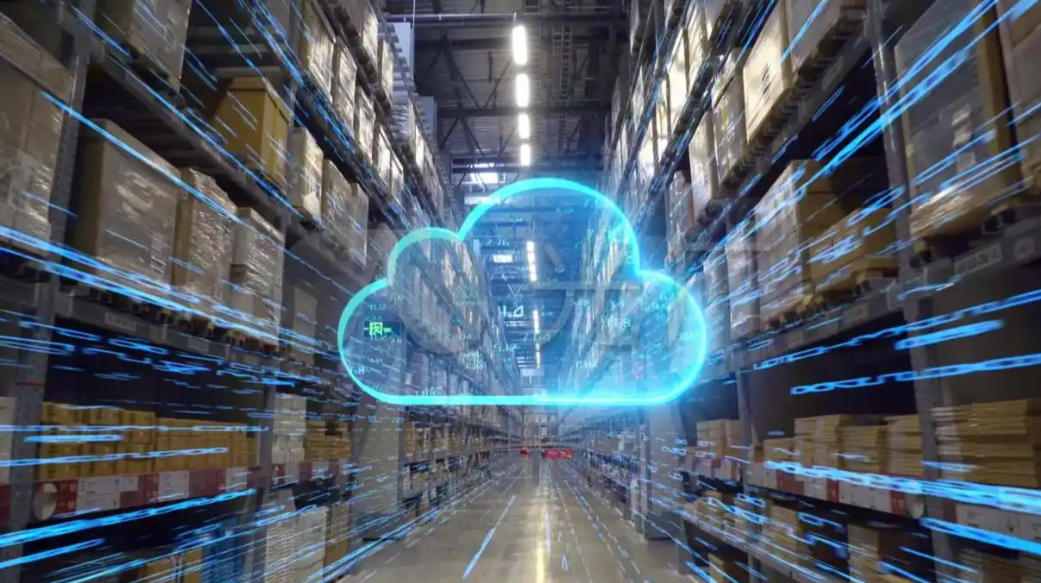
How Do ToF Depth Cameras Improve Efficiency in Smart Warehousing and Logistics?
A Key 3D Vision Technology for Warehouse Robots, AGVs, and Automated Logistics Systems
In modern warehouse operations, efficiency, accuracy, and safety have become the primary metrics for evaluating performance. As e-commerce fulfillment, cold-chain logistics, and express delivery continue to accelerate, warehouses are under increasing pressure to process higher volumes while maintaining precise inventory control and low error rates.
To meet these demands, smart warehousing and warehouse automation technologies are rapidly evolving. Among them, TOF (Time-of-Flight) depth cameras are emerging as a core perception technology, enabling real-time 3D vision for warehouse robots, AGVs, autonomous forklifts, and automated logistics systems.
By providing accurate depth maps and 3D point cloud data, ToF cameras allow warehouse systems to perceive space, objects, and motion with high precision—laying the foundation for intelligent decision-making and fully automated operations.
1. What Is a ToF (Time-of-Flight) Depth Camera?
A ToF depth camera is an active 3D sensing device that emits modulated infrared light and measures the time or phase shift of the reflected signal to calculate distance for each pixel. This process generates real-time depth images and 3D point clouds, enabling accurate spatial perception.
Compared with traditional 2D vision systems, ToF cameras offer several decisive advantages:
-
High-precision depth measurement: Accurate detection of object position, height, and volume
-
Strong resistance to lighting variations: Stable performance under strong light, low light, and uneven illumination
-
High real-time performance: High frame rates and low latency for dynamic operations
-
AI-ready data output: Depth maps and point clouds can be directly used for intelligent algorithms
These characteristics make ToF depth cameras especially suitable for automated material handling, AGV navigation, pallet detection, and inventory management in complex warehouse environments.

2. Typical Applications of ToF Depth Cameras in Smart Warehousing
2.1 Inventory Management and Space Utilization
High-precision 3D scanning and measurement
ToF depth cameras can rapidly scan goods of various shapes and stacking patterns—including regular stacks, irregular piles, and mixed configurations—accurately measuring length, width, height, and volume. Reliable accuracy is maintained even in high-density racking and multi-layer stacking scenarios.
Intelligent recognition of slot status and stacking height
Using real-time 3D point cloud data, systems can automatically identify whether storage slots are empty, partially occupied, fully occupied, or overstacked. This avoids misjudgments common in 2D vision or manual inspections.
Real-time inventory updates
When integrated with WMS / WES systems, ToF cameras enable automatic updates of inventory quantity, slot status, and cargo dimensions, significantly reducing manual data entry and human error.
Automated inventory counting and anomaly detection
Through scheduled or event-triggered scans, the system can detect discrepancies, abnormal stacking, or missing goods, providing reliable data for warehouse management decisions.
2.2 Autonomous Navigation and Obstacle Avoidance
3D environmental perception for AGVs and warehouse robots
ToF depth cameras continuously capture surrounding 3D information, enabling AGVs, AMRs, and warehouse robots to accurately identify aisles, racks, pallets, and dynamic obstacles such as personnel or forklifts.
Dynamic path planning and route optimization
Based on real-time 3D perception, navigation systems can dynamically adjust routes according to congestion, obstacles, and task priorities—reducing unnecessary detours and idle time.
Centimeter-level obstacle avoidance in dense environments
In narrow aisles and human–robot collaborative warehouses, ToF cameras precisely measure obstacle distance and height, enabling reliable collision avoidance and emergency responses.
Enhanced operational safety and stability
Continuous monitoring allows autonomous systems to slow down, reroute, or stop in advance, significantly improving safety in mixed human–machine environments.
2.3 Pallet Recognition and Automated Handling
Accurate pallet detection and pose estimation
Using ToF-generated point clouds, systems can precisely identify pallet position, orientation, fork pocket height, and boundary contours—even under partial occlusion or inconsistent pallet standards.
Pallet height and graspability assessment
ToF cameras measure pallet height relative to the ground and assess load stability, automatically determining whether a pallet is suitable for handling by AGVs, AMRs, or autonomous forklifts.
Precise alignment and automated handling
Integrated with vehicle control systems, ToF cameras provide accurate 3D pose data for automatic alignment, fork insertion, lifting, and placement—significantly improving handling success rates.
Higher throughput and reduced idle time
By minimizing manual intervention and positioning errors, overall handling efficiency and warehouse throughput are greatly improved.
2.4 Automated Container Unloading and Robotic Picking
3D modeling of containers and bins
ToF depth cameras rapidly scan container interiors to generate accurate 3D models, capturing cargo distribution, stacking patterns, and available gaps.
Intelligent unloading for diverse cargo types
For cartons, irregular parcels, or mixed loads, ToF data guides robots in selecting grasp points and adjusting poses for safe unloading.
Vision-guided robotic sorting
Combined with AI vision algorithms, ToF cameras support automated classification, sorting, and conveying—integrating unloading and sorting into a single workflow.
Reduced labor dependency and higher efficiency
Automated unloading systems operate continuously, reducing labor intensity, safety risks, and processing time.

2.5 Indoor Mapping and Intelligent Scheduling
High-precision 3D warehouse mapping
Multiple ToF depth cameras can be deployed to build continuously updated 3D warehouse maps, accurately reflecting rack layouts, aisle structures, and dynamic obstacles.
Multi-robot collaborative perception
Shared 3D environment models allow multiple AGVs and AMRs to coordinate navigation, avoid congestion, and collaborate efficiently.
AI-driven task scheduling and optimization
Combined with AI algorithms, real-time 3D data enables intelligent task allocation, route planning, and priority adjustment.
Deep integration with WMS / WES systems
ToF vision systems bridge perception and decision layers, enabling closed-loop automation of dispatching, feedback, and inventory updates.
3. Key Advantages of ToF Technology for Warehouse Efficiency
3.1 High Precision for Reliable Automation
-
Millimeter-level distance accuracy
-
Precise fork insertion, alignment, and stacking
-
Reduced collisions and misalignment in high-density storage
3.2 Real-Time Performance for Dynamic Operations
-
High frame rates and low latency
-
Rapid response to moving obstacles
-
Stable operation in high-throughput workflows
3.3 Strong Environmental Adaptability
-
Resistant to lighting changes, shadows, and reflections
-
Insensitive to cargo color and surface texture
-
Reliable performance in dusty, enclosed, or low-light warehouses
3.4 Reduced Labor Costs and Error Rates
-
Automated measurement and inventory checking
-
Lower labor intensity and human error
-
Supports 24/7 continuous operation
3.5 AI-Native Data for Intelligent Systems
-
Direct use of depth maps and point clouds
-
Ideal for object recognition, pose estimation, and path planning
-
Supports edge AI inference and low-latency decision-making

4. Industry Deployment Scenarios
Automated Lithium Battery Warehouses
-
High-precision pallet recognition and stacking
-
Enhanced safety and stability in high-density racking
-
Reduced manual inspections and operational risks
Logistics and Distribution Centers
-
Real-time slot and cargo status perception
-
Support for automated unloading, sorting, and transfer
-
Improved throughput and reduced mis-sorting
E-Commerce and Cold Chain Warehousing
-
Accurate 3D recognition of irregular goods
-
Dynamic inventory updates for fast fulfillment
-
Stable operation in low-temperature and low-light environments
5. Conclusion
As smart warehousing, autonomous forklifts, and AGV-based logistics systems continue to expand, ToF depth cameras are becoming a foundational technology for warehouse automation.
By delivering high-precision, real-time, and robust 3D perception for inventory management, pallet handling, autonomous navigation, and obstacle avoidance, ToF technology is driving warehouses toward higher efficiency, greater safety, and deeper intelligence—supporting the next generation of automated and unmanned logistics systems.
IHaw Structured Light Camera P050 0.50M

After-sales Service: Our professional technical support team specializes in TOF camera technology and is always ready to assist you. If you encounter any issues during the usage of your product after purchase or have any questions about TOF technology, feel free to contact us at any time. We are committed to providing high-quality after-sales service to ensure a smooth and worry-free user experience, allowing you to feel confident and satisfied both with your purchase and during product use.





Please upload banner from store admin blog pages