How Does a ToF 3D Sensor Improve Robot Vision and Automation?
How Does a ToF 3D Sensor Improve Robot Vision and Industrial Automation?
With the rapid development of robotics, artificial intelligence, autonomous systems, and smart manufacturing, machines are becoming increasingly dependent on accurate environmental perception. Traditional 2D cameras can identify objects, colors, and shapes, but they often cannot provide direct distance information. For robots operating in factories, warehouses, logistics centers, and outdoor environments, understanding the three-dimensional position of objects is essential.
This is why the ToF 3D Sensor (Time of Flight 3D Sensor) has become an important technology for modern robot vision and industrial automation.
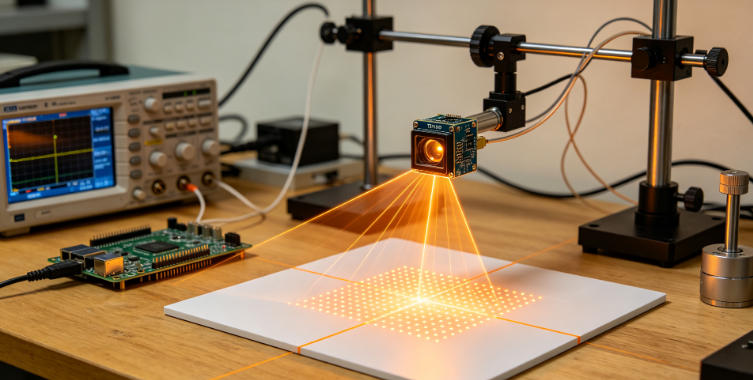
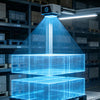
A ToF 3D sensor uses the Time of Flight principle to calculate distance by measuring how long infrared light takes to travel from the sensor to an object and return. By collecting depth information from multiple points or pixels, the sensor can create a detailed understanding of the surrounding environment.
Unlike traditional vision systems that only answer “what is this object?”, a 3D ToF sensor can also answer:
- Where is the object located?
- How far away is the object?
- What is the shape and size of the object?
- Is there an obstacle in the robot’s path?
This ability makes ToF technology widely used in AGV navigation, AMR robots, industrial robots, drones, warehouse automation, smart factories, and AI-based vision systems.
Modern ToF sensors are available in different forms, including single-zone distance sensors, multi-zone depth sensors, and full 3D ToF cameras. These solutions allow machines to obtain real-time spatial information for safer and more intelligent operation.
What Is a ToF 3D Sensor and How Does It Work?
A ToF 3D sensor is a depth sensing device that uses light travel time to measure the distance between the sensor and surrounding objects.
The working principle of a Time of Flight sensor is based on the speed of light. The sensor emits infrared light toward a target, and when the light reflects back, the system calculates the travel time difference between transmission and reception.
The basic formula is:
Distance = (Speed of Light × Flight Time) ÷ 2
The reason for dividing by two is that the light travels a complete round trip, moving from the sensor to the object and then returning to the receiver.
A typical 3D ToF sensor system includes:
- Infrared light emitter
- Optical lens
- Light receiver
- Timing measurement circuit
- Signal processor
- Calibration algorithms
During operation, the sensor continuously captures reflected light signals and converts them into distance information. When thousands of sensing points work together, the system can generate a Depth Map or Point Cloud representing the three-dimensional structure of the environment.
Compared with conventional cameras, ToF 3D sensing technology provides direct depth measurement instead of estimating distance through image processing. This makes it especially valuable for applications that require fast and reliable spatial perception.

How Does a 3D ToF Camera Improve Robot Vision?
For robots, vision is not only about recognizing objects. A robot must also understand the object's location and distance before it can interact with the environment.
A 3D ToF Camera provides real-time depth information that helps robots perform tasks such as:
- Obstacle detection
- Object positioning
- Navigation
- Robotic picking
- Collision avoidance
- 3D mapping
- Workspace monitoring
For example, when an autonomous mobile robot moves through a warehouse, an RGB camera may detect shelves, workers, and packages visually. However, a ToF camera for robotics can additionally measure the exact distance between the robot and these objects.
This allows the robot control system to make faster decisions.
A time of flight camera can help robots determine:
- Whether an obstacle is nearby
- Whether a path is available
- How far a target object is located
- Where the robot should move next
Because of these advantages, ToF sensors for robotics are increasingly used in autonomous navigation systems.
How Does ToF 3D Sensing Support SLAM and Autonomous Navigation?
SLAM (Simultaneous Localization and Mapping) is a key technology for autonomous robots. It allows robots to create maps of unknown environments while determining their own position.
For successful SLAM operation, robots require accurate spatial information.
Traditional RGB-based SLAM systems may struggle in environments with:
- Poor lighting
- Repetitive textures
- Low-feature surfaces
- Changing environments
A ToF 3D sensor provides direct depth information, making it a valuable input source for robot perception.
A typical workflow is:
ToF Sensor → Depth Data → Point Cloud → Environment Understanding → Localization → Mapping → SLAM
When combined with other sensors such as IMU, RGB cameras, or LiDAR, ToF depth cameras can improve the reliability of autonomous navigation systems.
For example, an AMR robot with a ToF camera can use depth information to detect obstacles, understand aisle conditions, and navigate safely through dynamic warehouse environments.
What Are Industrial ToF 3D Image Sensors Used For?
With the development of Industry 4.0, manufacturers are increasingly adopting intelligent sensing technologies to improve automation efficiency and production accuracy. Among these technologies, industrial ToF 3D image sensors are becoming an important component of modern machine vision systems.
Unlike traditional sensors that only provide simple distance values, a 3D ToF sensor can capture spatial information about objects, allowing industrial equipment to understand the position, shape, and movement of targets.
In manufacturing environments, ToF 3D sensing can be used for:
- Object positioning
- Component alignment
- Quality inspection
- Distance measurement
- Height detection
- Robot guidance
- Equipment monitoring
For example, on an automated production line, a robotic system may need to determine whether a component is correctly positioned before assembly. A traditional camera can recognize the appearance of the component, while a ToF camera can measure its exact height, position, and distance from the robot.
This makes industrial ToF sensors highly valuable for applications requiring fast and reliable 3D perception.
Common industrial applications include:
Robotic Picking and Assembly
Modern robotic arms require accurate information before performing tasks. A ToF camera for robotics can provide depth data that helps robots locate objects, calculate grasping positions, and adjust movements automatically.
In applications such as bin picking, robots often face randomly placed objects with different orientations. By using a 3D depth camera, the robot can understand the spatial relationship between objects and select the correct target.
Automated Inspection
In smart factories, inspection systems need to identify whether products meet quality requirements.
A 3D ToF camera can measure:
- Product dimensions
- Surface height differences
- Object positions
- Assembly accuracy
Compared with traditional 2D inspection, ToF-based machine vision can detect differences in three-dimensional structure, making it suitable for more complex inspection tasks.
Liquid and Material Level Detection
Because Time of Flight sensors measure distance directly, they can also be used for non-contact level measurement.
Industrial systems can use ToF technology to monitor:
- Liquid levels
- Material height
- Container filling status
- Storage conditions
This provides a safer and more automated alternative to manual measurement methods.
How Is a ToF Camera Used in Logistics Automation?
The growth of e-commerce and smart warehouses has increased demand for intelligent logistics systems. Today, AGV and AMR robots are widely used for transportation, sorting, and warehouse management.
However, autonomous robots need accurate perception to operate safely around shelves, workers, and other machines.
A ToF camera for AGV and AMR applications can provide important depth information for:
- Obstacle detection
- Collision avoidance
- Shelf recognition
- Pallet positioning
- Robot docking
- Path planning
- Warehouse navigation
For example, when an AMR robot approaches a pallet, a traditional camera can identify the pallet visually, but a 3D ToF camera can also determine the exact distance and position of the pallet.
This allows the robot to perform accurate docking and handling operations.
Compared with relying only on image recognition algorithms, ToF depth sensing technology provides direct distance measurement, reducing processing complexity and improving response speed.
In fast-moving logistics environments, real-time perception is essential. A reliable time of flight camera sensor can help robots react quickly when unexpected obstacles appear.
How Does a Time of Flight Camera Sensor Improve Industrial 3D Vision?
Modern industrial 3D vision systems require more than image recognition. Machines need accurate spatial data to understand objects and make decisions.
A time of flight camera sensor improves industrial vision by adding depth information to traditional image data.
For example, a manufacturing system can use ToF data to determine:
- Whether a component is correctly installed
- Whether an object is in the correct position
- Whether a product has the correct height
- Whether a robot can safely approach a target
The combination of ToF technology and AI vision further improves automation capabilities.
AI algorithms can analyze depth information to perform:
- Object classification
- Defect detection
- Human detection
- Gesture recognition
- Scene understanding
This combination creates more intelligent AI-powered machine vision systems that can adapt to complex industrial environments.
What Is the Difference Between a ToF Camera and Conventional Vision?
The main difference between a camera ToF system and a traditional RGB camera is the ability to directly measure depth.
A conventional camera mainly captures:
- Color
- Brightness
- Texture
- Shape
A ToF camera captures these visual features while also providing:
- Distance information
- Depth maps
- 3D coordinates
- Spatial relationships
A traditional camera can answer:
“What does this object look like?”
A 3D ToF sensor can answer:
“Where is this object located in three-dimensional space?”
This difference is extremely important for robotics and automation.
For example, a robot arm working in a factory needs to know not only which object it should pick, but also the object's exact location and distance. Without depth information, the robot may require additional sensors or complex algorithms.
With a ToF depth camera, the robot can obtain this information directly.
ToF vs LiDAR: Which Technology Is Better for 3D Sensing?
The comparison of ToF vs LiDAR is common when selecting a sensing solution for robotics and automation.
Both technologies use the Time-of-Flight principle, but their designs and application focuses are different.
A LiDAR system usually uses laser pulses to measure distance and create large-scale environmental maps. It is commonly used in:
- Autonomous vehicles
- Outdoor navigation
- Large-area mapping
- Long-range detection
A ToF camera, however, is usually designed for shorter-range 3D perception with a wider sensing area.
It is commonly used in:
- Robot vision
- Industrial automation
- Human detection
- Object recognition
- Smart devices
The comparison can be summarized as:
LiDAR → Long-range environmental perception
ToF Camera → Close-range 3D depth perception
In many advanced systems, these technologies work together rather than replacing each other.
For example:
- A mobile robot may use LiDAR for global navigation.
- A robotic arm may use a ToF camera for precise object positioning.
- An autonomous system may combine LiDAR, ToF, RGB cameras, and AI algorithms for complete environmental understanding.
This approach is known as sensor fusion, which improves the reliability of intelligent machines.
Why Is a ToF Sensor Suitable for Industrial Automation?
Industrial automation requires sensors that are:
- Compact
- Fast
- Accurate
- Low power
- Easy to integrate
- Reliable in different environments
A modern ToF sensor meets many of these requirements because it can provide real-time distance information without physical contact.
Compared with traditional measurement methods, ToF technology offers several advantages:
Non-Contact Measurement
A time of flight sensor can measure distance without touching the object, making it suitable for moving products and automated systems.
Fast Response
Robots and machines often need immediate feedback. ToF sensors can provide depth information quickly for real-time control.
Compact Integration
Many ToF solutions are designed for embedded applications, allowing integration into:
- Robots
- Drones
- Smart devices
- Industrial equipment
Strong 3D Perception
Unlike simple distance sensors, 3D ToF cameras provide spatial information that can support advanced vision applications.
These advantages make ToF technology an important sensing solution for next-generation automation systems.

How Do You Choose the Right Time of Flight Sensor?
Selecting the correct Time of Flight sensor depends on the specific application requirements.
Important factors include:
Measurement Range
Different applications require different sensing distances.
For example:
- Smart home devices may require short-range detection.
- Warehouse robots may need longer-range obstacle detection.
- Outdoor systems may require extended measurement capability.
Resolution and Depth Accuracy
A 3D ToF camera used for object recognition may require higher resolution, while simple distance detection may only need basic measurement capability.
Field of View
The field of view determines how much of the environment the sensor can capture.
A wider field of view is useful for:
- Robot navigation
- Human detection
- Safety monitoring
Frame Rate
High-speed applications such as robotics require fast data updates to support real-time movement.
Environmental Performance
Engineers should consider:
- Ambient light resistance
- Temperature range
- Target reflectivity
- Outdoor conditions
Software Support
A complete ToF sensor solution should also include:
- SDK support
- Development tools
- Data processing libraries
- Compatibility with robotics platforms such as ROS
Choosing the right sensor requires balancing performance, cost, integration difficulty, and application needs.
Where Is AI + ToF Technology Heading in the Future?
As artificial intelligence, robotics, and automation continue to develop, ToF technology is evolving from a simple distance measurement method into a more advanced 3D perception solution. Future AI-powered ToF sensors will combine depth sensing, machine learning, edge computing, and sensor fusion technologies to help machines better understand and interact with their environments.
Traditional ToF sensors mainly provide distance information, but the integration of AI enables systems to extract more meaningful information from Depth Maps and Point Cloud data.
For example, an AI-enhanced 3D ToF camera can analyze depth information to identify:
- Different objects
- Human activities
- Movement patterns
- Environmental changes
- Potential safety risks
This allows robots and intelligent devices to move beyond simple detection and achieve advanced scene understanding.
In industrial environments, the combination of AI vision and ToF sensors can improve automation efficiency by enabling machines to make faster and smarter decisions.
Future AI 3D vision systems based on ToF technology may support applications such as:
- Autonomous robot navigation
- Intelligent factory automation
- Real-time object tracking
- Human-robot collaboration
- Automated quality inspection
- Smart warehouse management
For example, a future AMR robot with a ToF camera may not only detect obstacles but also understand whether an object is a person, a package, or another machine. This deeper level of perception will improve safety and operational efficiency.
How Will ToF Sensors Improve Future Robotics?
Robotics is one of the most important application areas for ToF 3D sensors. As robots become more autonomous, they require accurate and reliable perception systems.
A robot needs to understand:
- Where it is located
- What objects are around it
- How far objects are away
- How the environment changes over time
A 3D ToF camera for robotics provides the depth information required for these tasks.
In the future, ToF technology will continue to support:
Autonomous Mobile Robots (AMR)
AMR robots operating in warehouses, factories, and public environments need real-time perception to navigate safely.
By combining ToF depth cameras, LiDAR, AI algorithms, and navigation software, robots can achieve:
- More accurate obstacle avoidance
- Better path planning
- Improved localization
- Safer human interaction
Industrial Robotic Arms
Industrial robots are becoming more flexible and intelligent.
A ToF camera for robotic arms can help robots perform complex tasks such as:
- Bin picking
- Component assembly
- Object sorting
- Precision positioning
Depth information allows robots to handle objects with different shapes, sizes, and positions more effectively.
Collaborative Robots
Collaborative robots, or cobots, are designed to work together with humans.
In these environments, safety is critical. A ToF sensor for robot safety can detect human movement and surrounding obstacles, helping robots adjust their behavior in real time.
How Does ToF Technology Support Smart Manufacturing?
The future of manufacturing is moving toward greater automation, flexibility, and intelligence. Smart manufacturing systems require accurate data from sensors to optimize production processes.
A ToF 3D sensor can provide valuable spatial information for:
- Automated inspection
- Production monitoring
- Equipment positioning
- Material handling
- Robot guidance
When combined with AI algorithms, industrial ToF sensors can help factories achieve:
- Higher production efficiency
- Reduced manual inspection
- Improved product quality
- More flexible automation
For example, in an intelligent assembly line, a 3D vision system with ToF technology can identify whether components are correctly installed and automatically notify the control system if an error occurs.
This makes ToF an important building block for future Industry 4.0 applications.
Why Will 3D ToF Sensors Become More Important?
The demand for intelligent machines is increasing across many industries. Whether in robotics, logistics, healthcare, consumer electronics, or smart homes, devices need better ways to understand the physical world.
A traditional camera provides visual information, but 3D depth sensing technology provides spatial understanding.
This difference makes ToF sensors valuable for applications where distance and position are critical.
The main advantages of modern ToF 3D sensing technology include:
- Real-time depth measurement
- Compact sensor design
- Low power consumption
- Fast response
- Easy system integration
- Support for AI processing
As sensor hardware improves, future ToF camera sensors will likely achieve higher resolution, better accuracy, longer range, and stronger performance in challenging environments.
Conclusion: Why Is ToF Sensor Technology Important for Future Intelligent Systems?
From robot navigation and industrial automation to smart devices and AI vision systems, ToF Sensor technology is becoming a key technology for understanding three-dimensional environments.
By using the Time of Flight principle, a ToF 3D sensor can measure distance accurately and provide depth information that allows machines to perceive objects and spaces more effectively.
Unlike traditional cameras, 3D ToF cameras provide direct spatial information through Depth Maps and Point Clouds, making them highly suitable for applications requiring real-time 3D perception.
Today, ToF sensors for robotics, industrial ToF cameras, and AI-powered 3D vision systems are helping transform factories, warehouses, and autonomous machines.
In the future, the integration of AI, ToF technology, LiDAR, and sensor fusion will further improve machine perception and automation capabilities.
Whether used in AGV and AMR navigation, robotic arms, smart manufacturing, autonomous devices, or consumer electronics, Time of Flight technology will continue to provide the accurate depth information needed for intelligent systems.
For engineers and developers searching for what is a ToF sensor, how does a ToF sensor work, or how ToF technology improves robot vision, the core value of this technology is clear: ToF enables machines not only to see objects, but also to understand distance, space, and the three-dimensional world around them.



Please upload banner from store admin blog pages
Please select collection from store admin blog pages