
ToF 3D Vision and ACR Robots: Transforming Warehouse Automation
hy Are ToF 3D Vision and ACR Robots Becoming Essential for Smart Warehouses?
Accelerating the Evolution of Smart Warehousing and Intelligent Logistics
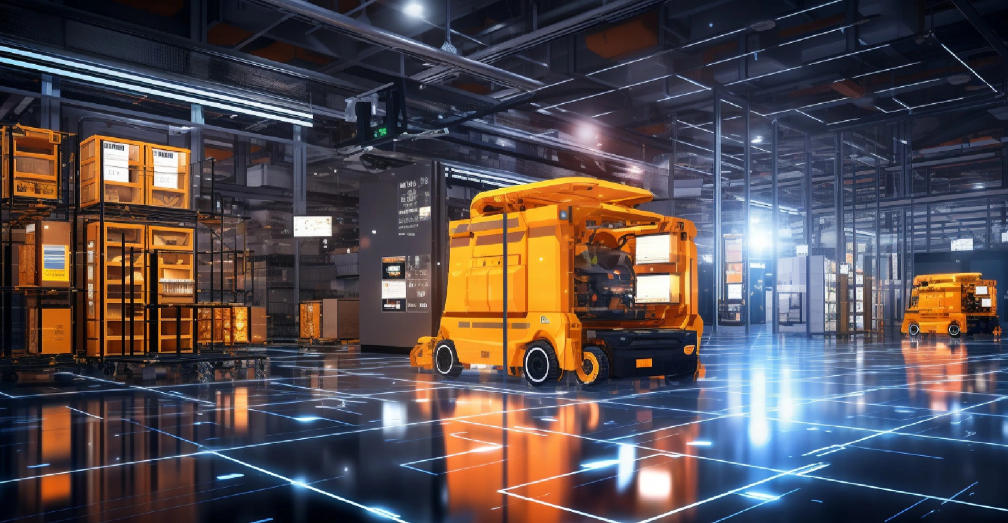
As global warehousing and logistics rapidly move toward automation, digitalization, and intelligence, Autonomous Case-handling Robots (ACRs) are becoming a foundational technology for high-density storage systems and intelligent sorting solutions. Particularly in China, ACR deployment is not only growing at an unprecedented rate but is also undergoing a qualitative transformation—from rule-based automation to high-precision, adaptive, and fully autonomous warehouse operations—largely driven by the adoption of TOF (Time-of-Flight) 3D vision technology.
This convergence of ACR robots, ToF 3D vision, AI, and intelligent scheduling systems is redefining how modern warehouses perceive space, recognize cases, and execute logistics tasks with speed and accuracy.
Rapid Expansion and Global Leadership of China’s ACR Market
China has emerged as one of the fastest-growing and most technologically advanced markets for ACR robots and smart warehouse automation.
According to data from GGII, ACR shipments in China increased from just 100 units in 2017 to 3,454 units in 2022, achieving a compound annual growth rate (CAGR) of over 100%. Supported by a mature industrial supply chain and strong policy incentives, China is rapidly positioning itself as a global innovation center for warehouse robotics and intelligent logistics systems.
-
2021: Statistics from the China Mobile Robot (AGV/AMR) Industry Alliance show that approximately 2,800 ACR units were deployed, representing a 245.7% year-on-year increase, with total sales revenue reaching RMB 810 million (+376.5% YoY).
-
2023: ACR shipments are projected to exceed 6,000 units, accounting for 6.68% of total industrial mobile robot sales, highlighting strong market momentum.
-
2024 and beyond: Annual shipments are expected to surpass 10,000 units, and by 2030, China is forecast to represent over 35% of the global ACR market, firmly establishing worldwide leadership.
What Is Time-of-Flight (ToF) 3D Vision?
Time-of-Flight (ToF) is an active depth-sensing technology used to measure distance and acquire three-dimensional spatial information. By emitting modulated near-infrared light and measuring the time required for the light to travel to an object and return, ToF systems calculate precise distance values based on the speed of light.
ToF-based systems directly generate depth maps and 3D point cloud data, enabling accurate perception of an object’s position, height, volume, and spatial relationship. Unlike passive vision technologies, ToF does not depend on surface texture or ambient lighting conditions, allowing stable performance in strong light, low light, and complex warehouse environments.
Thanks to its low latency, high real-time performance, and simplified processing pipeline, ToF 3D vision has become a key sensing technology for markerless robot navigation, smart warehousing, autonomous vehicles, industrial automation, and 3D machine vision.

ToF 3D Vision: The Core Enabler of High-Performance ACR Operations
Modern smart warehouses are characterized by high storage density, diverse carton sizes, mixed SKUs, and multi-layer stacking. In such environments, traditional identification and perception methods—including barcode scanning, QR codes, and 2D vision—are increasingly inadequate.
Key Limitations of Traditional Approaches
-
Sensitivity to lighting conditions
Recognition accuracy degrades under glare, shadows, or uneven illumination, often requiring additional lighting infrastructure. -
Lack of true 3D perception
2D systems cannot accurately measure carton height, stacking layers, or real occupied volume, limiting storage optimization. -
Strict placement constraints
Poor tolerance for carton rotation, tilt, occlusion, or mixed stacking patterns. -
Limited automation intelligence
Most systems follow a simple 'recognize and execute' logic, lacking spatial reasoning and adaptive error correction.
Advantages of ToF 3D Vision for ACR Robots
ToF 3D vision technology addresses these challenges by providing real-time, true-scale depth information, enabling spatial perception comparable to human stereoscopic vision. When integrated into ACR systems, ToF delivers significant operational benefits:
Accurate Case Recognition and Localization
Markerless 3D perception allows ACRs to identify cartons of varying sizes, materials, and orientations without relying on barcodes or labels, achieving centimeter-level positioning accuracy.
Dynamic Inventory and Slotting Optimization
ToF continuously monitors storage occupancy, stacking height, and carton orientation, synchronizing data with Warehouse Management Systems (WMS) to enable intelligent scheduling and high-density storage.
Automated Storage, Retrieval, and Handling
Using dense point cloud data, ACRs precisely calculate carton dimensions and tilt angles, automatically correct placement deviations, ensure stable multi-layer stacking, and reduce handling errors.
Support for Multi-SKU and Mixed Packaging
In e-commerce and retail logistics environments with thousands of SKUs, ToF enables fast and reliable recognition across diverse packaging formats, supporting efficient inbound and outbound workflows.
Stable 24/7 Operation
Robust performance under low light, strong light, and partial occlusion ensures uninterrupted operation in unmanned or nighttime warehouse scenarios.
By leveraging ToF 3D vision, ACR robots transition warehouse operations from two-dimensional processing to true three-dimensional spatial intelligence, significantly improving throughput, safety, and overall logistics efficiency.

Typical Application Scenarios for ToF-Enabled ACR Systems
Smart Automated Warehouses
In high-bay automated warehouses, ACRs equipped with ToF 3D vision enable dense vertical storage, real-time inventory monitoring, and dynamic slotting optimization. Intelligent path planning minimizes conflicts and waiting time, ensuring safe and efficient operations even in complex layouts.
E-commerce and Retail Logistics
Facing high SKU diversity and variable order volumes, ToF-powered ACRs deliver fast recognition, precise positioning, and dynamic sorting, shortening fulfillment cycles and reducing manual intervention during peak seasons.
Manufacturing Intralogistics
In industries such as electronics, pharmaceuticals, and automotive manufacturing, ACRs support flexible material feeding and automated replenishment. ToF perception ensures accurate handling of diverse materials while maintaining production line stability.
Intelligent Logistics Centers
Large-scale logistics hubs benefit from ToF-enabled multi-robot coordination, real-time obstacle detection, and adaptive route planning, enabling 24/7 unmanned operation with high throughput and reliability.

Industry Leaders and Technology Trends in China’s ACR Ecosystem
China’s ACR ecosystem includes more than ten active players. Hai Robotics stands out as a global leader, focusing exclusively on ACR development and holding a dominant market share. Other manufacturers typically integrate ACRs as part of broader robotic portfolios.
Key technology trends shaping the future include:
-
Deep integration of ToF + AI + SLAM for autonomous localization and decision-making
-
Multi-sensor fusion combining ToF, LiDAR, and RGB vision
-
Vertical Goods-to-Person systems to maximize storage density
-
High-precision 3D positioning and intelligent error correction
-
Flexible mechanical designs for diverse carton specifications
-
Large-scale fleet management and multi-robot collaboration
Conclusion
China’s ACR market is advancing at remarkable speed, with ToF 3D vision emerging as a core driver of smart warehouse automation. By delivering high-precision, real-time, and robust 3D spatial perception, ToF enables ACR robots to achieve accurate case recognition, intelligent handling, and scalable automation.
As technology matures and costs continue to decline, ACR + ToF 3D Vision + AI + SLAM will become a global standard for intelligent warehouse systems—supporting efficient, flexible, and future-ready logistics solutions across retail, manufacturing, and distribution industries.
Robosense 32-line 3D LiDAR sensor RS-Helios-5515 unmanned ranging navigation obstacle avoidance V2R RS-Helios-1615 Laser radar

After-sales Support:
Our professional technical team specializing in 3D camera ranging is ready to assist you at any time. Whether you encounter any issues with your TOF camera after purchase or need clarification on TOF technology, feel free to contact us anytime. We are committed to providing high-quality technical after-sales service and user experience, ensuring your peace of mind in both shopping and using our products.





Please upload banner from store admin blog pages