
Camera Field of View Explained: FOV vs Angle of View Guide
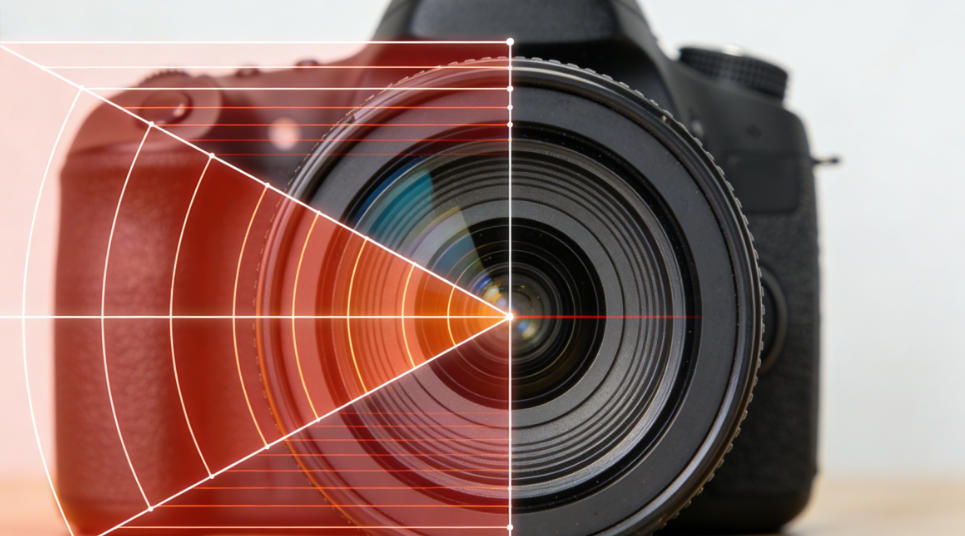
What Is Camera Field of View (FOV) and How Do You Choose the Right Angle of View?
In modern imaging systems such as ToF cameras, depth cameras, RGBD cameras, and machine vision systems, understanding camera field of view (FOV) is essential. Whether you're working on robotics, 3D vision, industrial automation, or surveillance systems, choosing the right camera angle of view directly impacts performance and accuracy.
This comprehensive guide explains everything about field of view in cameras, including formulas, types, applications, and optimization tips—helping you select the best configuration for your project.
What Is Field of View (FOV)?
The field of view (FOV) refers to the total angular area that a camera can capture. In simple terms, it describes how much of the scene is visible through the lens at any given moment.
It is also commonly called the angle of view, and it determines how wide or narrow your camera perspective will be.
- A wide field of view camera captures more area but with less detail
- A narrow field of view camera captures less area but with higher precision
This makes FOV a critical factor in applications like:
- 3D people counting systems
- autonomous mobile robots (AMR navigation)
- smart surveillance cameras
- industrial inspection and measurement

Why Camera Field of View Matters
The importance of camera FOV goes beyond just visibility. It directly affects:
- Coverage area
- measurement accuracy
- pixel density
- depth sensing performance
For example, in ToF depth cameras, a larger field of view allows broader environmental perception, but too wide an FOV may reduce resolution and accuracy.
High-search SEO keywords integrated:
- best field of view for security camera
- wide angle vs narrow angle lens
- camera lens field of view comparison
- how to choose camera focal length for FOV
FOV Calculation Formula (Camera Field of View Equation)
To calculate the camera field of view, the standard formula is:
Where:
- sensor width = size of the camera sensor
- f (focal length) = lens focal length
Key insights:
- Shorter focal length → wider FOV (wide-angle lens)
- Longer focal length → narrower FOV (telephoto lens)
Understanding the relationship between focal length vs field of view is essential for camera calibration, computer vision, and 3D depth mapping systems.
Types of Field of View in Cameras
1. Horizontal Field of View (HFOV)
Defines how much the camera captures from left to right.
Important for:
- robot navigation
- warehouse automation
- traffic monitoring systems
2. Vertical Field of View (VFOV)
Measures top-to-bottom coverage.
Used in:
- height detection
- pallet stacking systems
- facial recognition
3. Diagonal Field of View (DFOV)
Represents the widest measurable angle across the sensor.
Common in camera specifications and lens datasheets.
Field of View vs Angle of View vs Depth of Field
Many users confuse these three terms. Here’s the difference:
- Field of View (FOV): Angular coverage of the camera
- Angle of View (AOV): Another term for FOV (often used interchangeably)
- Depth of Field (DoF): Distance range where objects remain in focus
In ToF cameras and depth sensing systems:
- FOV defines what area is captured
- Depth of field defines how far objects remain sharp

What Affects Camera Field of View?
Several factors determine the camera lens field of view:
1. Focal Length
The most important factor:
- Short focal length → wide-angle view
- Long focal length → zoomed-in view
2. Sensor Size
A larger sensor captures more of the scene, increasing FOV.
3. Lens Design
Different lenses (fisheye, wide-angle, telephoto) drastically change FOV.
4. Camera Position and Distance
Although FOV angle stays constant, coverage area increases with distance.
Field of View in ToF Cameras and 3D Vision Systems
In Time-of-Flight (ToF) cameras, FOV plays a critical role in depth sensing and 3D perception.
ToF cameras measure distance by calculating how long light takes to travel to an object and back, generating real-time depth maps.
Why FOV matters in ToF systems:
- Determines 3D scanning coverage
- Impacts point cloud density
- Affects object detection accuracy
Common applications:
- Autonomous robots and AGV navigation
- gesture recognition systems
- smart retail people counting
- industrial automation vision systems
Practical Applications of Camera FOV
1. Robotics and Automation
A wide FOV helps robots detect obstacles and navigate safely.
2. Security and Surveillance Cameras
Choosing the best FOV ensures optimal coverage with fewer cameras.
3. 3D Imaging and Depth Sensing
In 3D cameras and ToF sensors, FOV determines how much spatial data can be captured.
4. AR/VR and Smart Devices
Wide-angle lenses improve immersion and environmental awareness.
How to Choose the Right Field of View
When selecting a camera, consider:
✔ Use Case
- Surveillance → wide FOV
- Inspection → narrow FOV
✔ Distance to Object
- Close range → wide angle
- Long distance → narrow angle
✔ Resolution Requirements
Higher precision tasks require smaller FOV with higher pixel density.
✔ Environment
Indoor vs outdoor lighting and obstacles affect performance.
Final Thoughts
Understanding camera field of view (FOV) is essential for designing efficient imaging systems. From focal length calculations to ToF depth sensing applications, FOV directly impacts how accurately a camera perceives the world.
By optimizing angle of view, sensor size, and lens selection, you can significantly improve performance in machine vision, robotics, surveillance, and 3D imaging systems.
Vzense NYX Series ToF Sensor -NYX650-NYX660

After-sales Service: Our professional technical support team specializes in TOF camera technology and is always ready to assist you. If you encounter any issues during the usage of your product after purchase or have any questions about TOF technology, feel free to contact us at any time. We are committed to providing high-quality after-sales service to ensure a smooth and worry-free user experience, allowing you to feel confident and satisfied both with your purchase and during product use.





Please upload banner from store admin blog pages