
Fourier Intelligence GR-3 Humanoid Robot: The Future of Embodied AI
How Is Fourier Intelligence GR-3 Humanoid Robot Changing the Future of Embodied AI?
Introduction: The Rise of Embodied AI Robots and Intelligent Humanoid Machines
With the rapid evolution of artificial intelligence (AI), robotics technology, and smart automation, the global robotics industry is entering a new era driven by embodied intelligence. Unlike traditional robots that only execute pre-programmed tasks, Embodied AI Robots are designed to perceive the environment, understand human instructions, make intelligent decisions, and perform complex physical actions in the real world.
In 2026, humanoid robots powered by AI have become one of the most important technology trends, attracting global attention from researchers, technology companies, and industrial manufacturers. These advanced robots combine large AI models, computer vision, robotic control systems, machine learning algorithms, and intelligent hardware to create machines that can interact naturally with humans.
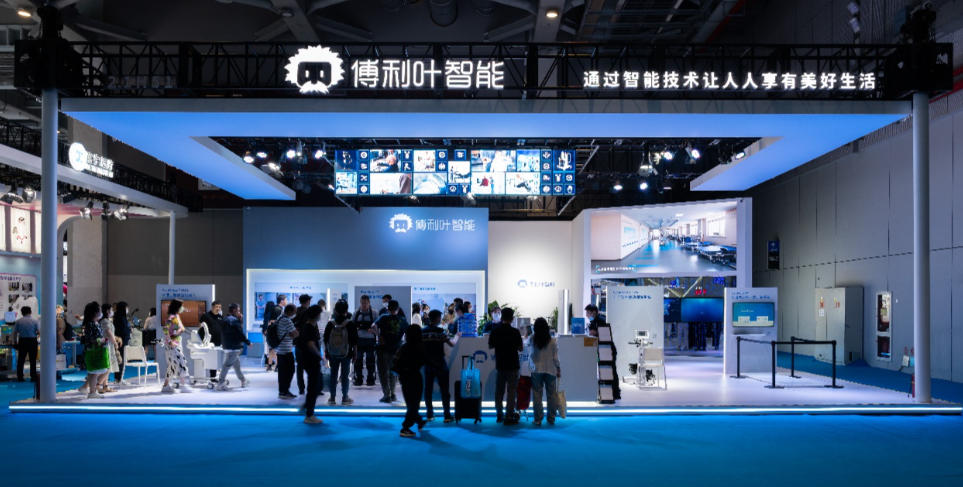
At the 2026 World Artificial Intelligence Conference (WAIC 2026), Fourier Intelligence showcased its latest achievements in humanoid robots, rehabilitation robots, intelligent service robots, and multi-robot collaboration systems. Among these innovations, the Fourier Intelligence GR-3 Humanoid Robot became one of the most discussed platforms, representing the company’s vision for the future of general-purpose AI robots.
By integrating AI foundation models, robot vision, autonomous motion planning, and advanced humanoid robot control technology, Fourier Intelligence is accelerating the transformation of robots from industrial automation tools into intelligent assistants capable of working alongside humans.
What Is Fourier Intelligence? Exploring the Future of Intelligent Robotics
Fourier Intelligence is a robotics technology company focused on developing AI-powered robots, humanoid robots, rehabilitation robotics solutions, and embodied intelligence platforms. The company aims to bridge the gap between artificial intelligence and physical interaction by creating robots that can understand, learn, and adapt to real-world environments.
As artificial intelligence continues to advance, the future of robotics is moving beyond traditional automation. Conventional industrial robots typically operate in controlled environments and perform repetitive movements based on fixed programming. However, next-generation general-purpose humanoid robots are designed to handle dynamic situations, interact with people, and complete multiple types of tasks.
Fourier Intelligence focuses on several key areas, including:
- Humanoid robot development
- AI robot assistants
- Rehabilitation robot technology
- Robot motion control systems
- Human-robot interaction technology
- Embodied AI research
- Intelligent robotic platforms
By combining technologies such as AI large language models (LLMs), computer vision, reinforcement learning, natural language processing, and robotic perception, Fourier Intelligence is developing robots that can better understand human needs and operate in complex environments.
The company’s goal is not only to build robots that can move, but also to create intelligent machines that can see, think, learn, and act.

What Is an Embodied AI Robot and Why Does It Matter?
An Embodied AI Robot refers to an intelligent machine that combines artificial intelligence with a physical robotic body. Unlike software-based AI systems that only process information digitally, embodied AI allows robots to interact directly with the physical world.
So, what is an embodied AI robot?
An embodied AI robot typically includes several core capabilities:
1. Environmental Perception
Through advanced sensors such as:
- RGB cameras
- Depth cameras
- 3D vision sensors
- LiDAR systems
- Force and motion sensors
robots can recognize objects, understand spaces, track human movement, and analyze environmental changes.
2. Intelligent Decision-Making
Powered by AI foundation models and machine learning algorithms, embodied AI robots can:
- Understand natural language commands
- Analyze situations
- Plan tasks
- Adjust actions based on feedback
This allows robots to move from simple command execution toward autonomous problem-solving.
3. Advanced Motion Control
Humanoid robots require highly precise control systems to achieve:
- Walking balance
- Flexible joint movement
- Object manipulation
- Human-like interaction
Advanced actuators, robotic control algorithms, and dynamic balance systems allow modern humanoid robots to perform increasingly complex movements.
The development of embodied intelligence represents a major step toward the future of robotics, where robots become intelligent partners rather than simple machines.
WAIC 2026: Fourier Intelligence Demonstrates the Future of Embodied Intelligence Robotics
At WAIC 2026, Fourier Intelligence presented multiple innovative robotics solutions under the theme of 'Embodied Intelligence + Robotics Applications.'
The exhibition highlighted several important robotic platforms, including:
- GR-3 Humanoid Robot
- GRW Heavy-Duty Wheeled Dual-Arm Robot
- GR Series 'Cat-Head' Robot Family
- Semantic Model-Driven Multi-Robot Autonomous Closed-Loop Embodied Intelligence System
These technologies demonstrate how artificial intelligence and robotics are merging to create a new generation of intelligent machines.
Compared with traditional robots, Fourier Intelligence’s embodied AI systems focus on improving:
- Autonomous perception
- Intelligent decision-making
- Human-machine communication
- Robotic collaboration
- Real-world task execution
The future of robotics is no longer limited to factories. AI humanoid robots are expected to expand into:
- Smart manufacturing
- Elderly care
- Healthcare assistance
- Commercial services
- Education
- Home assistance
- Dangerous environment operations
Through continuous innovation in AI robotics technology, Fourier Intelligence is helping accelerate the commercialization of intelligent robots.
Fourier Intelligence GR-3 Humanoid Robot: A New Generation of General-Purpose AI Robot
The Fourier Intelligence GR-3 Humanoid Robot is one of the company’s most important platforms for exploring the future of general-purpose humanoid robots.
Unlike traditional industrial robots designed for repetitive tasks, GR-3 focuses on flexible interaction, intelligent decision-making, and autonomous operation.
The GR-3 integrates multiple advanced technologies, including:
- AI semantic understanding models
- Multimodal perception systems
- High-precision motion control
- Autonomous navigation
- Intelligent task planning
- Human-robot interaction technology
These capabilities allow the robot to better understand commands and perform tasks according to different environments.
For example, instead of simply receiving a fixed instruction, a user can communicate with GR-3 through natural language. The robot can analyze the command, understand the surrounding environment, identify objects, create an action plan, and complete the required task.
This represents a significant change from traditional robotics.
Traditional robots:
Receive commands → Execute fixed actions
Embodied AI robots:
Understand needs → Analyze environment → Make decisions → Complete tasks autonomously
This evolution is one of the most important characteristics of modern AI humanoid robots.
How Does GR-3 Humanoid Robot Work With AI Technology?
The intelligence of GR-3 comes from the combination of artificial intelligence algorithms and advanced robotic hardware.
AI Foundation Models and Natural Language Interaction
Large AI models allow humanoid robots to understand human instructions more naturally.
Instead of using complex programming commands, users can communicate with robots through everyday language.
For example:
“Please bring this object to the table.”
The robot can:
- Understand the meaning of the instruction
- Identify the target object
- Locate the destination
- Plan movement
- Execute the task
This creates a more natural human-robot interaction experience.
Robot Vision and Environmental Understanding
Modern humanoid robots rely heavily on AI vision technology.
Through cameras and depth perception systems, GR-3 can analyze:
- Object locations
- Human movements
- Environmental conditions
- Spatial relationships
Robot vision enables intelligent robots to operate in environments that are not completely predictable.
Advanced Motion Control and Humanoid Design
A major challenge for humanoid robots is achieving stable and flexible movement.
GR-3 uses:
- Flexible joint structures
- High-performance actuators
- Motion planning algorithms
- Dynamic balance control
These technologies improve the robot’s ability to move naturally and adapt to different environments.
Future applications of humanoid robots may include smart factories, healthcare support, home assistance, and intelligent service scenarios.
GRW Dual-Arm Robot: Expanding the Possibilities of AI Robot Assistants
Beyond humanoid robots, Fourier Intelligence also introduced the GRW Heavy-Duty Wheeled Dual-Arm Robot, a new generation of intelligent robotic assistants designed for industrial automation, elderly care, and service applications.
Unlike traditional fixed robotic arms used in factories, GRW combines a mobile robotic platform with dual robotic arms, providing greater flexibility, mobility, and task adaptability.
The combination of:
- Autonomous mobile navigation
- Dual-arm manipulation technology
- AI-based perception systems
- Intelligent task planning
- Human-robot collaboration capabilities
allows GRW to perform a wider range of real-world tasks.
As industries move toward smart manufacturing and intelligent automation, mobile dual-arm robots are becoming an important solution for environments that require both movement and precise operation.
GRW Robot Applications in Elderly Care and Industrial Automation
One of the key application areas of GRW is intelligent elderly care robotics.
With the global demand for elderly assistance solutions increasing, AI robots are expected to play a larger role in supporting daily activities and improving quality of life.
GRW can potentially assist with:
- Object transportation
- Daily living support
- Intelligent interaction
- Rehabilitation assistance
- Healthcare-related services
Compared with traditional assistive devices, AI-powered robots provide more flexible support by combining physical assistance with intelligent decision-making.
In industrial environments, GRW can support:
- Material transportation
- Warehouse logistics
- Production line assistance
- Repetitive task execution
- Smart factory operations
By combining mobility, manipulation, and AI intelligence, GRW represents the future direction of industrial AI robots and autonomous robotic assistants.
GR Series 'Cat-Head' Robots: Making Human-Robot Interaction More Natural
In addition to large humanoid robots and industrial robotic systems, Fourier Intelligence also showcased the GR Series “Cat-Head” Robot Family, focusing on more natural and friendly human-robot interaction.
Unlike traditional industrial robots designed primarily for efficiency, these smaller intelligent robots emphasize:
- Emotional interaction
- Voice communication
- AI companionship
- Smart home assistance
- Educational applications
The approachable appearance and interactive design help create a more comfortable relationship between humans and machines.
Future applications of small AI robots may include:
- Home companion robots
- Educational robots
- Smart living assistants
- Commercial reception robots
- Customer service robots
As AI models become more powerful, robots will increasingly understand human emotions, preferences, and communication styles, creating more personalized experiences.

Core Technologies Behind Fourier Intelligence Humanoid Robots
The development of advanced humanoid robots requires the integration of multiple cutting-edge technologies.
Fourier Intelligence robots combine artificial intelligence, robotics engineering, and intelligent hardware to achieve more advanced autonomous capabilities.
1. AI Foundation Models and Robot Intelligence
Large AI models are becoming a key technology behind future robotics.
By integrating AI foundation models, robots can:
- Understand human instructions
- Learn new tasks
- Analyze complex situations
- Generate action plans
- Improve performance through experience
This allows robots to move beyond fixed programming and develop more adaptive intelligence.
The combination of large language models (LLMs) and robotics systems is one of the most important trends shaping the future of AI robots.
2. Robot Vision and 3D Perception Technology
For humanoid robots to operate effectively in real environments, they need advanced perception capabilities.
Fourier Intelligence robots utilize technologies such as:
- RGB cameras
- Depth perception sensors
- 3D vision systems
- AI image recognition algorithms
These technologies allow robots to understand:
- Objects around them
- Human positions
- Environmental changes
- Spatial relationships
Advanced robot vision is essential for applications such as:
- Autonomous navigation
- Object recognition
- Smart manufacturing
- Service robotics
- Human-robot collaboration
3. Motion Control and Robotic Actuator Technology
Humanoid movement is one of the biggest challenges in robotics.
A human-like robot needs to maintain balance, coordinate multiple joints, and perform smooth movements.
Key technologies include:
- High-performance robotic actuators
- Joint control systems
- Dynamic balance algorithms
- Motion planning technology
These systems allow humanoid robots to walk, interact with objects, and adapt to changing environments.
The improvement of motion control technology is helping humanoid robots become more practical for real-world applications.
4. Multi-Robot Collaboration and Autonomous Robotic Systems
At WAIC 2026, Fourier Intelligence also demonstrated a semantic model-driven multi-robot autonomous closed-loop embodied intelligence system.
This technology enables multiple robots to:
- Share information
- Assign tasks automatically
- Understand environments together
- Coordinate operations
Compared with traditional automation systems, multi-robot collaboration provides higher flexibility and efficiency.
Potential applications include:
Smart Warehousing
Multiple robots can cooperate in logistics environments to improve:
- Inventory management
- Goods transportation
- Warehouse efficiency
Smart Manufacturing
In future factories, AI robots may work together with humans to complete complex production tasks.
Commercial Services
Collaborative robots can support:
- Hotels
- Shopping centers
- Offices
- Exhibition spaces
Multi-robot intelligence is expected to become a critical foundation for future autonomous robotics ecosystems.
Expanding Applications of Fourier Intelligence AI Robots
As humanoid robot technology and embodied AI systems continue to mature, the applications of intelligent robots are expanding rapidly.
1. Smart Manufacturing Robots
Manufacturing is one of the earliest fields adopting robotic technology.
Future AI humanoid robots can help with:
- Assembly tasks
- Quality inspection
- Material handling
- Production assistance
Unlike traditional automation equipment, AI-powered robots can adapt to changing production requirements.
2. Elderly Care and Healthcare Assistance Robots
Aging populations worldwide are increasing demand for intelligent care solutions.
AI robots can provide:
- Daily assistance
- Rehabilitation support
- Health monitoring
- Social interaction
Companies developing rehabilitation robots and humanoid assistants are helping create a future where technology supports independent living.
3. Home AI Robot Assistants
The future home may include intelligent robots capable of:
- Household assistance
- Object handling
- Smart home control
- Personal companionship
With advances in AI understanding and robotic mobility, home robots are becoming closer to practical everyday assistants.
4. Commercial Service Robots
Businesses are also exploring AI robots for customer-facing applications.
Possible scenarios include:
- Hotel services
- Retail assistance
- Reception services
- Education support
- Exhibition guidance
Humanoid robots can provide more natural interaction compared with traditional service machines.
The Future of Embodied Intelligence: How AI Robots Will Change the World
The development of embodied AI robots represents a major transformation in the relationship between humans and technology.
Future robots will no longer be limited to performing simple programmed actions. Instead, they will become intelligent systems capable of:
- Understanding environments
- Learning new skills
- Communicating naturally
- Making autonomous decisions
- Collaborating with humans
The combination of:
- Artificial intelligence
- Robotics technology
- Large language models
- Computer vision
- Advanced sensors
- Autonomous control systems
will continue pushing the boundaries of what robots can achieve.
The Fourier Intelligence GR-3 Humanoid Robot, GRW dual-arm robot, and GR Series intelligent robots demonstrate how the next generation of robotics is moving toward a world where AI machines become valuable partners in homes, factories, healthcare environments, and public spaces.
SLAMTEC RPLIDAR S2L 30m TOF LiDAR Sensor for Navigation & Avoidance

Fourier Intelligence and the Future of AI Humanoid Robots
With the rapid growth of artificial intelligence and robotics, humanoid robots powered by AI are becoming one of the most important technology trends of the next decade.
From general-purpose humanoid robots to intelligent service robots and industrial AI assistants, embodied intelligence is changing how humans interact with machines.
Through innovations in:
- Humanoid robot development
- AI perception technology
- Autonomous motion control
- Robot intelligence systems
- Human-robot interaction
Fourier Intelligence is helping accelerate the transition from traditional automation toward a future powered by intelligent robotic systems.
As embodied AI continues to evolve, robots will move beyond laboratories and factories into everyday environments, becoming an essential part of the future of artificial intelligence, automation, and smart living.





Please upload banner from store admin blog pages
Please select collection from store admin blog pages