How Laser Distance Sensors Work: Short & Long Range Measurement Guide

How Laser Distance Sensors Work: Short & Long Range Measurement Guide
How Do Laser Distance Sensors Work? Principles, Types, and Applications


With the development of industrial automation, robot navigation, construction measurement, and smart devices, laser distance sensors have become a key technology for precise measurement and positioning. These sensors can quickly and accurately determine the distance between a target and the sensor without physical contact. This article provides an in-depth explanation of how laser measuring works, including working mechanisms, common types, short- and long-range applications, and essential technical details, helping you fully understand the core knowledge of laser sensors for distance measurement.


1. What Is a Laser Distance Sensor?

A laser distance sensor / laser measuring sensor is a high-tech measurement device that uses the principle of laser beam emission and reflection to accurately measure the distance between a target and the sensor. Compared with traditional mechanical contact sensors or ultrasonic distance meters, laser distance sensors offer non-contact measurement, high precision, and fast response.

The core working principle is to emit a laser beam toward a target, receive the reflected light, and calculate the distance based on the time of flight or phase difference of the light signal. This allows millimeter- or even micrometer-level precision within short or medium to long distances.

Typical application scenarios include:

  • Industrial automation: part positioning, thickness measurement, and assembly line monitoring
  • Robot navigation: path planning and obstacle avoidance for UAVs or AGVs
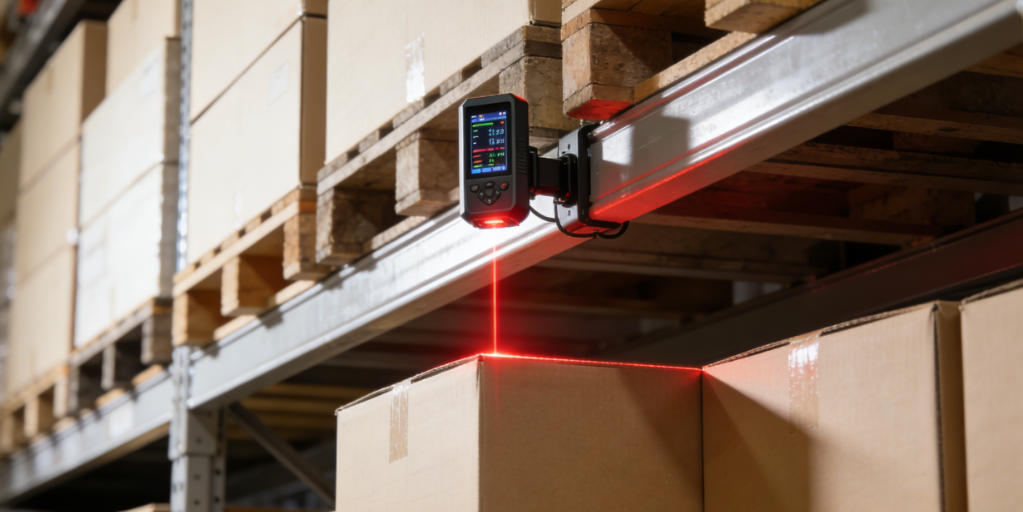
  • Logistics and warehousing: automated sorting, stack height detection, and precise inventory management
  • Construction and terrain measurement: precise measurement of building distances and terrain variations
  • Safety monitoring: hazard detection, intrusion monitoring, and intelligent security
  • Smart vehicles and traffic systems: LiDAR, collision warning, and automated parking

Modern laser sensors can also integrate with laser displacement sensors, laser proximity sensors, and handheld laser measuring devices for multi-functional distance measurement and positioning.

Laser distance sensors are not only precise measuring tools but also core components of automated and intelligent systems, providing fast, reliable, and highly accurate distance measurements in complex environments.

How Do Laser Distance Sensors Work? Principles, Types, and Applications    With the development of industrial automation, robot navigation, construction measurement, and smart devices, laser distance sensors have become a key technology for precise measurement and positioning. These sensors can quickly and accurately determine the distance between a target and the sensor without physical contact. This article provides an in-depth explanation of how laser measuring works, including working mechanisms, common types, short- and long-range applications, and essential technical details, helping you fully understand the core knowledge of laser sensors for distance measurement.    1. What Is a Laser Distance Sensor?  A laser distance sensor / laser measuring sensor is a high-tech measurement device that uses the principle of laser beam emission and reflection to accurately measure the distance between a target and the sensor. Compared with traditional mechanical contact sensors or ultrasonic distance meters, laser distance sensors offer non-contact measurement, high precision, and fast response.  The core working principle is to emit a laser beam toward a target, receive the reflected light, and calculate the distance based on the time of flight or phase difference of the light signal. This allows millimeter- or even micrometer-level precision within short or medium to long distances.  Typical application scenarios include: Industrial automation: part positioning, thickness measurement, and assembly line monitoring Robot navigation: path planning and obstacle avoidance for UAVs or AGVs Logistics and warehousing: automated sorting, stack height detection, and precise inventory management Construction and terrain measurement: precise measurement of building distances and terrain variations Safety monitoring: hazard detection, intrusion monitoring, and intelligent security Smart vehicles and traffic systems: LiDAR, collision warning, and automated parking  Modern laser sensors can also integrate with laser displacement sensors, laser proximity sensors, and handheld laser measuring devices for multi-functional distance measurement and positioning.  Laser distance sensors are not only precise measuring tools but also core components of automated and intelligent systems, providing fast, reliable, and highly accurate distance measurements in complex environments.   2. Working Principles of Laser Distance Sensors  Understanding how laser measuring works focuses on measuring the time it takes for a laser to travel to a target and back or analyzing the light signal characteristics. Laser distance sensors achieve high-precision, fast, non-contact measurement through different working principles, widely used in industrial automation, UAV measurement, robot navigation, and smart vehicles.  1. Time-of-Flight (ToF) Principle  The Time-of-Flight method is the most common laser measurement principle, especially suitable for medium to long-range measurement and dynamic targets:  The sensor emits a short pulse or continuous laser beam; The laser hits the target and reflects back to the sensor; The receiver captures the reflected light and sends the signal to the controller; The controller calculates the precise distance based on the travel time:  Distance = Speed of Light × Round-trip Time / 2  Advantages:  Can measure distances from meters to hundreds of meters or kilometers Fast response, suitable for dynamic measurements Works well on various target materials  Applications: UAV obstacle avoidance, building measurement, long-distance industrial measurement.  2. Phase Shift Measurement Principle  Phase shift measurement improves precision and response speed, especially suitable for short to medium-range laser measurements:  The laser emits a modulated continuous beam; The sensor compares the phase difference between the emitted and reflected light; The distance is calculated accurately from the phase shift.  Features:  High precision, millimeter-level accuracy Fast response, enabling real-time measurement Reduces ambient light interference for stable signals  Applications: High-precision laser displacement sensors, short-range industrial measurements, robotic precision positioning.  3. Triangulation Principle  Triangulation is commonly used for short-range laser distance sensors and scenarios requiring high resolution and precision:  The laser emits a spot onto the target through a lens; The reflected light is projected onto a sensor array via a receiving lens; The reflection point shifts depending on distance; The controller calculates distance using triangulation geometry.  Advantages:  Extremely high accuracy for millimeter-scale short-range measurements Can monitor planar height, thickness, or displacement changes Less affected by target color or material variations  Applications: Laser displacement sensors, automated production line inspection, precision part measurement, short-range robot navigation.  Principle	Measurement Range	Accuracy	Typical Applications Time-of-Flight (ToF)	Medium to long	Centimeter-level	UAV obstacle avoidance, long-range measurement, smart vehicles Phase Shift	Short to medium	Millimeter-level	High-precision industrial measurement, laser displacement sensors Triangulation	Short range	High precision (micrometer-level)	Short-range robot navigation, precision part inspection  These principles allow laser measuring sensors, laser proximity sensors, and laser sensors for distance measurement to meet various requirements, from precise short-range detection to fast long-range scanning.   3. Key Components of a Laser Sensor System  A typical laser distance sensor system consists of:  Laser emitter: generates the beam, usually a laser diode Photodetector: captures the reflected light Signal processor: analyzes travel time or phase difference Output module: provides digital or analog distance data  These components work together to achieve fast, stable, and accurate distance measurements.   4. Main Types of Laser Distance Sensors 1. Short-Range Laser Distance Sensors Range: a few millimeters to several meters Applications: precise positioning, assembly detection Accuracy: micrometer-level 2. Long-Range ToF Laser Rangefinders Range: several meters to hundreds of meters Applications: autonomous driving, UAV obstacle avoidance, monitoring 3. Laser Proximity Sensors Detect whether an object reaches a distance threshold Can function as a short-range measurement sensor 4. Laser Displacement Sensors Use triangulation to provide high-precision position change information Applications: quality inspection, planar height measurement  5. Advantages of Laser Distance Sensors  Compared to traditional measurement methods, laser distance technology offers:  ✔ High accuracy — millimeter or micrometer-level resolution ✔ Non-contact measurement — no physical contact needed ✔ Fast response — real-time detection ✔ Wide applicability — industrial, robotic, logistics, and construction applications   6. Typical Applications  Laser distance sensors (laser distance sensor / laser measuring sensor) are widely used in industrial, transportation, construction, and logistics scenarios due to high precision, non-contact, and fast response.  Industrial Automation Detect part positions, sizes, thicknesses, and assembly on production lines Reduces human error and improves efficiency Can integrate with laser displacement sensors for micrometer-level accuracy Robot Navigation Used in AGVs, service robots, and UAV path planning and obstacle avoidance Real-time data improves navigation accuracy Laser proximity sensors enhance environmental perception in complex spaces Logistics and Warehousing Automated sorting, stack height detection, inventory management Non-contact measurement protects goods and supports high-speed operations Integrates sensors in a laser for real-time monitoring Construction & Terrain Survey Measures building spacing, floor heights, terrain variations Reduces traditional measurement errors Applicable for laser measure how does it work scenarios Safety & Monitoring Hazardous environment monitoring, intrusion detection, automated protection Non-contact avoids human exposure and provides real-time, precise data Works with laser measuring sensors for dynamic monitoring Other High-Precision Scenarios Autonomous vehicle environment scanning Precision instruments or laboratory displacement monitoring UAV distance measurement and terrain mapping  Laser distance sensors can perform short-range precision measurement and medium-to-long-range detection, using laser sensors for distance measurement technology for accurate, non-contact, and fast measurements.   7. Key Considerations for Selecting a Laser Distance Sensor Measurement range — short-range or medium-to-long range Accuracy requirements — high-precision applications prefer phase shift or triangulation methods Environmental conditions — light, reflectivity, and interference can affect stability Output interface — analog, current, serial, or network signals  8. Conclusion  Laser sensors leverage photoelectric principles and advanced processing to achieve fast, accurate, non-contact distance measurement. From short-range measurement to complex navigation tasks, they are essential components in modern intelligent systems. With ongoing advancements, laser distance technology will see broader applications in autonomous driving, smart manufacturing, renewable energy, and more.    RPLIDAR A2 A3 S1 S2  lidar Metal Protective Radar Lidar Cover  SHOP NOW    After-sales Support: Our professional technical team specializing in 3D camera ranging is ready to assist you at any time. Whether you encounter any issues with your TOF camera after purchase or need clarification on TOF technology, feel free to contact us anytime. We are committed to providing high-quality technical after-sales service and user experience, ensuring your peace of mind in both shopping and using our products.

2. Working Principles of Laser Distance Sensors

Understanding how laser measuring works focuses on measuring the time it takes for a laser to travel to a target and back or analyzing the light signal characteristics. Laser distance sensors achieve high-precision, fast, non-contact measurement through different working principles, widely used in industrial automation, UAV measurement, robot navigation, and smart vehicles.

1. Time-of-Flight (ToF) Principle

The Time-of-Flight method is the most common laser measurement principle, especially suitable for medium to long-range measurement and dynamic targets:

  • The sensor emits a short pulse or continuous laser beam;
  • The laser hits the target and reflects back to the sensor;
  • The receiver captures the reflected light and sends the signal to the controller;
  • The controller calculates the precise distance based on the travel time:

Distance = Speed of Light × Round-trip Time / 2

Advantages:

  • Can measure distances from meters to hundreds of meters or kilometers
  • Fast response, suitable for dynamic measurements
  • Works well on various target materials

Applications: UAV obstacle avoidance, building measurement, long-distance industrial measurement.

2. Phase Shift Measurement Principle

Phase shift measurement improves precision and response speed, especially suitable for short to medium-range laser measurements:

  • The laser emits a modulated continuous beam;
  • The sensor compares the phase difference between the emitted and reflected light;
  • The distance is calculated accurately from the phase shift.

Features:

  • High precision, millimeter-level accuracy
  • Fast response, enabling real-time measurement
  • Reduces ambient light interference for stable signals

Applications: High-precision laser displacement sensors, short-range industrial measurements, robotic precision positioning.

3. Triangulation Principle

Triangulation is commonly used for short-range laser distance sensors and scenarios requiring high resolution and precision:

  • The laser emits a spot onto the target through a lens;
  • The reflected light is projected onto a sensor array via a receiving lens;
  • The reflection point shifts depending on distance;
  • The controller calculates distance using triangulation geometry.

Advantages:

  • Extremely high accuracy for millimeter-scale short-range measurements
  • Can monitor planar height, thickness, or displacement changes
  • Less affected by target color or material variations

Applications: Laser displacement sensors, automated production line inspection, precision part measurement, short-range robot navigation.

Principle Measurement Range Accuracy Typical Applications
Time-of-Flight (ToF) Medium to long Centimeter-level UAV obstacle avoidance, long-range measurement, smart vehicles
Phase Shift Short to medium Millimeter-level High-precision industrial measurement, laser displacement sensors
Triangulation Short range High precision (micrometer-level) Short-range robot navigation, precision part inspection

These principles allow laser measuring sensors, laser proximity sensors, and laser sensors for distance measurement to meet various requirements, from precise short-range detection to fast long-range scanning.

3. Key Components of a Laser Sensor System

A typical laser distance sensor system consists of:

  • Laser emitter: generates the beam, usually a laser diode
  • Photodetector: captures the reflected light
  • Signal processor: analyzes travel time or phase difference
  • Output module: provides digital or analog distance data

These components work together to achieve fast, stable, and accurate distance measurements.

4. Main Types of Laser Distance Sensors

1. Short-Range Laser Distance Sensors

  • Range: a few millimeters to several meters
  • Applications: precise positioning, assembly detection
  • Accuracy: micrometer-level

2. Long-Range ToF Laser Rangefinders

  • Range: several meters to hundreds of meters
  • Applications: autonomous driving, UAV obstacle avoidance, monitoring

3. Laser Proximity Sensors

  • Detect whether an object reaches a distance threshold
  • Can function as a short-range measurement sensor

4. Laser Displacement Sensors

  • Use triangulation to provide high-precision position change information
  • Applications: quality inspection, planar height measurement
How Do Laser Distance Sensors Work? Principles, Types, and Applications    With the development of industrial automation, robot navigation, construction measurement, and smart devices, laser distance sensors have become a key technology for precise measurement and positioning. These sensors can quickly and accurately determine the distance between a target and the sensor without physical contact. This article provides an in-depth explanation of how laser measuring works, including working mechanisms, common types, short- and long-range applications, and essential technical details, helping you fully understand the core knowledge of laser sensors for distance measurement.    1. What Is a Laser Distance Sensor?  A laser distance sensor / laser measuring sensor is a high-tech measurement device that uses the principle of laser beam emission and reflection to accurately measure the distance between a target and the sensor. Compared with traditional mechanical contact sensors or ultrasonic distance meters, laser distance sensors offer non-contact measurement, high precision, and fast response.  The core working principle is to emit a laser beam toward a target, receive the reflected light, and calculate the distance based on the time of flight or phase difference of the light signal. This allows millimeter- or even micrometer-level precision within short or medium to long distances.  Typical application scenarios include: Industrial automation: part positioning, thickness measurement, and assembly line monitoring Robot navigation: path planning and obstacle avoidance for UAVs or AGVs Logistics and warehousing: automated sorting, stack height detection, and precise inventory management Construction and terrain measurement: precise measurement of building distances and terrain variations Safety monitoring: hazard detection, intrusion monitoring, and intelligent security Smart vehicles and traffic systems: LiDAR, collision warning, and automated parking  Modern laser sensors can also integrate with laser displacement sensors, laser proximity sensors, and handheld laser measuring devices for multi-functional distance measurement and positioning.  Laser distance sensors are not only precise measuring tools but also core components of automated and intelligent systems, providing fast, reliable, and highly accurate distance measurements in complex environments.   2. Working Principles of Laser Distance Sensors  Understanding how laser measuring works focuses on measuring the time it takes for a laser to travel to a target and back or analyzing the light signal characteristics. Laser distance sensors achieve high-precision, fast, non-contact measurement through different working principles, widely used in industrial automation, UAV measurement, robot navigation, and smart vehicles.  1. Time-of-Flight (ToF) Principle  The Time-of-Flight method is the most common laser measurement principle, especially suitable for medium to long-range measurement and dynamic targets:  The sensor emits a short pulse or continuous laser beam; The laser hits the target and reflects back to the sensor; The receiver captures the reflected light and sends the signal to the controller; The controller calculates the precise distance based on the travel time:  Distance = Speed of Light × Round-trip Time / 2  Advantages:  Can measure distances from meters to hundreds of meters or kilometers Fast response, suitable for dynamic measurements Works well on various target materials  Applications: UAV obstacle avoidance, building measurement, long-distance industrial measurement.  2. Phase Shift Measurement Principle  Phase shift measurement improves precision and response speed, especially suitable for short to medium-range laser measurements:  The laser emits a modulated continuous beam; The sensor compares the phase difference between the emitted and reflected light; The distance is calculated accurately from the phase shift.  Features:  High precision, millimeter-level accuracy Fast response, enabling real-time measurement Reduces ambient light interference for stable signals  Applications: High-precision laser displacement sensors, short-range industrial measurements, robotic precision positioning.  3. Triangulation Principle  Triangulation is commonly used for short-range laser distance sensors and scenarios requiring high resolution and precision:  The laser emits a spot onto the target through a lens; The reflected light is projected onto a sensor array via a receiving lens; The reflection point shifts depending on distance; The controller calculates distance using triangulation geometry.  Advantages:  Extremely high accuracy for millimeter-scale short-range measurements Can monitor planar height, thickness, or displacement changes Less affected by target color or material variations  Applications: Laser displacement sensors, automated production line inspection, precision part measurement, short-range robot navigation.  Principle	Measurement Range	Accuracy	Typical Applications Time-of-Flight (ToF)	Medium to long	Centimeter-level	UAV obstacle avoidance, long-range measurement, smart vehicles Phase Shift	Short to medium	Millimeter-level	High-precision industrial measurement, laser displacement sensors Triangulation	Short range	High precision (micrometer-level)	Short-range robot navigation, precision part inspection  These principles allow laser measuring sensors, laser proximity sensors, and laser sensors for distance measurement to meet various requirements, from precise short-range detection to fast long-range scanning.   3. Key Components of a Laser Sensor System  A typical laser distance sensor system consists of:  Laser emitter: generates the beam, usually a laser diode Photodetector: captures the reflected light Signal processor: analyzes travel time or phase difference Output module: provides digital or analog distance data  These components work together to achieve fast, stable, and accurate distance measurements.   4. Main Types of Laser Distance Sensors 1. Short-Range Laser Distance Sensors Range: a few millimeters to several meters Applications: precise positioning, assembly detection Accuracy: micrometer-level 2. Long-Range ToF Laser Rangefinders Range: several meters to hundreds of meters Applications: autonomous driving, UAV obstacle avoidance, monitoring 3. Laser Proximity Sensors Detect whether an object reaches a distance threshold Can function as a short-range measurement sensor 4. Laser Displacement Sensors Use triangulation to provide high-precision position change information Applications: quality inspection, planar height measurement  5. Advantages of Laser Distance Sensors  Compared to traditional measurement methods, laser distance technology offers:  ✔ High accuracy — millimeter or micrometer-level resolution ✔ Non-contact measurement — no physical contact needed ✔ Fast response — real-time detection ✔ Wide applicability — industrial, robotic, logistics, and construction applications   6. Typical Applications  Laser distance sensors (laser distance sensor / laser measuring sensor) are widely used in industrial, transportation, construction, and logistics scenarios due to high precision, non-contact, and fast response.  Industrial Automation Detect part positions, sizes, thicknesses, and assembly on production lines Reduces human error and improves efficiency Can integrate with laser displacement sensors for micrometer-level accuracy Robot Navigation Used in AGVs, service robots, and UAV path planning and obstacle avoidance Real-time data improves navigation accuracy Laser proximity sensors enhance environmental perception in complex spaces Logistics and Warehousing Automated sorting, stack height detection, inventory management Non-contact measurement protects goods and supports high-speed operations Integrates sensors in a laser for real-time monitoring Construction & Terrain Survey Measures building spacing, floor heights, terrain variations Reduces traditional measurement errors Applicable for laser measure how does it work scenarios Safety & Monitoring Hazardous environment monitoring, intrusion detection, automated protection Non-contact avoids human exposure and provides real-time, precise data Works with laser measuring sensors for dynamic monitoring Other High-Precision Scenarios Autonomous vehicle environment scanning Precision instruments or laboratory displacement monitoring UAV distance measurement and terrain mapping  Laser distance sensors can perform short-range precision measurement and medium-to-long-range detection, using laser sensors for distance measurement technology for accurate, non-contact, and fast measurements.   7. Key Considerations for Selecting a Laser Distance Sensor Measurement range — short-range or medium-to-long range Accuracy requirements — high-precision applications prefer phase shift or triangulation methods Environmental conditions — light, reflectivity, and interference can affect stability Output interface — analog, current, serial, or network signals  8. Conclusion  Laser sensors leverage photoelectric principles and advanced processing to achieve fast, accurate, non-contact distance measurement. From short-range measurement to complex navigation tasks, they are essential components in modern intelligent systems. With ongoing advancements, laser distance technology will see broader applications in autonomous driving, smart manufacturing, renewable energy, and more.    RPLIDAR A2 A3 S1 S2  lidar Metal Protective Radar Lidar Cover  SHOP NOW    After-sales Support: Our professional technical team specializing in 3D camera ranging is ready to assist you at any time. Whether you encounter any issues with your TOF camera after purchase or need clarification on TOF technology, feel free to contact us anytime. We are committed to providing high-quality technical after-sales service and user experience, ensuring your peace of mind in both shopping and using our products.

5. Advantages of Laser Distance Sensors

Compared to traditional measurement methods, laser distance technology offers:

High accuracy — millimeter or micrometer-level resolution
Non-contact measurement — no physical contact needed
Fast response — real-time detection
Wide applicability — industrial, robotic, logistics, and construction applications

6. Typical Applications

Laser distance sensors (laser distance sensor / laser measuring sensor) are widely used in industrial, transportation, construction, and logistics scenarios due to high precision, non-contact, and fast response.

Industrial Automation

  • Detect part positions, sizes, thicknesses, and assembly on production lines
  • Reduces human error and improves efficiency
  • Can integrate with laser displacement sensors for micrometer-level accuracy

Robot Navigation

  • Used in AGVs, service robots, and UAV path planning and obstacle avoidance
  • Real-time data improves navigation accuracy
  • Laser proximity sensors enhance environmental perception in complex spaces

Logistics and Warehousing

  • Automated sorting, stack height detection, inventory management
  • Non-contact measurement protects goods and supports high-speed operations
  • Integrates sensors in a laser for real-time monitoring

Construction & Terrain Survey

  • Measures building spacing, floor heights, terrain variations
  • Reduces traditional measurement errors
  • Applicable for laser measure how does it work scenarios

Safety & Monitoring

  • Hazardous environment monitoring, intrusion detection, automated protection
  • Non-contact avoids human exposure and provides real-time, precise data
  • Works with laser measuring sensors for dynamic monitoring

Other High-Precision Scenarios

  • Autonomous vehicle environment scanning
  • Precision instruments or laboratory displacement monitoring
  • UAV distance measurement and terrain mapping

Laser distance sensors can perform short-range precision measurement and medium-to-long-range detection, using laser sensors for distance measurement technology for accurate, non-contact, and fast measurements.

7. Key Considerations for Selecting a Laser Distance Sensor

  • Measurement range — short-range or medium-to-long range
  • Accuracy requirements — high-precision applications prefer phase shift or triangulation methods
  • Environmental conditions — light, reflectivity, and interference can affect stability
  • Output interface — analog, current, serial, or network signals

8. Conclusion

Laser sensors leverage photoelectric principles and advanced processing to achieve fast, accurate, non-contact distance measurement. From short-range measurement to complex navigation tasks, they are essential components in modern intelligent systems. With ongoing advancements, laser distance technology will see broader applications in autonomous driving, smart manufacturing, renewable energy, and more.


RPLIDAR A2 A3 S1 S2  lidar Metal Protective Radar Lidar Cover

RPLIDAR A2 A3 S1 S2 metal protective cover for lidar sensor


After-sales Support:
Our professional technical team specializing in 3D camera ranging is ready to assist you at any time. Whether you encounter any issues with your TOF camera after purchase or need clarification on TOF technology, feel free to contact us anytime. We are committed to providing high-quality technical after-sales service and user experience, ensuring your peace of mind in both shopping and using our products.


Leave a comment

Please note, comments must be approved before they are published

What are you looking for?