
ToF Depth Perception in Embodied Intelligence Robots Explained
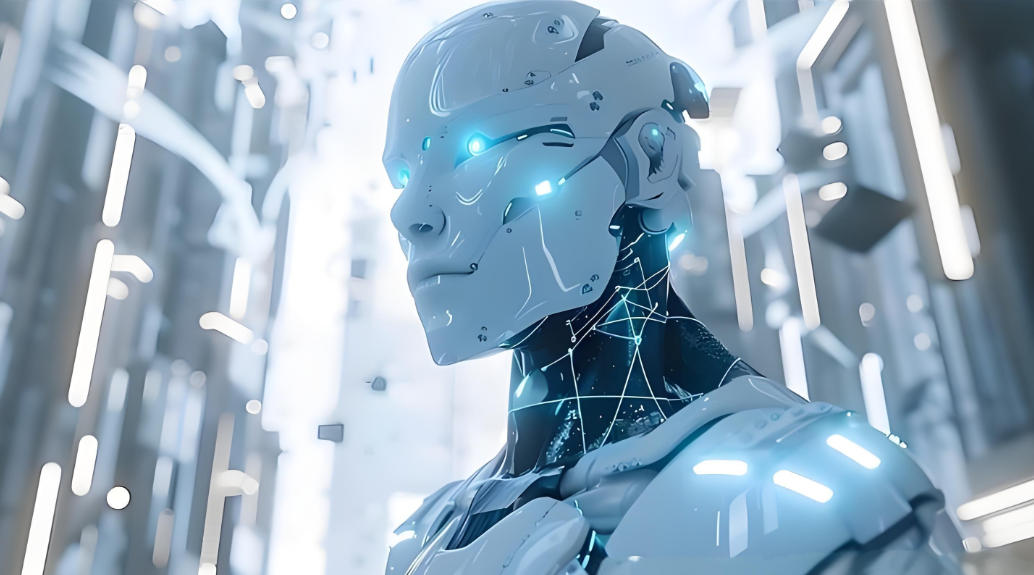
How Does ToF Depth Perception Enable Embodied Intelligence in Robots?
As artificial intelligence and robotics evolve, embodied intelligence has emerged as a breakthrough concept in intelligent robotics. Unlike traditional automation, which follows fixed rules, embodied intelligence allows robots to perceive the physical world, understand 3D space, reason in real time, and make autonomous decisions, efficiently connecting perception, cognition, and action. In this evolution, Time-of-Flight (ToF) depth perception technology plays a foundational role, enabling robots to move from simple task execution toward true spatial understanding and intelligent behavior.
What ToF Depth Perception Does for Robots
ToF cameras emit light pulses and measure the time it takes for the pulses to reflect off surfaces and return. This calculation produces pixel-level real-time depth maps and 3D spatial data, delivering precise distance, height, shape, and geometric information regardless of lighting, texture, or color conditions. This active depth sensing allows robots to perceive space in three dimensions rather than relying solely on flat 2D images.
ToF depth perception is ideal for robotic navigation, dynamic obstacle avoidance, embodied AI systems, human-robot interaction, gesture and body tracking, 3D scanning, and industrial inspection. It gives robots a true sense of their environment, supporting advanced spatial cognition and real-time decision-making in complex, dynamic spaces.

ToF Depth Perception as the Spatial Foundation of Embodied Intelligence
Embodied intelligence robots rely on a robust perception–cognition–action feedback loop. Traditional vision systems often require complex processing to infer depth from 2D images. In contrast, ToF depth perception delivers stable, continuous, and quantifiable 3D spatial measurements, even in low light, backlighting, reflections, or cluttered environments.
Benefits for Intelligent Robots
With ToF depth data, robots can directly interpret:
- Distance relationships between objects and themselves
- Height and spatial hierarchy within a scene
- Volume and occupancy of space
- Reachability and traversability for navigation or manipulation
This transforms raw visual input into a computable 3D world, enabling robots to understand space, not just observe it. Depth perception powered by ToF is essential for robust motion planning, spatial reasoning, and context-aware decision making.
From Perception to Purpose: ToF in the AI Decision Pipeline
ToF depth perception feeds every layer of an embodied intelligence system:
- Perception Layer: Real-time 3D geometry with low latency and high resolution
- Cognition Layer: Spatial modeling, scene segmentation, and semantic understanding
- Decision Layer: Intelligent path planning, risk assessment, and action selection
- Execution Layer: Precise feedback for grasping, obstacle avoidance, and motion corrections
Combined with SLAM, point cloud processing, motion planning, and learning algorithms, ToF depth data strengthens a robot’s ability to interpret and adapt to real environments.
ToF as a Core Component in Multimodal Perception
Embodied intelligence robots often use multimodal perception, integrating ToF depth cameras with RGB cameras, LiDAR, radar, and IMUs. ToF is crucial in RGB-D perception systems, merging color and depth data to enhance spatial awareness and improve safety and operational efficiency in homes, factories, and shared human environments.
Spatial Understanding Enables High-Level Cognitive Functions
With rich 3D depth information, robots can develop:
- Structural models of space
- Semantic scene segmentation
- Differentiation of walls, floors, objects, and humans
- Evaluations of traversability and manipulability
This spatial understanding is key for autonomous exploration, collaborative robot operation, and complex environment navigation.

Stable 3D Feedback for Autonomous Learning and Real-Time Decisions
In reinforcement and embodied learning, robots refine actions based on environmental feedback. ToF depth perception provides continuous, stable 3D input, enabling trajectory optimization and dynamic responses, both indoors and in structured logistics environments.
Rapid Perception–Action Loop for Dynamic Interaction
Embodied intelligence relies on fast feedback between sensing and acting. ToF depth cameras deliver high-frame-rate, low-latency depth maps, allowing robots to react instantly in tasks such as robotic grasping, obstacle navigation, and autonomous systems requiring millisecond control loops.
Driving Natural Human–Robot Interaction
As robots enter healthcare, service, and public environments, ToF depth perception enables natural and safe human-robot interaction:
- Detecting human spatial position, orientation, and intent
- Recognizing poses and gestures under varied lighting
- Maintaining dynamic safety boundaries
- Supporting gesture-driven, low-latency interaction feedback
This transforms robots into interactive agents capable of behavior-aware responses.

ToF Applications Accelerating Real-World Deployment
Depth perception via ToF is powering robots across domains:
- Smart healthcare and patient monitoring
- Human-aware service robots in homes and public spaces
- Industrial collaborative robots in mixed production lines
- Gesture-based AR/VR spatial computing
- Dynamic warehouse logistics and autonomous mobile robots
This shows how ToF depth perception supports embodied intelligence systems that are safe, adaptive, and context-aware.
ToF: A Key Enabler for Embodied Intelligence in Robots
ToF depth cameras provide an ideal balance of real-time performance, precision, and cost-effective sensing. Integrated with RGB vision, SLAM, and intelligent learning models, ToF enables embodied intelligence systems to complete the perception–understanding–action loop, empowering robots to learn and adapt in real-world environments.
Conclusion
Embodied intelligence represents a shift from simple machines to autonomous, learning, and interacting agents. ToF depth perception is at the core of this transformation. By providing continuous, real-time 3D spatial information and powering multimodal perception, ToF sensors allow robots to perceive, think, decide, and act intelligently in complex environments. As ToF technology, algorithms, and hardware continue to advance, embodied intelligence will expand into large-scale real-world deployment, becoming a foundation of future robotics and autonomous systems.
AllSENSOR 20M Outdoor Fully Solid-State LiDAR S150

After-sales Service: Our professional technical support team specializes in TOF camera technology and is always ready to assist you. If you encounter any issues during the usage of your product after purchase or have any questions about TOF technology, feel free to contact us at any time. We are committed to providing high-quality after-sales service to ensure a smooth and worry-free user experience, allowing you to feel confident and satisfied both with your purchase and during product use.




Please upload banner from store admin blog pages