Laser Distance Sensors vs TOF & RGB-D Cameras for 3D Measurement
What Are the Differences Between Laser Distance Sensors, TOF, and RGB-D Cameras?
With the development of industrial automation, VR/MR technology, and intelligent robotics, RGB-D cameras and TOF cameras have become core tools for depth perception. When combined with laser distance sensors, 3D imaging, and depth-processing algorithms, they provide high-precision support for measurement, navigation, and interactive applications.
What is an RGB-D Camera?
An RGB-D camera is a sensor that captures both color images (RGB) and depth information (Depth), adding 'distance sensing' capabilities to a standard camera. It not only records the color and texture of objects but also measures the distance from each pixel to the camera, generating complete 3D spatial information.
In practice, RGB-D cameras are widely used in face recognition, 3D modeling, AR/VR, robot navigation, gesture recognition, and autonomous driving. By combining RGB images with depth data, they enable more accurate environmental perception and object recognition, such as determining an object’s position, shape, and size. In short, an RGB-D camera allows devices to both 'see colors' and 'understand distances', providing intelligent visual perception.

Basics of RGB-D and TOF Cameras
RGB-D cameras combine color (RGB) images with depth (D) information to generate colored point clouds, depth maps, and 3D scene models. They accurately capture object position, shape, and texture, supporting complex spatial analysis and 3D reconstruction. RGB-D cameras are especially suitable for indoor robot manipulation, augmented/virtual/mixed reality (AR/VR/MR), virtual simulation, 3D modeling, smart home systems, and industrial inspection. By obtaining color-depth maps, developers can perform precise object recognition, path planning, and human-machine interaction, with applications in education, research, and industrial robotics.
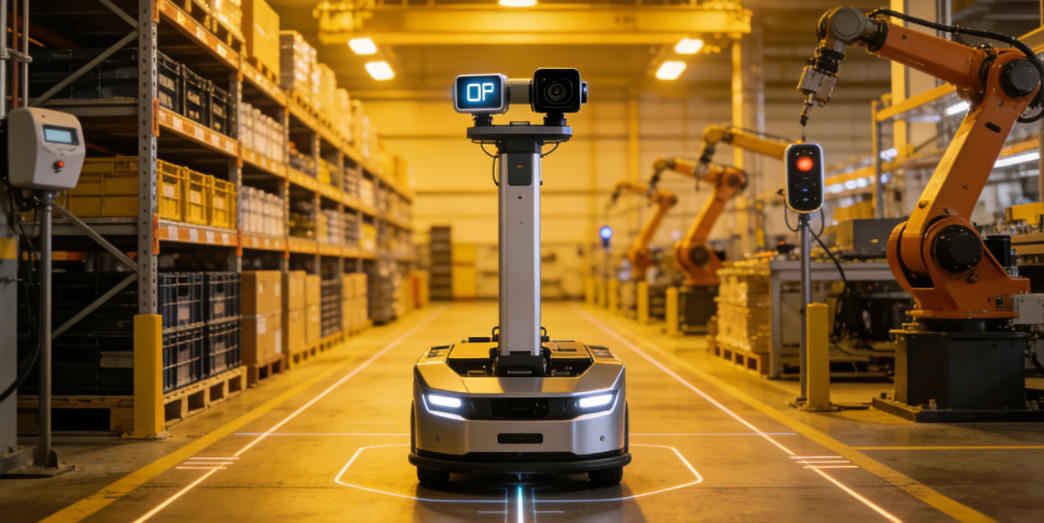
TOF cameras (Time-of-Flight Cameras) measure the time it takes for light pulses to travel to an object and reflect back, producing accurate distance data and real-time depth maps. Since TOF technology does not rely on surface textures, it remains stable and precise in dynamic scenes, low-light conditions, fast-moving objects, and complex industrial environments. TOF cameras are commonly used in robot obstacle avoidance, AGV navigation, drone distance measurement, automated warehousing, smart factories, and 3D mapping, providing fast, continuous 3D spatial data for depth perception and automated control systems.
| Technology | Measurement Principle | Advantages | Applications |
|---|---|---|---|
| RGB-D | Structured light / Stereo vision | Rich color-depth fusion, strong detail restoration | AR/VR interaction, robot manipulation, 3D modeling, virtual simulation, smart home systems |
| TOF | Time-of-flight of light | Fast, high-precision depth mapping, suited for dynamic scenes | AGV navigation, drone distance measurement, robot obstacle avoidance, 3D mapping, VR/MR interaction, smart manufacturing |
In practice, RGB-D and TOF cameras are often used together to create high-precision, multi-functional depth perception systems. RGB-D provides rich color-depth information, while TOF delivers fast and stable 3D distance data. Their combination is widely applied in AGV navigation, drone obstacle avoidance, precise robot manipulation, VR/AR/MR interactions, smart manufacturing, and automated production lines. This setup not only improves the speed and accuracy of depth measurement but also enhances the system’s adaptability to complex environments, allowing robots and intelligent devices to maintain high reliability under varying lighting, material, and dynamic conditions.
Additionally, with advanced algorithms and filtering techniques, RGB-D and TOF cameras can enable real-time 3D reconstruction, point cloud fusion, path planning, object detection, and multi-robot collaboration, providing complete technical solutions for industrial automation, intelligent logistics, drone inspection, and VR/MR interactive applications.
Combining Laser Distance Measurement and Depth Perception
Integrating laser distance sensors (LiDAR) with TOF or RGB-D cameras can significantly improve spatial perception accuracy and real-time performance. By leveraging their complementary strengths, both short-range and long-range measurements can be combined:
- Laser distance applications: Ideal for precise measurement of object height, angle, length, and boundaries, particularly in high-precision scenarios such as industrial automation, surveying, and structural monitoring.
- TOF/RGB-D cameras: Quickly generate high-resolution depth maps, supporting real-time depth perception in dynamic environments, such as drone obstacle avoidance, AGV navigation, and VR/MR interaction.
-
Advantages of integration: Laser sensors provide high-precision point measurements, while TOF cameras provide surface-level depth information. Combined applications include:
- 4D imaging radar: Enhances object recognition and speed measurement capabilities
- Interactive walls or virtual environments: Improves touch precision and spatial interaction experience
- Intelligent robots: Enables autonomous navigation, obstacle detection, and environment mapping
- LiDAR systems: Increases point cloud accuracy and enhances environmental perception
By fusing different depth perception technologies, measurement accuracy can remain stable in complex environments, improving system robustness and real-time performance.

Arduino and Laser Distance Measurement Practice
For developers, makers, and hobbyists, Arduino laser distance sensor projects provide an ideal introduction to spatial measurement and intelligent devices. Practical activities include:
- Arduino laser distance modules: Sensors like VL53L0X or TFMini support short to medium-range measurements, featuring compact size and low power consumption.
-
Distance measurement and object detection:
- Capture precise distances between objects and the sensor
- Perform real-time obstacle detection, suitable for small robot navigation or automatic door control
-
Laser proximity sensors:
- Detect objects approaching or moving away
- Trigger events or alerts, e.g., safety alarms or interactive devices
-
Extended applications:
- Robotics: Combine with Arduino controllers for intelligent obstacle avoidance, path planning, and autonomous navigation
- Data visualization: Output distance data via serial port and visualize with Processing or Python in real time
- Experiments and education: Conduct multi-point measurements to understand laser propagation, reflection, and distance measurement principles
Such hands-on practice not only helps understand the fundamentals of distance measurement but also provides reliable data for intelligent robots, automated control systems, and interactive devices, fostering practical skills and engineering thinking.
Methods to Improve Application Accuracy
When using RGB-D cameras, TOF cameras, and laser distance sensors, accuracy and stability can be influenced by multiple factors. The following strategies can significantly improve measurement reliability and data quality:
-
Adjust sensor angles to avoid reflection interference
- Laser and TOF sensors may experience reflection errors when facing mirrors, glass, or smooth surfaces.
- Adjust the angle of incidence to maximize direct reflection and reduce multiple reflections or scattering.
- In complex environments, multiple sensor angles can be sampled and fused to reduce outliers.
-
Apply filtering algorithms to reduce measurement errors
- Raw measurements may contain noise, especially in dynamic or long-range scenarios.
- Common filtering methods include:
- Moving average filter: Smooths sudden noise by averaging consecutive measurements
- Kalman filter: Uses historical data and motion models to improve dynamic measurement accuracy
- Median filter: Eliminates occasional extreme values effectively
- In AGV navigation or robot path planning, filtering reduces false triggers and trajectory errors.
-
Optimize lighting to reduce environmental light effects
- TOF and RGB-D cameras are sensitive to strong light or reflective surfaces, which can introduce measurement errors.
- Indoor setups can use diffused lighting or shading to avoid direct exposure.
- Outdoor setups can use light adjustment or infrared filtering to enhance depth map quality.
-
Regularly calibrate sensors and cameras
- Sensors may drift over time, causing cumulative measurement errors.
- Calibration methods include:
- Laser sensors: Compare against a standard ruler or calibration board
- RGB-D/TOF cameras: Use checkerboard or 3D calibration boards to correct depth map distortion
- Regular calibration maintains accuracy, prolongs device life, and improves system stability.
-
Additional optimization strategies (optional)
- Multi-sensor fusion: Combine laser and TOF depth data through weighted fusion or filtering to enhance measurement accuracy
- Environmental modeling and error compensation: Build error models for fixed environments and correct depth data in real time
- Software optimization: Remove noise, enhance edges, and fill holes in point clouds or depth maps for better 3D reconstruction
Using these methods, depth perception systems can achieve higher accuracy and stability in 3D imaging, robot navigation, drone obstacle avoidance, and VR/MR interactions, providing reliable data for intelligent decision-making.
Conclusion
The combination of RGB-D cameras, TOF cameras, and laser distance sensors provides robust technical support for depth perception, 3D modeling, and intelligent robotics. Understanding their principles and applications enables high-precision measurement and reliable performance in industrial automation, AGV navigation, VR/MR interactions, and robotic systems.
Robosense RS-lidar-M1/RS-lidar-M1 Plus 3D Vehicle grade intelligent solid-state LiDAR for autonomous driving

After-sales Support:
Our professional technical team specializing in 3D camera ranging is ready to assist you at any time. Whether you encounter any issues with your TOF camera after purchase or need clarification on TOF technology, feel free to contact us anytime. We are committed to providing high-quality technical after-sales service and user experience, ensuring your peace of mind in both shopping and using our products.



Please upload banner from store admin blog pages