
ToF Depth Sensing Driving Faster, Smarter Mobile Robot Navigation
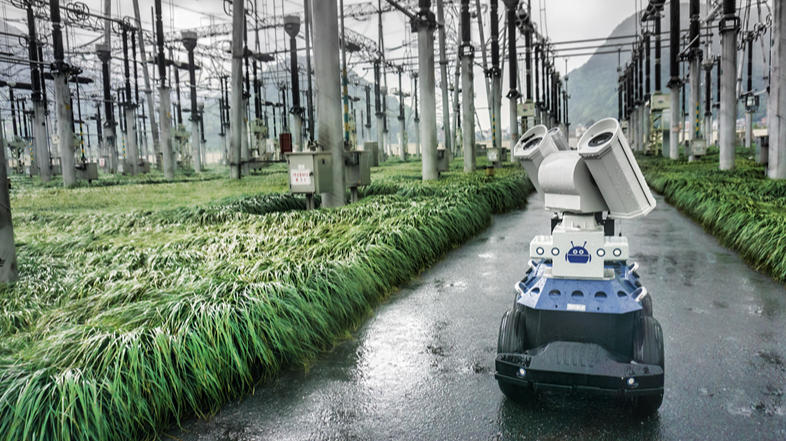
How Does ToF Depth Sensing Enable Faster, Smarter, and Markerless Mobile Robot Navigation?
A Core 3D Perception Technology Driving High-Speed Autonomy and Embodied Intelligence
As mobile robotics rapidly evolves, autonomous mobile robots (AMRs) are becoming a central pillar of intelligent manufacturing, smart logistics, service robotics, and autonomous inspection. According to industry research, the global mobile robot market has experienced explosive growth over the past decade, with deployment volumes increasing by more than an order of magnitude.
More importantly, industry demand is no longer limited to low-speed indoor robots operating in structured environments. The focus is shifting toward high-speed, semi-outdoor, and fully outdoor mobile robots, including:
-
Unmanned delivery robots
-
Autonomous inspection and patrol robots
-
Agricultural and mining robots
-
Port, airport, and campus logistics robots
Behind this transformation, ToF (Time-of-Flight) depth sensing technology has emerged as one of the most critical perception enablers.
What Are Autonomous Mobile Robots (AMRs)?
Autonomous Mobile Robots (AMRs) are intelligent robotic systems capable of:
-
Perceiving their surroundings
-
Localizing themselves in real time
-
Planning and adjusting paths dynamically
-
Avoiding obstacles and interacting safely with humans
Typical AMRs integrate multiple sensors such as LiDAR, ToF depth cameras, RGB/RGB-D cameras, and IMUs, combined with SLAM (Simultaneous Localization and Mapping) and motion planning algorithms.
Compared with traditional AGVs that rely on fixed routes or infrastructure, AMRs offer:
-
Markerless navigation
-
Dynamic environment adaptation
-
Higher flexibility and safety
-
Easier deployment and scalability

From Low-Speed Automation to High-Speed Mobile Robots
Early mobile robots were primarily deployed in controlled indoor environments, such as warehouses and production lines. Due to limitations in perception and computation, these robots operated at low speeds and relied heavily on predefined routes.
However, the rise of:
-
E-commerce logistics
-
Flexible manufacturing
-
On-demand delivery
-
Smart factories
has driven an urgent need for higher-speed, more responsive, and more intelligent mobile robots.
This shift from low-speed to high-speed autonomy fundamentally depends on one capability:
👉 fast, accurate, and stable 3D perception
And this is where ToF depth sensing becomes indispensable.
Why ToF Depth Sensing Is Essential for High-Speed Mobile Robots
At higher speeds, robots must complete the perception–decision–action loop within milliseconds. This places strict requirements on sensing technology.
Millisecond-Level Depth Measurement
ToF depth cameras calculate distance by measuring the time light travels to an object and back, capturing full-scene depth information in milliseconds—ensuring perception stability even during rapid motion.
High-Frame-Rate 3D Output
ToF continuously outputs dense 3D depth maps and point clouds at high frame rates, providing reliable data for:
-
High-speed path planning
-
Obstacle prediction
-
Trajectory optimization
Robust Performance in Challenging Lighting
As an active sensing technology, TOF (Time-of-Flight) performs consistently under:
-
Strong sunlight
-
Backlight and shadows
-
Rapidly changing illumination
This makes ToF particularly suitable for industrial and semi-outdoor environments.
ToF + AI: Unlocking Smarter High-Speed Robot Behavior
When combined with AI perception and decision-making algorithms, ToF depth sensing enables advanced robot intelligence:
Real-Time Obstacle Detection and Classification
Using 3D depth data, robots can identify obstacle position, size, and category (people, equipment, cargo), enabling differentiated avoidance strategies.
Dynamic Path Replanning
At high speed, unexpected obstacles require immediate reaction. ToF provides real-time spatial updates, allowing robots to replan paths instantly.
Precise Avoidance and Emergency Braking
Accurate depth measurement allows robots to predict risk earlier, enabling smoother avoidance maneuvers and reliable emergency stops.
From 'Slow Transport Tools' to High-Speed Intelligent Executors
With ToF depth sensing, mobile robots evolve into:
-
High-speed autonomous platforms
-
Intelligent execution units with spatial understanding
-
Core automation nodes for continuous large-scale operations
This evolution dramatically improves efficiency in logistics, manufacturing, and service scenarios.

From Indoors to Outdoors: Expanding Robot Operating Boundaries with ToF
Outdoor environments introduce challenges far beyond indoor scenarios:
-
Strong sunlight and night conditions
-
Rain, fog, and snow
-
Slopes, uneven terrain, and unstructured roads
Compared with traditional 2D vision systems, ToF depth cameras offer:
-
Lighting-independent perception
-
Direct real-scale depth measurement
-
Cost-effective complement to LiDAR
As a result, ToF is widely used in:
-
Outdoor delivery robots
-
Autonomous inspection robots
-
Agricultural and mining robots
-
Security patrol and cleaning robots
ToF + LiDAR + IMU multi-sensor fusion has become a mainstream architecture for outdoor mobile robots.
From Autonomous Mobility to Embodied Intelligence
Modern robotics is moving toward Embodied Intelligence, where perception, cognition, decision-making, and physical action are tightly coupled.
To achieve this, robots must do more than move—they must understand 3D space in real time.
ToF as the 'Spatial Cognition Organ' of Robots
Within embodied intelligence systems, ToF depth sensing provides:
-
Real-time 3D environment modeling
-
Accurate understanding of object size, shape, and spatial relationships
-
Closed-loop feedback for manipulation, avoidance, and collaboration
From Obstacle Detection to Scene Understanding
Traditional robots focus on detecting obstacles. Embodied intelligence requires:
-
Understanding object function and passability
-
Judging whether objects can be crossed, pushed, or manipulated
-
Continuously optimizing behavior based on feedback
ToF + AI semantic perception enables this transition from perception to understanding.
ToF Across Different Robot Forms
ToF depth sensing supports embodied intelligence across robot types:
-
Humanoid robots: balance, walking stability, hand–eye coordination
-
Quadruped robots: terrain perception and foot placement
-
Specialized mobile robots: inspection, outdoor operations, and industrial tasks

Multimodal Perception: ToF as a Core Sensor
In real systems, ToF works with:
-
RGB cameras (semantic understanding)
-
LiDAR (long-range perception)
-
IMUs (motion estimation)
-
Tactile sensors (interaction feedback)
ToF fills the critical gap between vision and LiDAR by providing dense, real-time, structured 3D data, making it a standard component in advanced robotic perception systems.
Navigation Upgrade: ToF Enables Markerless SLAM
Traditional navigation relies on QR codes or magnetic strips, limiting flexibility.
With ToF-based SLAM, robots achieve:
-
Markerless navigation
-
Plug-and-play deployment
-
Robust localization in low-texture environments
ToF enhances:
-
Visual SLAM
-
Depth-based SLAM
-
Multi-sensor fusion SLAM
Perception Upgrade: From 2D to True 3D
2D perception sees planes.
ToF enables volumetric understanding, supporting:
-
3D obstacle avoidance
-
Human–robot collaboration
-
Multi-robot coordination
-
High-rack and complex manipulation tasks
From Point Clouds to Semantic Intelligence
ToF generates dense point clouds, but intelligence comes from interpretation.
With AI integration, robots can:
-
Distinguish people, vehicles, and equipment
-
Identify movable vs. fixed objects
-
Understand scene semantics such as pathways and hazard zones
This marks the transition from 'seeing' to 'thinking.'
Conclusion: ToF as an Accelerator of Mobile Robot Intelligence
From low-speed to high-speed, from indoors to outdoors, and from autonomous mobility to embodied intelligence, ToF depth sensing has consistently been a key enabling technology.
As ToF sensors continue to improve in cost, performance, and integration, their role in:
-
Mobile robots
-
Autonomous driving
-
Intelligent security
-
Industrial vision
will only expand.
Future mobile robots will not just move faster and farther—they will perceive more accurately, understand more deeply, and act more intelligently.
ToF depth sensing is the foundation that makes this possible.
Slamtec RPLIDAR A2 A3 S1 S2 S3 Lidar Front-End Ports Ethernet Adapter

After-sales Support:
Our professional technical team specializing in 3D camera ranging is ready to assist you at any time. Whether you encounter any issues with your TOF camera after purchase or need clarification on TOF technology, feel free to contact us anytime. We are committed to providing high-quality technical after-sales service and user experience, ensuring your peace of mind in both shopping and using our products.




Please upload banner from store admin blog pages