
VR vs MR: Key Differences, Applications, Future Mixed Reality Devices
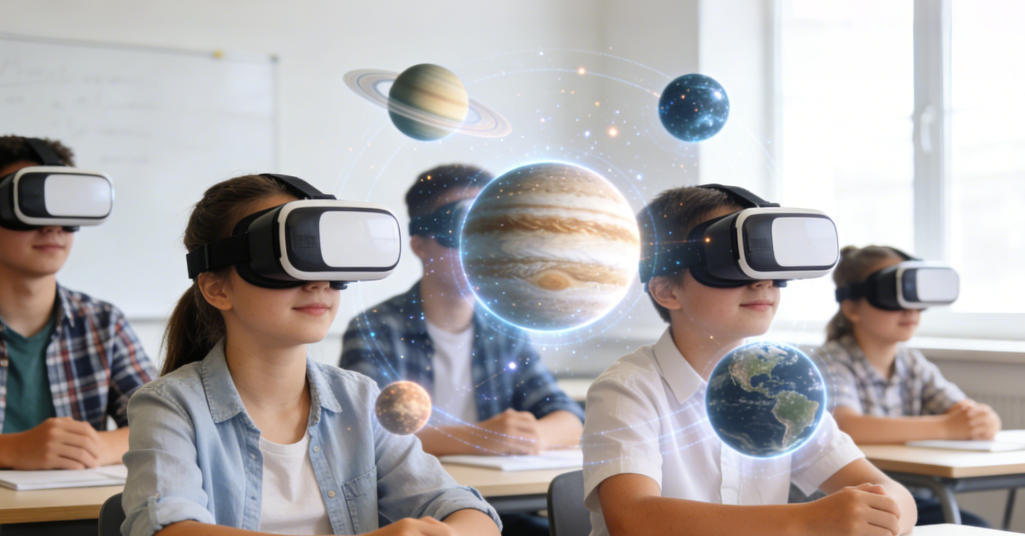
Virtual Reality MR Explained: Key Differences, Applications and Future Trends
With the continuous development and popularization of ar/vr/mr (Augmented Reality/Virtual Reality/Mixed Reality) technologies, vr and mr virtual reality solutions are transforming entertainment, work, education, and industrial experiences. Compared to traditional single virtual experiences, vr mr integrates real and virtual interactions, providing users with immersive, intelligent, and interactive experiences. This article provides a detailed overview of the core principles of VR and MR, their key differences, application scenarios, and the development trends of vr mr device (Virtual Reality Mixed Reality devices).
1. What Are VR, AR, and MR? Core Technology, Differences, and Application Value
Before diving into vr and mr, it is essential to understand the basic concepts and technical cores of VR, AR, and MR:
- Virtual Reality VR: VR provides a fully immersive digital experience. Users enter a completely virtual world through a VR MR device or headset. In this environment, all visual, auditory, and even tactile experiences are computer-generated, entirely isolated from the real world. VR is commonly applied in immersive gaming, simulation training, virtual exercises, virtual tourism, and cinematic experiences, making users feel as if they are in another world.
- Augmented Reality AR: AR overlays virtual information, images, or data onto the real world while allowing users to perceive their surroundings. For example, through smart glasses or a smartphone screen, users can view navigation instructions, 3D models, data charts, or interactive interfaces within the real environment. The core value of AR is seamlessly merging digital information with reality, improving work efficiency, educational interaction, and situational awareness.
- Mixed Reality MR: MR provides an advanced immersive experience between VR and AR. Virtual elements are not only overlaid on the real environment but also interact with real objects. For example, users can place virtual models on a desk and manipulate them, while the virtual objects respond to real-world changes. Compared to AR, MR emphasizes interactivity, spatial awareness, and seamless fusion between real and virtual worlds, often relying on advanced vr mr device and environmental scanning technologies.
In short, VR replaces the real world, immersing users in a fully virtual space; AR enhances reality by adding digital information to the real environment; and MR blends virtual and real worlds, enabling interactive immersive experiences where virtual elements can perceive and participate in the real environment.
With ar/vr/mr technologies, users can achieve unprecedented immersion, interactivity, and realism in education, industrial design, medical rehabilitation, and entertainment. Especially, vr mr solutions offer multi-scenario application value, becoming a core technology driving digitalization and intelligent development.

2. Key Differences Between VR and MR: Immersion, Interaction, and Device Selection
The main distinction between vr mr lies in how they interact with the real world, their level of immersion, and the required hardware. As ar/vr/mr technologies evolve, VR and MR are showing distinct value across entertainment, education, industry, and healthcare.
📌 Level of Immersion
- VR: Fully replaces the real world, placing users in a purely virtual environment. Through VR MR device with headsets, controllers, and other input tools, users experience high-degree visual, auditory, and tactile interactions. VR is widely used in immersive gaming, virtual tourism, simulation training, and virtual exercises, isolating users from the real environment.
- MR: Maintains the real environment while overlaying interactive virtual elements. Users can see the real world and manipulate virtual objects, which respond to real-world changes. MR offers a more interactive, realistic, and practical immersive experience, commonly applied in industrial design, remote collaboration, educational training, and medical rehabilitation.
📌 Interaction Methods
- VR interactions rely mainly on controllers and motion-tracking devices, with virtual objects confined to the virtual environment.
- MR supports two-way interaction between the physical world and virtual elements. For example, users can place virtual models on a desk and use gestures, touch, or controllers to adjust them, while virtual elements respond to real-world changes. This advanced interaction mode makes MR one of the most cutting-edge immersive technologies.
📌 Device Types
- VR MR devices typically include high-resolution headsets, controllers, and motion trackers, enabling full immersion and complex interactions.
- AR devices often use smartphones or lightweight smart glasses, suitable for lighter applications like navigation, data overlays, and simple interactions.
- Professional MR devices require advanced spatial mapping, environmental understanding, and gesture recognition technologies. Most MR devices remain high-end headsets, suitable for enterprise-level training, industrial design, and professional research.
By distinguishing these factors, users can select the most appropriate VR MR device or AR device based on experience goals, application scenarios, and interaction needs, achieving optimal immersion and interaction.
3. Typical Application Scenarios for VR and MR
As ar/vr/mr technologies mature, vr mr is expanding from professional applications to the consumer market:
Entertainment and Gaming
- VR Games: Fully immerse players in a virtual world with interactive gameplay.
- MR Games: Use the real environment as a background, allowing virtual characters to interact with real layouts, such as virtual chess pieces on a table responding to physical movements.
Education and Training
- VR simulates complex scenarios for training, such as flight simulations or medical surgery practices.
- MR overlays virtual elements on real environments for surgical teaching, industrial process training, and skill practice, integrating theory and practice.
Industrial Design and Remote Collaboration
- MR overlays 3D models onto real-world sites, allowing designers to adjust plans in real-time.
- Remote collaboration enables shared spatial views via MR, improving cross-location teamwork and efficiency.
Healthcare and Rehabilitation
VR and MR are applied in pre-surgery planning, rehabilitation exercises, and psychological therapy, helping patients practice safely and overcome fears.

4. VR and MR Technology Trends: Future Innovation and Immersive Experiences
In the coming years, vr and mr technologies will show greater innovation and application diversity, advancing virtual and mixed reality ecosystems. With hardware and software upgrades, VR MR devices will offer improved immersion and smarter, more convenient interactions.
⚡ Lightweight and Comfortable Design
With improved chip performance, display technology, and sensors, future vr mr devices will be lighter, easier to wear, and designed for comfort similar to everyday glasses or headsets. This reduces fatigue during extended use and extends VR and MR applications from professional scenarios to daily education, office work, socializing, and entertainment, enabling immersive experiences anytime, anywhere.
🤖 Integration of AI and Spatial Computing
Future ar/vr/mr systems will integrate AI algorithms and spatial computing to understand user gestures, actions, and environmental changes in real time, enabling intelligent virtual-real interaction:
- Automatically identify room layouts and furniture positions to generate accurate MR spatial models.
- Enhance interactivity of virtual elements with AI to respond dynamically to user actions.
- Support gesture tracking, eye-tracking, and voice commands for more natural and intuitive VR and MR operation.
This trend will expand mr ar vr applications in industrial design, remote collaboration, virtual education, medical training, and entertainment, improving user experience and productivity.
🌐 Cross-Platform Connectivity and Multi-Device Collaboration
Future vr and mr ecosystems will support cross-platform and multi-device interaction, allowing users to seamlessly switch between VR headsets, MR devices, AR smart glasses, or mobile devices for continuous immersive experiences:
- Designers using MR for 3D collaboration in the office can switch to VR for virtual meetings.
- Students can join the same virtual lab through different devices for interactive learning.
- Multiplayer experiences in entertainment and social scenarios can synchronize across virtual and mixed reality spaces.
With lighter hardware, AI and spatial computing integration, and cross-platform connectivity, future vr mr devices will deliver greater freedom, smarter interactivity, and deeper immersion, opening new possibilities across gaming, education, healthcare, industry, and social applications.
5. How to Choose the Right VR or MR Device
When selecting a vr mr device, consider the following factors:
- Experience Goals: Full immersion or interaction with the real environment? VR is suitable for fully virtual experiences; MR is ideal for interactive, blended experiences.
- Hardware Performance: Key indicators include display resolution, tracking accuracy, motion recognition, and spatial understanding.
- Usage Scenario: Entertainment, education, or industrial applications have different device requirements; choose devices with strong adaptability.
- Ease of Use and Comfort: Comfortable to wear and easy to set up, suitable for extended use.
Conclusion
vr and mr, ar/vr/mr technologies are driving digital experiences into a new era. MR enables virtual and real-world interaction, making immersive experiences more realistic and valuable. Whether for gaming, education, industrial design, or remote collaboration, VR MR devices will play a key role in the future. With advancements in technology, lighter hardware, and AI integration, the boundaries between VR and MR will blur, collectively fostering a thriving mixed reality ecosystem.
As an umbrella term, immersive technologies such as virtual reality vr augmented reality ar combine digital objects, digital elements, and a digital environment with the real world environment through advanced head mounted displays, creating new vr experiences and interactive applications.
As mixed reality technology continues to evolve, mr device solutions combine the advantages of ar overlays and immersive experiences, helping users better understand the differences between ar vr and mr. By comparing vr mr ar and exploring ar vs mr vs vr, modern XR technologies including virtual reality mr are creating new possibilities for gaming, education, industrial training, and digital interaction.
SLAMTEC RPLIDAR S3 40M LiDAR Sensor for Robot Navigation & Avoidance

After-sales Support:
Our professional technical team specializing in 3D camera ranging is ready to assist you at any time. Whether you encounter any issues with your TOF camera after purchase or need clarification on TOF technology, feel free to contact us anytime. We are committed to providing high-quality technical after-sales service and user experience, ensuring your peace of mind in both shopping and using our products.




Please upload banner from store admin blog pages