
Why TOF Cameras Are a Must-Have in High-End Smartphones in 2026
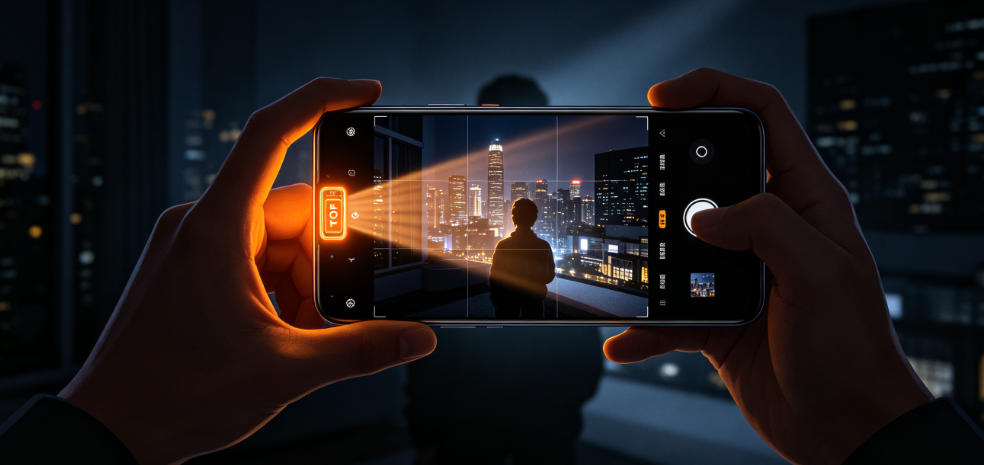
What Is a TOF Camera and Why Should Your Next Smartphone Have One?
As smartphone photography technology continues to advance, TOF (Time-of-Flight) cameras are gradually becoming a standard feature in high-end models. According to recent data, an increasing number of flagship smartphones are now equipped with the best TOF camera, providing users with more precise depth sensing and exceptional photography experiences. For users seeking professional photography, AR applications, and secure facial recognition, TOF cameras have become an indispensable component.
What Is a TOF Camera?
A TOF (Time-of-Flight) camera is an advanced depth sensing technology. It works by emitting invisible infrared light onto the surface of objects and measuring the time it takes for the light to reflect back to the camera to calculate precise distances. Unlike traditional cameras that rely on image contrast or dual-camera depth estimation, TOF cameras can directly generate high-precision 3D depth maps, allowing devices to perceive the distances of objects and spaces more accurately.
The core advantages of TOF cameras lie in their speed, precision, and low latency in depth measurement. This makes them more than just a photography tool—they support a variety of innovative applications, including:
-
Professional Portrait Photography
TOF cameras can accurately distinguish between foreground and background, creating natural and three-dimensional bokeh effects. They outperform single or dual-camera setups in producing professional-quality portraits. -
Augmented Reality (AR) Applications
In AR gaming, virtual try-on, furniture placement simulations, and other scenarios, TOF cameras provide realistic spatial depth, ensuring seamless integration between virtual objects and real-world environments. -
Facial Recognition and Secure Unlocking
TOF cameras capture minute facial contours, offering more reliable security than traditional 2D cameras. They effectively prevent attempts to bypass facial recognition using photos or screen projections. -
Gesture Recognition and Smart Interaction
When combined with AI algorithms, TOF cameras enable touchless interactions, such as gesture-based swiping, air photography, or AR control, providing users with innovative and intuitive interaction experiences. -
Low-Light Photography Assistance
In dim environments, TOF cameras assist with focusing by providing depth information, improving night photography, indoor portraits, and other low-light shots. -
Enhanced Smartphone Navigation and Environmental Awareness
In smartphones, drones, or robots, TOF cameras enable precise distance measurements and spatial mapping, improving navigation accuracy and path planning.
Tip: When shopping for a smartphone, if you see the label "best TOF camera," it typically indicates outstanding performance in depth measurement, bokeh effects, and AR functionality. For users seeking professional photography and immersive interaction, a TOF camera is nearly essential for high-end smartphones.
TOF technology not only enhances photography but also provides a reliable hardware foundation for smart interaction, AR applications, and secure unlocking, marking a new era in smartphone photography and user experience.

Applications of TOF Cameras in Smartphones
-
Professional Portrait Photography
TOF cameras precisely differentiate between foreground and background, delivering natural depth-of-field effects. Compared to traditional single or dual cameras, portrait edges are sharper, contours are more defined, and photos appear more professional. -
Enhanced AR Experience
With TOF depth sensing, AR applications can integrate virtual objects with real-world environments more realistically. From virtual furniture placement and interior design simulations to virtual try-ons and AR games, high-precision TOF cameras play a key role. -
Facial Recognition and Secure Unlocking
TOF cameras capture subtle facial contours, providing safer and faster unlock experiences than standard 2D cameras. This helps protect user privacy and prevents unauthorized access through photos or screen projections. -
Gesture Recognition and Interaction Control
Some high-end smartphones utilize TOF cameras for touchless operations, including gesture swiping, air photography, and AR control, offering innovative ways to interact with devices. -
Low-Light Photography Optimization
TOF cameras excel in dim lighting by using depth information to assist focus, resulting in clearer night shots and indoor portraits.
Market Trends: TOF Cameras Are Becoming Standard in High-End Smartphones
With the continuous development of smartphone photography and interaction technology, TOF cameras have transitioned from experimental features in flagship devices to mainstream adoption. Recent market research indicates that by 2026, over 70% of high-end smartphones worldwide will feature the best TOF camera.
TOF cameras enhance not only photography and AR experiences but also autofocus, gesture recognition, indoor navigation, and AI-powered shooting optimization. For instance, a smartphone TOF camera can measure object distances within milliseconds, achieving more accurate autofocus and low-light performance, ensuring high-quality images across diverse scenarios.
As technology matures and costs decrease, mid-to-high-end devices will also adopt TOF cameras. This means that smartphone TOF cameras are no longer luxury features but essential for everyday photography, AR gaming, and secure interactions. In the future, the presence and performance of a TOF camera will be a key factor in evaluating the value of a high-end smartphone.
Moreover, TOF cameras are increasingly integrated with 5G, AI photography, and smart home ecosystems. By providing precise spatial depth perception, they can assist with indoor navigation, object recognition, and gesture-based control, enabling smarter and more convenient digital lifestyles.
How to Choose the Best TOF Camera Smartphone
When selecting a smartphone equipped with the best TOF camera, consider not only the hardware specifications but also software optimization and real-world performance:
-
Brand and Reputation
Choose brands with advanced imaging technology, such as Apple, Samsung, Huawei, and Xiaomi. These brands typically excel in smartphone TOF camera implementation and provide enhanced photography and AR experiences through software optimization. -
Hardware Specifications
Key metrics for high-performance TOF cameras include resolution, measurement accuracy, infrared emission strength, and coordination with the main camera. A high-quality TOF camera improves portrait bokeh, low-light performance, and provides stable depth sensing for AR applications. -
Software Optimization
Hardware alone is not enough. Optimized camera algorithms can fully leverage TOF camera capabilities, including automatic depth adjustments, gesture recognition, and AR scene rendering, ensuring smoother user experiences. -
Real-World Usage
Refer to professional reviews or hands-on videos to understand TOF camera performance in various scenarios, including low-light photography, dynamic shooting, AR interaction, and gesture recognition. Actual user experience often provides more practical insight than official specifications.
Tip: Smartphones labeled with 'best TOF camera' usually excel in photography, portrait bokeh, AR interaction, and gesture recognition.

Future Development Trends of TOF Technology
TOF technology is reshaping smartphone photography and interactive experiences. In the coming years, TOF cameras will continue to evolve in several key areas:
-
Multi-Camera Fusion for Depth Sensing
Future smartphones will combine TOF cameras with laser autofocus, structured light, and multi-sensor setups to create highly precise 3D spatial models for AR, gesture recognition, and AI-enhanced photography. -
Low-Power, High-Precision Measurement
Optimizations will reduce power consumption while maintaining measurement accuracy and responsiveness, which is crucial for prolonged AR use or video recording. -
AI Photography Enhancements
AI algorithms will automatically analyze scenes, improving portrait and depth effects in low-light, motion, and complex environments for smarter, more professional results. -
Cross-Scenario Applications
Beyond smartphones, TOF cameras will see widespread use in wearables, AR/VR glasses, drones, and smart home devices, enabling comprehensive depth sensing and intelligent interaction. Examples include gesture-based control of home appliances or precise obstacle avoidance and environment mapping for drones. -
Personalized AR and Interactive Experiences
TOF technology combined with AI will drive AR social applications, virtual try-ons, and interactive gaming, providing users with immersive, personalized experiences.
Overall, TOF cameras are not only a major upgrade for smartphone photography but also a core sensor driving AR, AI, and intelligent interaction. As the technology becomes more accessible and cost-effective, high-end smartphones will increasingly feature the best TOF camera, offering superior photography, interaction, and security experiences.
XT-S240Pro 3D ToF Lidar| Compact, Solid State, 240 Lines, 20m Working Distance

Conclusion
TOF cameras have elevated smartphone photography and propelled advancements in AR, gesture interaction, and secure recognition. More high-end smartphones are now equipped with the best TOF camera, making it a key indicator of device performance. For users seeking professional imaging, immersive experiences, and innovative interaction, TOF technology is a critical factor when choosing a high-end smartphone.
As TOF technology continues to mature, future smartphones will evolve from mere photography tools into multi-functional, intelligent depth-sensing devices.






Please upload banner from store admin blog pages