
How Far Is a League? Accurate Distance Measurement with ToF Technology
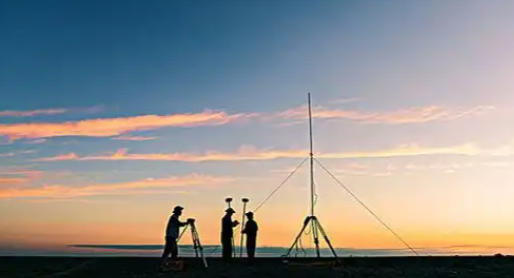
How Can We Measure a League Accurately Using ToF Technology?
Bridging Historical Units and Modern 3D Distance Measurement
A league has long been used as a unit of distance in history, navigation, and literature—but what exactly is a league? By combining TOF (Time-of-Flight) depth sensing technology with unit conversion principles, we can now measure leagues with high precision, helping with scientific research, geographic surveying, navigation, and industrial spatial modeling.
What Is a League? Definition and Historical Background
A league is an ancient unit of distance originating in Europe and historically applied to walking, maritime navigation, and map measurement. People often ask: 'What is a league in miles?' or 'How far is a league?'
Traditionally:
-
1 league ≈ 3 miles (~4.828 km)
-
1 league ≈ 15,840 feet
Although historical definitions vary slightly across regions and eras, these conversions provide a practical framework for modern applications such as cartography, surveying, and long-distance navigation.

Why Modern Measurement Needs Precision
Although leagues are historical, modern projects—like terrain mapping, drone surveys, and autonomous navigation—require accurate, reproducible measurements. Keywords people search include:
-
how far is a league / how long is a league / league to miles / distance of a league / league in miles
Time-of-Flight (ToF) technology provides the scientific basis for translating this ancient unit into precise modern distances. By measuring the flight time of light or laser pulses, ToF sensors can calculate the exact distance between the sensor and target, enabling accurate conversion into leagues.
What Is a Time-of-Flight (ToF) Sensor?
A ToF sensor measures distance by emitting infrared light or laser pulses and calculating the time it takes for the light to travel to a target and return. Key features include:
-
Per-pixel depth maps: high-resolution 3D distance information
-
Fast, real-time performance: millisecond-level measurements
-
Low computational load: ideal for embedded systems
-
Ambient light resistance: accurate in sunlight, low-light, or dynamic environments
Applications of ToF sensors include:
-
RGBD cameras for 3D vision
-
Robotic navigation and obstacle avoidance
-
Industrial automation and spatial measurement
-
AR/VR spatial perception and gesture recognition
-
Autonomous driving systems
This makes ToF technology ideal for accurate league measurement and modern 3D distance modeling.

How ToF Technology Measures League Distances Accurately
1. High-Precision Conversion from Historical League to Modern Units
ToF sensors measure the round-trip travel time of infrared or laser light, converting it into precise distances. This allows accurate measurement of:
-
Single leagues (≈3 miles)
-
Multiple leagues in extended terrain or maritime navigation
Unlike traditional estimates, ToF technology ensures the measurement is based on actual spatial distance, not approximations from historical texts.
2. Real-Time Dynamic Measurement
ToF sensors continuously output real-time distance data, making it ideal for:
-
Drone or UAV surveying
-
Autonomous vehicle navigation
-
Cross-terrain robotic operations
-
Large-scale industrial spatial mapping
This enables dynamic tracking of distance changes over single or multiple leagues, providing immediate updates for planning and navigation.
3. Environmental Resistance for Outdoor Use
Traditional distance methods are affected by sunlight, fog, rain, or snow. ToF’s active light source allows reliable outdoor measurement for:
-
Maritime navigation
-
Road or railway distance planning
-
Drone inspections
-
Geographic and terrain surveys
This overcomes historical uncertainty, like “a league equals one hour of walking,” by providing engineering-grade precision.
4. 3D Spatial Measurement Beyond a Single League
ToF sensors capture thousands of depth points simultaneously, generating 3D point clouds and spatial models. This enables:
-
Accurate measurement across multiple leagues
-
Calculation of horizontal distances, elevation differences, and volumes
-
Transition from 1D “league length” to full 3D distance modeling
Applications include urban planning, terrain analysis, and industrial inspection.
5. Bridging Historical Units to Modern Engineering Distances
With ToF technology, leagues are no longer vague historical concepts but quantifiable and verifiable units. Users searching for 'how long is a league' or 'league in miles' can now obtain precise measurements with modern instrumentation.

How to Convert a League to Modern Units
Using ToF measurements alongside historical standards:
| Unit | Conversion |
|---|---|
| 1 league | ≈ 3 miles (~4.828 km) |
| 1 league | ≈ 15,840 feet |
| Multiple leagues | Number of leagues × 3 miles or × 4.828 km |
ToF sensors allow direct measurement, reducing reliance on estimation and enabling precise mapping of distances in leagues for scientific and engineering applications.
Practical Applications of League Measurement
1. Maritime and Long-Distance Navigation
ToF radar and laser ranging provide accurate multi-league distance calculations, improving safety in maritime travel.
2. Cartography and Historical Geography
Old maps can be converted into modern units with ToF distance measurements, aiding research in historical geography.
3. 3D Modeling and Industrial Surveying
In factories, construction sites, and large-scale spatial projects, ToF sensors can measure league-scale distances for accurate layouts and volume planning.
Conclusion
Although the league is an ancient unit of distance, it retains practical and educational value. Combining ToF technology with unit conversion allows:
-
Precise measurement of single or multiple leagues
-
Conversion into miles, kilometers, and feet
-
Applications in navigation, surveying, 3D modeling, and autonomous vehicle navigation
Popular searches related to leagues include:
-
what is a league measurement / how far is a league / league to miles / 1 league in miles / feet in a league
With ToF sensors, the league becomes a scientifically measurable and modernly applicable distance unit, bridging historical concepts with today’s technology.
ROBOSENSE Airy LIDAR digital hemispherical wide-angle 3D 96-channel / 192-channel laser radar

Our professional technical team specializing in 3D camera ranging is ready to assist you at any time. Whether you encounter any issues with your TOF camera after purchase or need clarification on TOF technology, feel free to contact us anytime. We are committed to providing high-quality technical after-sales service and user experience, ensuring your peace of mind in both shopping and using our products.






Please upload banner from store admin blog pages