
How ToF 3D Vision Improves AGV Slot & Pallet Recognition in Warehouses
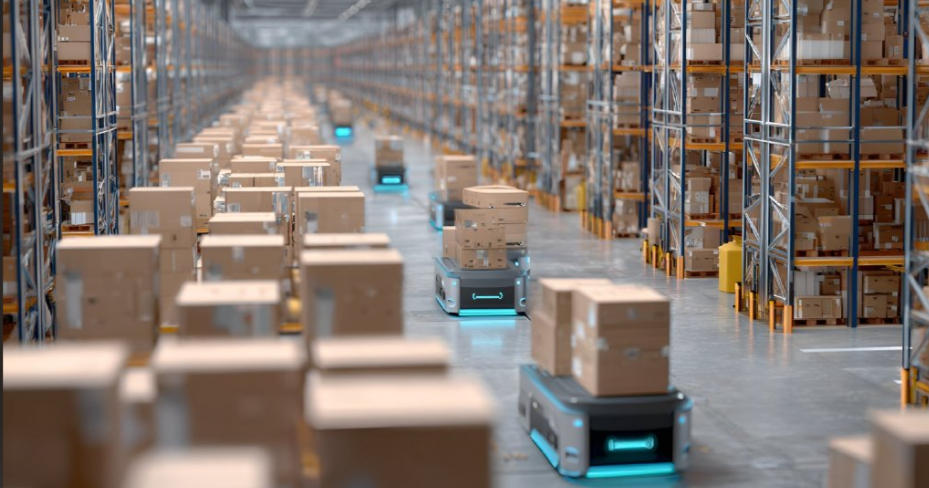
How Can ToF 3D Vision Help AGVs Accurately Detect Warehouse Slots and Pallets?
ToF 3D Vision Empowering Intelligent Warehouse Automation and AGV Coordination
As Industry 4.0, IoT-enabled logistics, and automated warehouses evolve, modern storage systems increasingly integrate AI-driven Warehouse Management Systems (WMS), big data analytics, cloud computing, Warehouse Execution Systems (WES), and AGV/AMR autonomous robots to achieve optimized material handling.
Within this ecosystem, real-time slot occupancy detection and pallet position tracking are foundational perception capabilities, as they directly impact AGV scheduling, automated handling success, and warehouse safety. ToF-based RGB-D 3D vision technology has emerged as a leading solution to address these challenges in high-density and dynamic storage environments.
What is a 3D ToF Sensor?
A 3D TOF (Time-of-Flight) sensor actively measures depth by emitting modulated infrared light or laser pulses and calculating the round-trip travel time to objects. This allows the sensor to generate high-precision 3D depth maps and dense point clouds for accurate spatial perception.
Key capabilities of ToF sensors include:
-
Reliable operation in low-light or complex lighting
-
Independence from object color, texture, or material
-
Real-time 3D output for AI applications like object recognition, pose estimation, and collision detection
Applications extend across intelligent warehouse slot recognition, pallet and cargo handling, AGV navigation, obstacle avoidance, and human-machine interaction, enabling robots and automated systems to perceive true spatial layouts and dimensions.
Core Perception Requirements for Storage Slots and Pallets
Smart warehouse systems must maintain real-time knowledge of key data, such as:
-
Slot occupancy (empty, partially filled, full)
-
Pallet presence and integrity
-
Cargo stack height and over-height detection
-
Consistency between physical state and WMS/WES data
Only with accurate, automatically updated data can AGVs, autonomous forklifts, and automated stackers operate efficiently and safely.

Limitations of Traditional Slot and Pallet Recognition Solutions
1. WMS Desynchronization Due to Human Intervention
Even with AGVs, human activity like manual shelving or temporary placement can:
-
Delay slot status updates
-
Cause AGVs to follow incorrect instructions
-
Lead to empty picks, misplacement, or collisions
This problem is frequently cited in discussions on AGV-WMS integration and smart warehouse challenges.
2. Single-Point LiDAR Accuracy Limitations
Single-point LiDAR sensors capture only a single distance measurement, missing gaps or irregularities between pallets and cargo. This can result in false empty slot detection and stacking hazards.
3. RGB Camera Misidentification and Data Gaps
Using RGB cameras for 2D visual recognition alone can:
-
Fail with untrained cargo types
-
Miss height or depth information, reducing stacking decision reliability
-
Require GPU servers for computation, increasing cost
-
Introduce lens distortion with fisheye optics
These issues are common in searches like: 'RGB vision warehouse misjudgment' or 'slot recognition error in high-density racks.'
How ToF 3D Vision Solves Core Challenges
ToF depth cameras, combined with RGB-D technology, simultaneously provide:
-
3D point cloud data for accurate depth and volume
-
Color and texture images for semantic understanding
This integrated data enables high-precision slot recognition, pallet detection, and stack height measurement, even in dynamic, high-density warehouse environments.

Advantages of ToF-Based 3D Vision Slot Recognition
✅ Real-Time, Accurate Slot Monitoring
-
Detect empty, partially occupied, or full slots
-
Support complex states like overstacking
-
Dynamically update WMS/WES data to prevent AGV errors
✅ Automatic Pallet and Cargo Height Detection
-
Capture real 3D dimensions and stack height
-
Enable AGV autonomous stacking and placement
-
Reduce collision and safety risks
✅ Edge AI Deployment Reduces Complexity
-
Run recognition on ToF sensor or edge module
-
Lower latency, real-time decisions
-
Avoid dependency on GPU or industrial PCs
✅ Seamless Integration with WMS/WES and AGVs
-
Supports TCP/IP, UDP, HTTP, JSON protocols
-
Multi-AGV coordination and human-robot collaboration
-
Real-time feedback to warehouse systems
✅ Enhanced Safety and Operational Efficiency
-
Detect collisions and human-machine interactions
-
Improve rack space utilization
-
Support intelligent scheduling and optimized workflow
Industry Applications of ToF 3D Vision in Warehouses
ToF RGB-D solutions have been deployed in:
-
Automated lithium battery warehouses
-
High-density logistics centers
-
Multi-tier storage in manufacturing and packaging
Key operational benefits include:
-
Large-scale real-time slot monitoring: hundreds to thousands of slots
-
Improved AGV handling success: fewer errors, higher efficiency
-
Reduced slot misjudgment: accurate recognition of partial occupancy or overstacking
-
Enhanced human-machine safety: real-time perception and alerts

Future Trends: ToF as the Standard Sensor for Smart Warehouses
As smart warehouses and unmanned logistics expand, ToF 3D vision is shifting from premium to standard technology. Its advantages include:
-
High-precision 3D perception: centimeter or millimeter-level accuracy
-
Environmental adaptability: reliable in low-light, enclosed, or dynamic spaces
-
AI-ready edge processing: enables intelligent sorting, scheduling, and collision avoidance
-
Easy deployment and scalability: hundreds to thousands of sensors for large-scale warehouses
Future applications:
-
Real-time WMS slot monitoring
-
High-precision pallet recognition
-
Multi-AGV collaborative scheduling
-
Safety for unmanned forklifts
-
Flexible layouts for high-density storage
Conclusion
In intelligent warehouses, slot and pallet recognition is no longer optional. ToF-based RGB-D 3D vision provides high-precision, AI-friendly, real-time perception, enabling safe human-machine collaboration, optimized AGV operations, and reliable integration with WMS/WES. It is rapidly becoming the core sensing technology for next-generation smart logistics.
XT-S240Pro 3D ToF Lidar| Compact, Solid State, 240 Lines, 20m Working Distance

After-sales Service: Our professional technical support team specializes in TOF camera technology and is always ready to assist you. If you encounter any issues during the usage of your product after purchase or have any questions about TOF technology, feel free to contact us at any time. We are committed to providing high-quality after-sales service to ensure a smooth and worry-free user experience, allowing you to feel confident and satisfied both with your purchase and during product use.




Please upload banner from store admin blog pages