
Why ToF 3D Vision Is Essential for ACR Robots in Smart Warehouses
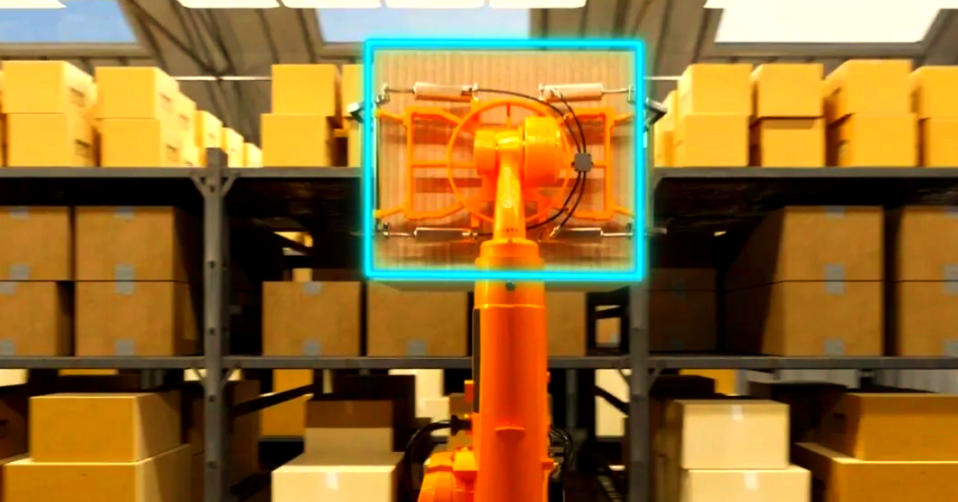
Why Do Smart Warehouses Rely on ToF 3D Vision for ACR Automation?
Driven by the explosive growth of e-commerce fulfillment, intelligent manufacturing, and automated logistics, the global warehousing industry is rapidly evolving toward smart warehouses and unmanned operations. As a critical execution unit in modern intralogistics systems, Autonomous Case-handling Robots (ACRs) are becoming indispensable for automated storage, case handling, sorting, and distribution tasks.
As warehouse operations move beyond basic transport toward high-precision handling, intelligent inventory management, and real-time decision-making, ACRs are required to perceive the physical world with greater accuracy and reliability. TOF (Time-of-Flight) 3D vision technology has therefore emerged as a core enabling technology, empowering ACRs with fast, accurate, and stable three-dimensional perception capabilities.
By integrating ToF 3D depth sensing, ACRs can rapidly identify cases, accurately determine spatial positions, and process detailed information for both single cartons and complex stacked loads—pushing warehouse automation from traditional 2D workflows toward true 3D intelligent logistics systems.
What Is a Time-of-Flight (ToF) 3D Vision Sensor?
A Time-of-Flight (ToF) sensor measures distance by calculating the time required for emitted infrared light to travel to an object and return to the sensor. By analyzing this flight time, the system directly generates depth maps and 3D point cloud data, providing accurate spatial information in real time.
Compared with conventional 2D industrial cameras, ToF 3D vision systems can directly capture height, volume, and spatial relationships without relying on surface texture, ambient lighting, or visual markers. Thanks to features such as strong resistance to ambient light interference, low latency, and high real-time performance, ToF sensors are widely used in:
-
Smart warehouse robotics
-
Autonomous mobile robots (AMRs) and ACRs
-
Industrial automation and machine vision
-
Robot navigation and obstacle avoidance
-
Autonomous driving and intelligent perception systems
These advantages make ToF 3D vision a foundational spatial perception technology for intelligent robots and automated logistics solutions.

Evolution of Case Recognition and Positioning Technologies
Limitations of Traditional Barcode and QR Code Identification
Early automated warehouses relied heavily on barcodes and QR codes for case identification. While effective in standardized and highly structured environments, these 2D identification methods reveal significant limitations in modern, high-density warehouse scenarios:
-
Inability to obtain real 3D information such as height and volume
-
Strict requirements for label orientation and visibility
-
Poor adaptability to stacked, tilted, or partially occluded cases
-
Limited scalability in dynamic and mixed-SKU environments
As warehouse complexity increases, these constraints significantly restrict automation efficiency and system flexibility.
The Rise of AI-Driven ToF 3D Vision Systems
The integration of artificial intelligence (AI) with ToF 3D vision technology has fundamentally transformed ACR perception and control capabilities. Modern ACRs can now operate autonomously in complex, dynamic warehouse environments, achieving real-time perception, intelligent decision-making, and precise execution.
Key enabling technologies include:
Deep Learning for 3D Point Cloud Processing
Advanced neural networks such as CNNs, PointNet, and PointNet++ extract geometric features from ToF-generated point clouds, enabling accurate recognition and classification of cases with varying sizes, shapes, and orientations.
Point Cloud Processing and 3D Reconstruction
Through filtering, denoising, clustering, and surface reconstruction, raw depth data is converted into structured 3D models, providing reliable inputs for robotic grasping, placement, and path planning.
SLAM (Simultaneous Localization and Mapping)
Using real-time ToF depth data, SLAM algorithms allow ACRs to perform autonomous localization and navigation without dependence on QR codes, magnetic strips, or fixed landmarks—greatly enhancing deployment flexibility.

Multi-Sensor Fusion: Building Intelligent ACR Perception Systems
In practical deployments, ACRs typically adopt multi-sensor fusion architectures, combining:
-
ToF 3D depth cameras
-
LiDAR sensors
-
RGB or RGB-D cameras
-
Inertial Measurement Units (IMUs)
This integrated sensing framework enables ACRs to:
-
Achieve full-scene 3D environmental awareness
-
Detect cases, obstacles, shelves, and structural features simultaneously
-
Dynamically optimize handling paths and stacking strategies
-
Maintain high recognition accuracy in low-light or visually cluttered environments
-
Support safe and efficient multi-robot collaboration
Through AI + ToF 3D vision + sensor fusion, ACRs evolve from rule-based machines into intelligent robotic systems capable of perception-driven decision-making and adaptive execution.
Key Applications of ToF 3D Vision in ACR Operations
Dynamic Inventory and Location Management
With real-time 3D perception, ACRs can continuously assess storage occupancy, stacking height, case orientation, and available space. This data seamlessly integrates with Warehouse Management Systems (WMS) and Warehouse Control Systems (WCS) to enable intelligent inventory optimization.
Key benefits include:
-
Automated optimization of storage layouts based on real dimensions
-
Increased warehouse space utilization and storage density
-
Faster inbound and outbound processing through dynamic scheduling
-
Efficient handling of mixed-SKU and mixed-size cases
-
Reduced manual intervention and inventory checks
Automated Storage, Retrieval, and Case Handling
Using ToF point cloud data and 3D reconstruction, ACRs can precisely measure length, width, height, stacking layers, and placement accuracy of cases in real time. This capability is essential for high-bay warehouses, automated racking systems, and parcel sorting centers.
Advantages include:
-
Stable, high-density stacking with minimal space waste
-
Real-time correction of misaligned or tilted cases
-
Optimized access paths and dynamic space calculation
-
Higher picking and placement accuracy with reduced damage risk
-
Parallel task execution through shared 3D spatial data
3D Vision Workflow for Intelligent ACR Operations
-
Data Acquisition
ToF 3D cameras scan cases and environments, generating high-resolution point cloud data. -
Feature Extraction
Algorithms identify key geometric features such as edges, corners, and graspable regions. -
Recognition and Precise Localization
Deep learning models perform accurate case identification and spatial positioning under occlusion or complex stacking. -
Real-Time Optimization
The system dynamically adjusts handling paths and corrects offsets to improve success rates. -
Execution and Coordination
Vision outputs directly guide robotic arms and handling mechanisms, enabling efficient multi-case operations.

Typical Application Scenarios
Smart High-Bay Warehouses
ToF 3D vision enables accurate perception of vertical space, supporting safe automated storage and retrieval in high-density environments.
E-Commerce and Retail Fulfillment
Fast and robust recognition of mixed SKUs without reliance on labels ensures stable operation during peak order volumes.
Manufacturing Intralogistics
In electronics, pharmaceuticals, and automotive production, ToF-enabled ACRs support flexible line feeding and automated replenishment.
Intelligent Logistics Centers
Real-time 3D mapping and obstacle detection enable 24/7 unmanned operation, efficient route planning, and multi-robot coordination.
Future Outlook: ToF as the 'Spatial Eye' of ACR Systems
As ToF sensor costs decrease, resolution improves, and power consumption drops, ToF 3D vision will become standard in smart warehouse robotics. Key development trends include:
-
Deep integration of ToF + AI + SLAM for autonomous decision-making
-
Advanced multi-sensor fusion for robust perception in complex environments
-
Transition from rule-based control to intelligent, perception-driven scheduling
-
Evolution from 2D layouts to fully 3D intelligent warehouse management
Additional trends include real-time safety monitoring, predictive scheduling, enhanced multi-robot collaboration, and expansion into semi-outdoor or unstructured logistics environments.
Conclusion
ToF 3D vision technology is redefining how ACRs perceive, understand, and interact with the physical world. By providing stable, real-time, and high-precision 3D spatial data, ToF enables:
-
Accurate case recognition and localization
-
Marker-free, flexible automation
-
Scalable, intelligent 3D warehouse management
As smart warehouses continue to evolve, ToF 3D vision will remain a core technology, powering the next generation of fully automated, intelligent, and unmanned logistics systems.
IHawk Structured Light Camera P100R 8.0M 1000x Polarization Extinction Ratio

After-sales Service: Our professional technical support team specializes in TOF camera technology and is always ready to assist you. If you encounter any issues during the usage of your product after purchase or have any questions about TOF technology, feel free to contact us at any time. We are committed to providing high-quality after-sales service to ensure a smooth and worry-free user experience, allowing you to feel confident and satisfied both with your purchase and during product use.




Please upload banner from store admin blog pages