
QiaoYin Robot Explained: How Embodied AI Is Transforming Smart Cities
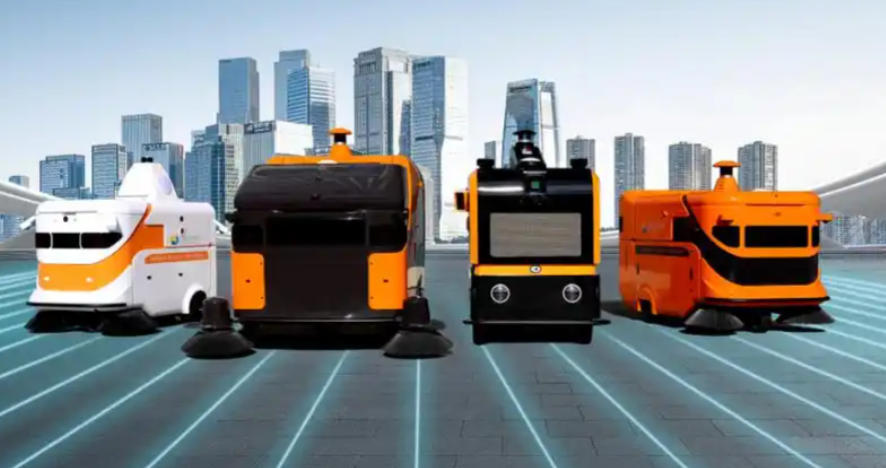
How Is QiaoYin Robot Using Embodied AI to Transform the Future of Smart Cities?
The Rise of QiaoYin Embodied AI Robot in the Future of Intelligent Urban Services
With the rapid development of artificial intelligence (AI), robotics technology, and smart city infrastructure, embodied AI robots are becoming one of the most important technology trends shaping the future of urban development.
Unlike traditional AI systems that mainly operate in digital environments, Embodied AI Robots combine artificial intelligence with physical machines, allowing robots to perceive surroundings, understand information, make decisions, and interact with the real world.
Through the integration of:
- Artificial Intelligence (AI)
- Robot Vision Technology
- Autonomous Navigation Systems
- Sensor Fusion Technology
- AI Foundation Models
- Intelligent Control Systems
embodied AI robots are evolving from simple automation machines into intelligent systems capable of performing complex tasks in real-world environments.
At the 2026 World Artificial Intelligence Conference (WAIC 2026), embodied intelligence was highlighted for the first time as one of the two major technology directions alongside intelligent computing. The event attracted more than 200 companies showcasing innovations in humanoid robots, industrial robots, robotic components, dexterous hands, AI models, and intelligent robotic systems.
Among these innovations, QiaoYin Co., Ltd. attracted significant attention by globally launching its independently developed QiaoYin Embodied AI Robot.
Based on the concept of humanoid intelligent equipment, QiaoYin Robot explores how artificial intelligence and robotics can be integrated into urban service scenarios, helping cities transition from traditional manual operations toward AI-powered urban management systems.
From smart sanitation and urban inspection to public facility maintenance and intelligent city operations, QiaoYin’s embodied AI technology represents a new direction for the future of Smart City Robots and autonomous service solutions.
What Is QiaoYin Robot and Why Does It Matter for Smart Cities?
QiaoYin Robot is an intelligent robotics solution developed by QiaoYin to explore the future applications of embodied intelligence in urban services.
As global cities continue to expand, traditional urban management systems face increasing challenges, including:
- Growing labor demand
- Repetitive and high-frequency tasks
- Complex operating environments
- Rising efficiency requirements
- The need for sustainable city management
To address these challenges, smart cities are increasingly adopting AI robots for urban services that can improve operational efficiency while supporting human workers.
The next generation of urban management will rely not only on human labor but also on intelligent machines capable of perception, analysis, and autonomous execution.
By combining:
Artificial Intelligence Algorithms
AI algorithms allow robots to process environmental information, recognize patterns, and make intelligent decisions.
Intelligent Perception Systems
Advanced sensors and cameras enable robots to understand surrounding environments and collect real-time data.
Autonomous Mobility Technology
Navigation systems allow robots to move independently through complex environments.
Data Analytics Platforms
Collected information can be analyzed to support smarter city management decisions.
Through these technologies, QiaoYin Robot represents a new generation of AI-powered service robots designed to improve efficiency, safety, and intelligence in urban environments.

WAIC 2026: QiaoYin Embodied AI Robot Makes Its Global Debut
At WAIC 2026, QiaoYin introduced its independently developed Embodied AI Robot for the first time globally, demonstrating the company’s exploration in robotics and artificial intelligence.
The robot integrates multiple advanced technologies, including:
- AI-based decision-making
- Multimodal environmental perception
- Autonomous navigation
- Intelligent task execution
- Human-machine interaction
These technologies allow the robot to move beyond traditional automation systems.
Traditional robots usually operate according to fixed programs and perform repetitive tasks in controlled environments.
However, embodied AI robots are designed to operate in dynamic real-world scenarios.
They can:
- Understand environmental changes
- Identify objects and obstacles
- Analyze task requirements
- Adjust operational strategies
- Collaborate with human workers
This ability creates new possibilities for real-world AI applications, especially in complex environments such as cities, industrial facilities, and public service areas.
QiaoYin’s robot demonstrates how future service robots will evolve from task execution machines into intelligent partners capable of perception, reasoning, and interaction.
How Can QiaoYin Robot Upgrade Future Smart City Services?
Smart cities require intelligent infrastructure that can collect information, respond quickly, and optimize resource allocation.
Urban services include many repetitive and labor-intensive tasks, such as:
- Environmental inspection
- Public area maintenance
- Facility monitoring
- Data collection
- Safety supervision
- Community service operations
Traditional service models often rely heavily on manual work, which can face limitations in efficiency, coverage, and response speed.
With the development of Embodied Intelligence Technology, AI robots are becoming an important solution for improving urban operations.
QiaoYin Embodied AI Robot combines robotics, AI vision, and intelligent control technologies to support future smart city applications.
Potential applications include:
- Smart sanitation
- Urban environment monitoring
- Public facility inspection
- Intelligent patrol services
- Smart community management
- Digital city operation platforms
By connecting robots with urban management systems, cities can achieve more accurate monitoring, faster response, and improved operational efficiency.
Smart Sanitation Applications: Using AI Robots to Improve Urban Environmental Management
One of the most promising applications of AI Robots for Smart Cities is intelligent sanitation.
Urban sanitation requires continuous inspection, cleaning assistance, and environmental monitoring. Many tasks involve repetitive operations and challenging working conditions.
Future QiaoYin Robot solutions can support smart sanitation through:
- AI vision recognition
- Environmental perception
- Intelligent route planning
- Waste identification
- Data collection
- Automated inspection
Using cameras, sensors, and AI algorithms, robots can analyze surrounding environments and identify important information, including:
- Road conditions
- Waste accumulation
- Public space changes
- Potential environmental issues
For example, in urban roads, parks, and residential communities, AI-powered robots can assist sanitation teams by performing routine inspections and collecting environmental data.
Instead of replacing human workers, robots can become intelligent assistants that help employees complete tasks more efficiently.
This human-machine cooperation model can reduce repetitive workloads while improving urban service quality.
Urban Inspection and Public Facility Management: Creating Intelligent City Perception Networks
A successful smart city depends on accurate and real-time information.
Traditional inspection methods often require workers to manually check infrastructure conditions, which can be time-consuming and difficult to scale.
With Smart City Robots, urban management can become more automated and data-driven.
QiaoYin Embodied AI Robot can potentially support:
Infrastructure Inspection
Robots can assist in monitoring public facilities and identifying abnormal conditions.
Urban Environment Monitoring
Through AI vision and sensor systems, robots can collect information about public spaces.
Safety Supervision
Robots can help detect potential risks and provide early warnings.
Digital Data Collection
Collected information can support smart city platforms and improve decision-making.
By combining:
- Robot Vision Technology
- Multi-Sensor Fusion
- AI Analytics
- IoT Connectivity
robots can become mobile intelligent terminals that continuously collect and analyze urban information.
Compared with traditional manual inspection methods, autonomous service robots can improve efficiency, expand coverage, and support faster urban responses.
Human-Robot Collaboration: The Future Model of Intelligent Urban Services
The future of urban robotics is not about replacing humans completely.
Instead, the development direction is Human-Robot Collaboration, where robots handle repetitive, dangerous, or high-frequency tasks while humans focus on management, creativity, and complex decision-making.
QiaoYin Robot can act as an intelligent assistant for urban workers by supporting:
- Long-duration inspections
- Routine environmental monitoring
- Basic operational tasks
- Data collection
- Assistance in special environments
This collaboration model creates a future where:
Robots execute tasks, while humans manage intelligence.
As AI models, robotics hardware, and autonomous systems continue to improve, embodied AI robots will become increasingly important components of future smart cities.
Core Technologies Behind QiaoYin Embodied AI Robot: How AI Enables Intelligent Machines
The rapid development of Embodied AI Robots depends on the combination of multiple advanced technologies, including artificial intelligence, robotics hardware, computer vision, autonomous navigation, and intelligent decision-making systems.
Unlike traditional industrial automation equipment that performs fixed tasks through predefined instructions, next-generation AI robots are designed to understand environments, learn from interactions, and complete complex operations autonomously.
The core capabilities behind QiaoYin Robot and future intelligent service robots include:
- AI Vision Technology
- Autonomous Navigation Systems
- SLAM Technology
- AI Foundation Models
- Intelligent Motion Control
- Multimodal Sensor Fusion
Together, these technologies allow robots to achieve a complete intelligent operation cycle:
Perception → Understanding → Decision-Making → Action → Learning
This closed-loop capability is one of the most important differences between embodied intelligence robots and traditional machines.
AI Vision Technology: Giving Robots the Ability to Understand the Physical World
One of the most important technologies behind QiaoYin Embodied AI Robot is intelligent visual perception.
For robots to operate independently in real-world environments, they need the ability to see, recognize, and understand surrounding objects and situations.
Through advanced Robot Vision Technology, AI robots can analyze:
- People
- Objects
- Obstacles
- Environmental changes
- Spatial relationships
- Operational conditions
Modern AI vision systems combine multiple technologies, including:
- Computer Vision
- Deep Learning Algorithms
- 3D Perception
- Image Recognition
- Depth Sensing
- Multi-Sensor Fusion
These technologies allow robots to build a detailed understanding of their surroundings.
For example, in smart city applications, an AI-powered service robot can identify:
- Road conditions
- Public facility status
- Environmental changes
- Unexpected obstacles
- Human activity patterns
In industrial environments, robots can recognize components, locate objects, and perform precise operations.
Compared with traditional automated machines that follow fixed workflows, AI robots with advanced vision capabilities can adapt their behaviors according to changing environments.
This makes AI vision a fundamental technology for future applications of:
- Smart City Robots
- Humanoid Robots
- Autonomous Service Robots
- Intelligent Manufacturing Systems
Autonomous Navigation and SLAM Technology: Enabling Robots to Move Independently
Mobility is one of the key abilities required for embodied AI robots to achieve real-world deployment.
A robot that can understand information but cannot move effectively has limited practical value.
Future AI robots need to operate in complex environments containing:
- Moving people
- Dynamic obstacles
- Changing layouts
- Different terrains
- Unpredictable situations
To solve these challenges, robots rely on advanced navigation technologies.
Key technologies include:
SLAM (Simultaneous Localization and Mapping)
SLAM technology allows robots to create maps of unknown environments while determining their own position.
Through SLAM algorithms, robots can:
- Build environmental maps
- Locate themselves accurately
- Plan optimal routes
- Avoid obstacles
- Navigate autonomously
Path Planning Algorithms
Intelligent path planning enables robots to select efficient routes based on environmental conditions.
For example:
In urban environments, robots can independently patrol designated areas.
In commercial spaces, robots can navigate safely around customers.
In industrial facilities, robots can adjust routes according to operational requirements.
Autonomous Obstacle Avoidance
Advanced sensors and AI algorithms allow robots to detect obstacles and dynamically change movement strategies.
This capability is essential for deploying AI robots in open and unpredictable environments.
With improvements in autonomous navigation technology, embodied AI robots are moving beyond controlled factory environments and entering real-world applications.

AI Foundation Models: Making Robots Smarter and More Adaptive
A major difference between traditional robots and modern embodied AI robots is the ability to understand complex instructions and make intelligent decisions.
Traditional robots usually require engineers to program every action.
However, future AI robots powered by AI Foundation Models can understand broader goals and determine how to complete tasks.
By combining:
- Large AI Models
- Natural Language Understanding
- Machine Learning Algorithms
- Reinforcement Learning
- Intelligent Control Systems
robots can achieve more flexible task execution.
For example, users may provide instructions through natural language:
“Inspect this area and report any abnormal conditions.”
Instead of following a simple predefined command, an embodied AI robot can:
- Understand the task objective
- Analyze the environment
- Create an execution plan
- Navigate to the target location
- Perform inspection tasks
- Provide feedback
This ability creates a new generation of intelligent machines capable of adapting to complex scenarios.
AI foundation models are expected to become one of the most important technologies driving the future of:
- Humanoid Robots
- General-Purpose Robots
- AI Service Robots
- Smart City Automation
Humanoid Intelligent Equipment: A New Direction for Future Service Robots
The development of humanoid intelligent equipment represents an important trend in robotics.
Compared with specialized machines designed for a single purpose, humanoid robots are designed with greater flexibility and adaptability.
Their human-like structures allow them to better operate in environments originally created for humans.
Future humanoid robot applications may include:
- Smart city services
- Commercial assistance
- Industrial support
- Healthcare assistance
- Public facility operations
- Special environment tasks
As robotic hardware becomes more advanced and AI models become more powerful, humanoid robots are expected to become important interfaces between digital intelligence and the physical world.
QiaoYin Robot’s exploration of embodied intelligence reflects this global movement toward more versatile and intelligent robotic systems.
QiaoYin Robot Strategy: Building the Future of AI-Powered Urban Management
The global development of smart cities is accelerating the demand for intelligent automation solutions.
Future cities require systems that are:
- More efficient
- More sustainable
- More responsive
- More data-driven
AI robots will become an important part of this transformation.
Through the development of:
- Embodied AI Robots
- Intelligent Equipment
- Smart Urban Service Solutions
- AI-Based Management Platforms
QiaoYin is exploring how robotics technology can support future city operations.
Potential future applications include:
Smart Sanitation
AI robots can assist environmental management through autonomous inspection, data collection, and intelligent operation.
Urban Management
Robots can support city monitoring, facility inspection, and information collection.
Smart Parks and Communities
Service robots can improve public services and provide intelligent assistance.
Digital City Platforms
Robots can become mobile data collection terminals connected with smart infrastructure.
This combination of robotics, artificial intelligence, and urban digital systems represents a major step toward the next generation of intelligent cities.
The Future of Embodied AI Robots: From Automation Tools to Intelligent Partners
The emergence of QiaoYin Embodied AI Robot reflects a broader transformation happening across the global robotics industry.
Robots are no longer limited to repetitive industrial tasks.
With advances in:
- Artificial Intelligence
- Robot Vision
- Autonomous Navigation
- AI Foundation Models
- Sensor Technology
- Intelligent Control Systems
robots are becoming intelligent platforms capable of understanding and interacting with the real world.
In the future, AI Robots, Humanoid Robots, and Smart City Robots will play increasingly important roles in:
- Urban management
- Intelligent manufacturing
- Commercial services
- Healthcare support
- Home assistance
- Public infrastructure
The development of embodied intelligence represents a major shift from traditional automation toward a new era of physical AI.
QiaoYin’s embodied AI robot launch at WAIC 2026 highlights how companies are exploring the integration of artificial intelligence with real-world applications.
As robotics technology continues to evolve, AI-powered urban service robots will become a key component of future smart cities, helping create more intelligent, efficient, and sustainable urban environments.
IHawk Structured Light Camera P100E 8M

Conclusion: How QiaoYin Robot Represents the Future of Smart City Innovation
The rise of QiaoYin Robot demonstrates how embodied AI technology is reshaping the relationship between artificial intelligence and the physical world.
By combining:
- AI Robots
- Embodied Intelligence
- Humanoid Robot Technology
- Smart City Solutions
- Autonomous Service Systems
future robots will move beyond simple task execution and become intelligent partners capable of perception, decision-making, and collaboration.
From smart sanitation and urban inspection to intelligent city operations, embodied AI robots are opening new possibilities for the future of urban development.
As artificial intelligence and robotics continue to advance, the era of intelligent cities powered by AI robots is becoming closer to reality.





Please upload banner from store admin blog pages
Please select collection from store admin blog pages