
Ti5 A6 Force Control Arm: Advancing Embodied AI Robotics
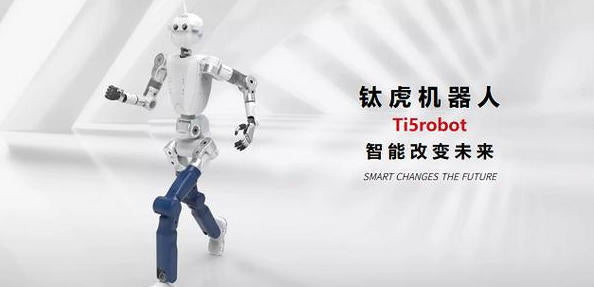
How Does Ti5 A6 Force Control Arm Enable Smarter Embodied AI Robots and Intelligent Manufacturing?
With the rapid advancement of artificial intelligence (AI), robotics, and smart manufacturing technologies, the global robotics industry is entering a new stage driven by embodied intelligence. Unlike traditional automation systems that mainly execute fixed programs, embodied AI robots (Embodied AI Robot) combine perception, decision-making, motion control, and physical interaction capabilities to operate in complex real-world environments.
In recent years, technologies such as force control robots, intelligent robotic arms, collaborative robots (Cobots), robot vision systems, and advanced motion control algorithms have become critical directions in the development of next-generation robotics.
During the 2026 World Artificial Intelligence Conference (WAIC 2026), embodied intelligence was highlighted for the first time as one of the two major strategic technology tracks alongside AI computing power. The conference attracted more than 200 companies showcasing innovations across:
- Industrial robots
- Humanoid robots
- Robotic components
- Dexterous manipulation systems
- Quadruped robots
- Embodied AI models
- Intelligent automation solutions
At WAIC 2026, Ti5 Robot will officially launch and showcase its latest innovation — the Ti5 A6 Force Control Arm, demonstrating how advanced force sensing, lightweight robot joint technology, and intelligent control systems can improve the capabilities of future intelligent robots.
Built with Ti5 Robot’s self-developed lightweight joint module, the Ti5 A6 Force Control Arm integrates an upgraded torque sensing system and proprietary robot motion control algorithms to accurately detect force changes during robot-environment interaction.
Unlike traditional industrial robotic arms that mainly rely on position control, force-controlled robotic arms can sense external resistance and dynamically adjust their movements, enabling:
- More precise operations
- Safer human-robot collaboration
- Flexible task execution
- Improved adaptability in complex environments
By combining advanced robotic hardware with intelligent algorithms, Ti5 Robot is helping transform traditional automation equipment into next-generation intelligent robots capable of sensing, learning, and interacting with the physical world.
What Is Ti5 Robot? Exploring the Future of Intelligent Robotics Technology
Ti5 Robot is a robotics technology company focused on developing advanced robotic components, intelligent robotic systems, and embodied AI solutions.
The company specializes in:
- Robot joint modules
- Force control robotic arms
- Motion control systems
- Torque sensing technology
- Industrial automation solutions
- Intelligent robot platforms
Traditional industrial robots have played an important role in manufacturing for decades. However, many conventional robots still operate within highly structured environments using predefined programs.
They are highly efficient for repetitive tasks but face challenges when dealing with:
- Changing environments
- Unstructured operations
- Delicate object handling
- Human collaboration
- Complex physical interaction
With the development of AI robotics and embodied intelligence, future robots require capabilities beyond simple movement.
Next-generation intelligent robots need to achieve:
Precise Force Perception
Robots must understand physical interactions with objects and environments, similar to how humans use touch.
High-Precision Motion Control
Robots need accurate movement control to perform delicate operations.
Environmental Interaction
Robots must adapt their behavior according to real-time conditions.
Autonomous Task Execution
Robots should complete increasingly complex tasks with minimal human intervention.
Through lightweight robotic hardware and intelligent control technologies, Ti5 Robot is developing key components that support the evolution of:
- Industrial robots
- Collaborative robots
- Humanoid robots
- General-purpose robots
- Embodied AI systems

What Is a Force Control Robot? Understanding Intelligent Robotic Arm Technology
A force control robot is an advanced robotic system that can detect and regulate the force generated during interaction with objects or environments.
Unlike traditional robots that mainly follow programmed movement paths, force-controlled robots use sensors and feedback systems to understand physical conditions and adjust their actions in real time.
The basic working process includes:
1. Force Detection Through Torque Sensors
High-precision torque sensors installed in robot joints measure external forces and changes in mechanical load.
These signals provide information about:
- Contact pressure
- Object resistance
- Assembly status
- Interaction conditions
2. Real-Time Data Processing
The collected force information is analyzed through intelligent control algorithms.
The robot can determine:
- Whether additional force is required
- Whether movement should slow down
- Whether position adjustments are needed
3. Adaptive Motion Control
Based on feedback data, the robotic system automatically modifies its movements.
This enables more flexible operations such as:
- Precision assembly
- Flexible gripping
- Surface inspection
- Polishing
- Human-assisted operations
This sensing-control-feedback process gives robots a capability similar to human touch, making force control technology an important foundation for embodied AI robots.
WAIC 2026: Ti5 Robot Launches Ti5 A6 Force Control Arm
At WAIC 2026, Ti5 Robot will officially introduce the Ti5 A6 Force Control Arm, a next-generation robotic arm designed for intelligent manufacturing and advanced robotics applications.
The product combines:
- Lightweight robot joint technology
- High-sensitivity torque sensing
- Intelligent force control algorithms
- Advanced motion control systems
to achieve more accurate and flexible robotic operations.
The core advantage of the Ti5 A6 Force Control Arm is its ability to understand interaction forces during operation.
Traditional robotic arms typically execute fixed trajectories. However, real-world industrial environments often involve uncertainty.
For example:
- Parts may have slight dimensional differences
- Assembly resistance may change
- Objects may require different gripping forces
- Human collaboration requires safer responses
The Ti5 A6 Force Control Arm addresses these challenges through real-time force feedback.
By continuously monitoring interaction forces, the robotic arm can adjust its behavior and improve task accuracy.
This makes it suitable for applications including:
- Precision assembly
- Electronics manufacturing
- Component insertion
- Product testing
- Flexible manufacturing
- Human-robot collaboration
How Does Ti5 A6 Force Control Arm Improve Smart Manufacturing?
As manufacturers move toward smart factories and flexible production systems, traditional automation methods are facing new challenges.
Modern manufacturing requires robots that can handle:
- Smaller production batches
- More product variations
- Higher precision requirements
- Human-machine collaboration
The Ti5 A6 Force Control Arm integrates multiple technologies to support advanced manufacturing scenarios.
Precision Assembly Applications
In industries such as electronics, semiconductor equipment, and precision components, robots must perform extremely accurate assembly tasks.
Traditional position-controlled robots may struggle when parts require delicate contact handling.
Force control technology enables robots to detect resistance changes during assembly and adjust their actions accordingly.
Benefits include:
- Reduced assembly errors
- Improved product quality
- Higher production reliability
- Better handling of fragile components
This makes force-controlled robotic arms valuable for precision manufacturing environments.
Flexible Manufacturing Applications
Future factories require robots that can quickly adapt to different products and production processes.
Unlike fixed automation equipment, intelligent robotic arms with force feedback can modify operations based on real-time conditions.
Applications include:
- Multi-product assembly lines
- Customized manufacturing
- Automated inspection
- Flexible production systems
This capability supports the transition from traditional automation toward intelligent manufacturing.
Human-Robot Collaboration Applications
Collaborative robots, also known as Cobots, are becoming increasingly important in modern factories.
Unlike isolated industrial robots, Cobots are designed to safely work alongside humans.
Force sensing technology improves collaboration safety by allowing robots to:
- Detect unexpected contact
- Adjust movement force
- Respond quickly to environmental changes
- Operate safely near workers
Through advanced force control systems, robots can become more flexible partners rather than simple production tools.
Robot Joint Module Technology: Why Lightweight Joints Matter for Future Robots
Robot joint modules are among the most important core components determining the performance and intelligence level of modern robots.
Often described as the “power joints” of robots, robot joint modules provide the essential capabilities required for movement, including torque output, precision control, stability, and flexibility.
Whether used in industrial robotic arms, humanoid robots, collaborative robots, or autonomous robots, high-performance joint modules directly influence how efficiently robots can interact with the physical world.
Traditional robot joints are mainly designed for repetitive industrial operations. However, the development of embodied AI robots requires more advanced joint technologies capable of supporting:
- Natural movement
- Precise force control
- High-speed response
- Compact structure
- Long-term reliability
A next-generation lightweight robot joint must balance several critical factors:
- High torque density
- Low weight
- High motion accuracy
- Efficient energy consumption
- Strong durability
- Intelligent control capability
Ti5 Robot’s self-developed lightweight joint module technology improves robotic performance through optimized mechanical structures, power systems, and control algorithms.
By reducing unnecessary mechanical weight while maintaining strong output capability, lightweight joint modules allow robots to achieve:
- Faster response speed
- Improved movement flexibility
- Better energy efficiency
- More precise operation control
These advantages are especially important for future robotics applications.
Lightweight Robot Joints in Humanoid Robots
Humanoid robots require extremely flexible movement capabilities because they are designed to operate in environments built for humans.
Unlike traditional industrial robots fixed in specific workspaces, humanoid robots must achieve:
- Balance control
- Multi-joint coordination
- Dynamic movement
- Object manipulation
- Human-like interaction
Lightweight and high-performance robot joints provide the foundation for these capabilities.
Future humanoid robots may rely on advanced joint technologies for:
- Walking stability
- Arm and hand manipulation
- Object handling
- Safe human interaction
As AI humanoid robots continue developing, robot joint modules will become one of the most important hardware foundations supporting intelligent physical movement.

Core Technology Advantages of Ti5 Robot Intelligent Robotics Solutions
The development of advanced robotic systems requires the combination of hardware innovation and intelligent software.
Ti5 Robot focuses on several key technologies that support the evolution of intelligent robots and embodied AI systems.
Self-Developed Robot Motion Control Algorithms
Motion control is one of the core technologies determining robotic performance.
A robot must not only move but also understand how to move efficiently, safely, and accurately.
Ti5 Robot develops proprietary robot control algorithms designed to improve:
- Movement stability
- Response speed
- Motion accuracy
- Task execution performance
Through intelligent control strategies, robotic systems can better coordinate movement between joints and respond to changing environments.
This capability is essential for applications requiring high precision, including:
- Industrial assembly
- Robotic inspection
- Flexible manufacturing
- Human-robot collaboration
High-Precision Torque Sensing Technology
Force perception is a key difference between traditional robots and intelligent robots.
By integrating advanced torque sensing technology, force-controlled robots can detect subtle changes during physical interaction.
This allows robots to:
- Measure external force
- Identify contact conditions
- Adjust operation strategies
- Improve task accuracy
For example, during precision assembly, a robot can sense whether a component is correctly positioned and automatically adjust its movement.
This creates a more intelligent interaction process compared with traditional position-based robots.
Intelligent Robotic Hardware Platform
Beyond individual components, Ti5 Robot focuses on developing complete robotic hardware platforms.
These platforms combine:
- Lightweight joint modules
- Robotic arm structures
- Force sensing systems
- Motion control technologies
to provide a foundation for future intelligent robot applications.
As robotics evolves from automation toward intelligence, integrated hardware platforms will become increasingly important.
Applications of Ti5 Force Control Robot Technology
The combination of force control, lightweight robotics, and intelligent motion systems creates opportunities across multiple industries.
Future applications of Ti5 Robot technologies may include:
Smart Manufacturing and Industrial Automation
Manufacturing remains one of the most important application areas for intelligent robots.
Force-controlled robotic arms can support:
- Precision manufacturing
- Automated assembly
- Quality inspection
- Flexible production
By improving adaptability and accuracy, intelligent robotic arms help factories achieve higher efficiency and flexibility.
Precision Assembly and Electronics Manufacturing
Modern electronics manufacturing requires extremely precise operations.
Robots used in these environments must handle:
- Small components
- Fragile materials
- Complex assembly processes
Force control technology enables robotic systems to perform delicate operations while reducing damage risks.
Potential applications include:
- Semiconductor component handling
- Electronic product assembly
- Precision equipment manufacturing
Collaborative Robots (Cobots)
Collaborative robots represent an important direction in future industrial automation.
Unlike traditional industrial robots operating separately from workers, Cobots are designed to cooperate directly with humans.
With force feedback and intelligent control, collaborative robots can provide:
- Safer interaction
- Flexible operation
- Easy deployment
- Better workplace efficiency
The Ti5 A6 Force Control Arm demonstrates how advanced force control technology can support the next generation of human-robot collaboration.
Research and Education Robotics
Advanced robotic arms are also becoming important platforms for robotics research and education.
Researchers can use intelligent robotic systems to study:
- Robot learning
- Motion planning
- Artificial intelligence
- Human-machine interaction
This helps accelerate innovation in future robotics technologies.
From Industrial Robotic Arms to Embodied AI Ecosystems: Ti5 Robot’s Future Vision
The robotics industry is entering a new era where AI, sensors, and robotic hardware are deeply integrated.
Future robots will no longer simply repeat programmed actions. Instead, they will become intelligent systems capable of:
- Understanding environments
- Learning from experience
- Making autonomous decisions
- Performing flexible tasks
The development of embodied AI robots requires advances across multiple technology areas:
- AI foundation models
- Robot perception systems
- Force sensing technology
- Motion control algorithms
- Intelligent hardware platforms
Through technologies such as:
- Force control robotic arms
- Lightweight robot joint modules
- Advanced robot control systems
- Intelligent sensing technology
Ti5 Robot is exploring new possibilities for next-generation robotics.
Future Applications of Embodied AI Robotics
As embodied intelligence technology matures, intelligent robots are expected to expand into more industries.
Humanoid Robot Development
Future humanoid robots require advanced joint systems and force control technologies to achieve natural movement and safe interaction.
Lightweight robot joints and intelligent control systems will help humanoid robots perform:
- Walking
- Object manipulation
- Human interaction
- Complex physical tasks
Smart Factories
AI-powered industrial robots will become key components of future manufacturing systems.
They will support:
- Autonomous production
- Flexible assembly
- Intelligent inspection
- Real-time optimization
Service Robotics
Intelligent robotic arms and mobile robots may support:
- Commercial services
- Healthcare assistance
- Educational applications
- Smart environments
Embodied AI Robot Training
Advanced robotic hardware will also provide important platforms for training future AI models.
Through real-world interaction data, robots can improve their ability to understand and perform physical tasks.
SLAMTEC LPX-E3 25m 360° regional monitoring 2D LiDAR 64 Field Sets for robots, AGV obstacle avoidance, and regional monitoring

The Era of Embodied AI: Ti5 Robot Enables More Intelligent Robotic Interaction
The 2026 World Artificial Intelligence Conference highlights the growing importance of embodied intelligence as a major technology trend.
As artificial intelligence, robotic hardware, sensing technologies, and intelligent control systems continue to converge, robots are evolving from simple automation machines into intelligent systems capable of perception, interaction, and autonomous operation.
The introduction of the Ti5 A6 Force Control Arm demonstrates how:
- Lightweight robot joint technology
- Torque sensing systems
- Force control algorithms
- Intelligent motion control
can improve robotic precision, safety, and flexibility.
In the future, technologies including:
- Force control robots
- Collaborative robots (Cobots)
- Industrial robots
- AI robotics systems
- Embodied AI robots
- Intelligent robotic arms
will play increasingly important roles across manufacturing, healthcare, services, and advanced automation.
By combining intelligent hardware with advanced robotics technologies, Ti5 Robot is helping accelerate the transformation from traditional automation toward a new era of intelligent robotics.
The future of robots will not only be defined by how machines move, but by how intelligently they can sense, adapt, and collaborate with humans in real-world environments.





Please upload banner from store admin blog pages
Please select collection from store admin blog pages