TOF 3D Camera: Advantages, Working Principle, and Key Applications
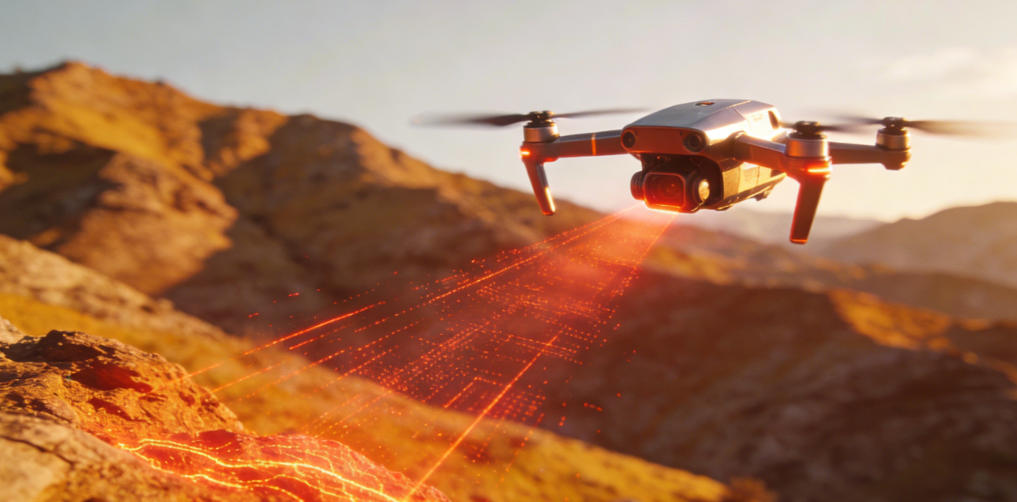
What is a TOF 3D Camera and what are its advantages and applications?
With the rapid development of 3D vision sensing technology, the ToF 3D camera (Time-of-Flight 3D camera) has become a key solution for depth measurement and spatial perception. ToF 3D technology captures three-dimensional depth information by emitting high-frequency light pulses and detecting their return time, enabling the creation of structured depth maps and 3D point clouds. It is widely used in robot navigation, industrial automation, smart vehicles, and augmented reality (AR/VR) applications.
This article explains the advantages, working principles, and key technical features of tof 3d cameras, and how these benefits are applied across various scenarios.
What Is a TOF 3D Camera?
A ToF 3D camera (based on the Time-of-Flight principle) is a high-precision depth sensing device that uses optical distance measurement. It actively emits infrared light or near-infrared laser toward a target, then calculates the distance for each pixel by measuring the time it takes for light to travel to the object and back. The result is a depth map or complete 3D spatial data.
Unlike traditional RGB cameras, which only capture 2D color images, ToF 3D technology provides spatial structure information, enabling real-time perception of object shapes, distances, and volumes. This makes tof 3d cameras suitable for both visual recognition and applications requiring high-precision depth data, such as robot navigation, automated production line monitoring, warehouse logistics, and AR/VR devices.
Compared to traditional stereo vision or structured light depth sensing solutions, tof 3d cameras offer:
- High real-time performance – full depth data from a single frame, ideal for dynamic scenes and moving objects
- Strong light adaptability – stable operation under low light, strong light, or reflective surfaces
- Simple system structure – no complex stereo matching or pattern recognition algorithms needed, reducing computational load
- Compact and integrable design – suitable for drones, robots, or portable devices
- Stable measurement accuracy – effective for uniform surfaces and low-texture objects
With the maturity of tof 3d technology, it has become a mainstream solution for modern 3D perception and spatial measurement, widely applied in industrial automation, smart transportation, consumer electronics, and security monitoring.

Core Advantages of TOF 3D Cameras
1. Simple System Architecture and Easy Integration
ToF 3D cameras use an active light source (infrared LED or laser) and a single sampling sensor, resulting in a simple system architecture and low algorithm complexity.
- Supports rapid prototyping and production deployment
- Compatible with robots, drones, smart industrial equipment, and more
- Advantage: reduces debugging time, lowers development costs, and accelerates project iteration
This structure allows tof 3d technology to be quickly deployed in automated factories, smart warehouses, mobile robots, and consumer electronics for efficient 3D sensing and spatial detection.
2. Real-Time Depth Output and High Responsiveness
ToF 3D cameras capture depth information for the entire scene in a single frame, generating 3D point clouds and depth maps:
- Low-latency response suitable for dynamic environments
- Supports obstacle avoidance, path planning, gesture recognition, and human-computer interaction
- Applicable to autonomous vehicles, industrial robots, and AR/VR real-time scene perception
Compared to stereo vision or structured light, tof 3d cameras excel in moving object detection and real-time 3D imaging, ideal for industrial and consumer scenarios requiring fast, accurate depth data.
3. Strong Light Adaptability
Since ToF technology relies on an active light source instead of ambient light, it works reliably under all lighting conditions:
- Bright environments – unaffected by direct sunlight or reflections
- Low light or night – accurate depth measurements still possible
- Complex environments – suitable for warehouses, factories, and outdoor navigation
This makes tof 3d cameras highly reliable in smart security, AGV/AMR navigation, and nighttime drone operations, ensuring consistent distance measurement and 3D perception.
4. Low Power Consumption and High Stability
Compared to stereo vision systems that require extensive image matching, tof 3d cameras have low computational load and power consumption:
- Suitable for edge devices, portable robots, and drones
- Stable operation over long periods, reducing overheating risk
- Battery-friendly for extended continuous operation
Hence, in smart warehouse logistics, industrial automation, and consumer electronics, ToF 3D cameras provide efficient and reliable performance.
5. Longer Detection Range and Wide Field of View
Advanced ToF 3D cameras can measure farther than traditional depth sensors while offering a wide field of view (FOV):
- Detection range: several meters up to tens of meters
- Ideal for large-area sensing, such as AGV path planning and warehouse stack monitoring
- Captures broad 3D data simultaneously, improving environmental modeling and navigation accuracy
Combined with high responsiveness and light adaptability, tof 3d cameras enable accurate, real-time, and reliable 3D spatial perception in autonomous driving, smart robotics, industrial automation, and warehouse logistics.
Working Principle of TOF 3D Cameras
ToF 3D cameras perform precise depth measurements using optical emission and reception systems. The core advantage is the ability to generate complete 3D spatial data in real time. The process can be summarized as follows:
-
Light Emission
- Emits modulated or pulsed light (usually infrared laser or high-power LED)
- Illuminates the entire field of view to provide data for depth calculation
-
Light Interaction with Target
- Light reflects off the object surface back to the camera
- ToF algorithms compensate for weak or reflective surfaces
-
Capture Reflected Light
- High-sensitivity ToF sensors capture returned light and measure time-of-flight or phase shift
- Each pixel can be sampled simultaneously for full-frame depth data
-
Calculate Distance
- Distance = Speed of light × (Round-trip time / 2)
- Enables rapid calculation of millions of pixels per frame
-
Generate Depth Map and 3D Point Cloud
- Aggregates distance data for 3D modeling, gesture recognition, robot navigation, and obstacle avoidance
Additional Features:
- Real-time depth output with millisecond-level latency
- Accurate in low light, strong light, and partially occluded conditions
- Scalable for integration with RGB cameras or IMUs for enhanced environmental perception
- Low power consumption suitable for edge devices, mobile robots, and drones
Using Time-of-Flight (ToF) measurement, ToF 3D cameras quickly produce 3D spatial structures per frame, making them ideal for real-time monitoring, industrial automation, smart devices, and autonomous driving.
Typical Applications of TOF 3D Cameras
TOF 3D cameras are widely used across industries thanks to their precision, real-time performance, and non-contact measurement capabilities:
1. Human Detection and Occupancy Counting
- Detects human shapes, posture, and location using depth data
- Privacy-friendly – no 2D image capture required
- Applications: smart buildings, crowd analytics, office space optimization, shopping mall monitoring
- Technical advantage: multiple people detected simultaneously in real time for accurate space management
2. Industrial Automation and Robot Navigation
- Provides real-time 3D depth data for path planning, dynamic obstacle detection, and safety monitoring
- Applications: AGVs, warehouse robots, industrial assembly robots, production line safety
- Advantage: accurately identifies moving and static obstacles in complex industrial environments
3. Consumer Electronics and Interactive Experiences
- Functions: gesture recognition, face detection, 3D scanning, AR/VR interaction
- Applications: smartphones, tablets, gaming devices, smart home control
- Advantage: higher accuracy than RGB cameras, faster response, enhanced user interaction
4. Smart Buildings and Security Monitoring
- Functions: dynamic scene monitoring, human tracking, intrusion alert, fire or hazard detection
- Applications: intelligent buildings, public spaces, factory security, parking management
- Advantage: operates reliably in low light or total darkness, enabling rapid alert and automated control
5. Autonomous Driving and Intelligent Transportation
- Functions: 3D perception of vehicle surroundings including pedestrians, cars, and obstacles
- Applications: autonomous vehicles, ADAS, smart traffic monitoring
- Advantage: precise spatial data even in complex roads or crowded environments, supporting path planning, collision warning, and smart avoidance
6. High-Precision Measurement and Industrial Inspection
- Functions: 3D modeling, dimension measurement, object positioning, surface defect detection
- Applications: precision parts inspection, production line quality control, 3D printing verification
- Advantage: tof 3d cameras deliver dense point cloud data for micron-level accuracy and real-time monitoring

ToF 3D Technology vs. Other Depth Sensing Methods
TOF 3D technology offers clear advantages over traditional image-based or matching 3D vision methods, particularly in real-time performance, environmental adaptability, and system simplicity:
1. Texture-Independent, Works in Complex Environments
- Unlike stereo vision or structured light, tof 3d cameras do not rely on surface texture
- Can measure uniformly colored or low-texture surfaces (walls, plastics, metal plates)
- Performs reliably under low-light, backlight, or reflective conditions
2. Fast Real-Time Depth Output
- Captures full depth information per frame
- Faster than image-matching systems without complex feature computation or triangulation
- Suitable for dynamic scenes, moving object tracking, robot navigation, and interactive electronics
3. Simple System Architecture and Easy Deployment
- Single-sensor architecture with active light source
- Minimal components make integration with smartphones, drones, and industrial robots straightforward
- Simplifies debugging and reduces hardware dependencies and development time
4. Low Power Consumption and Edge-Friendly
- No need for high-performance GPU/CPU for image matching
- Suitable for edge computing, mobile robots, drones, and IoT devices
- Low latency ensures fast response in real-world applications
5. High Reliability and Environmental Robustness
- Stable performance under various light, surface, and environmental conditions
- Works indoors, outdoors, at night, or in industrial environments
- Dense point cloud output enables accurate 3D modeling, object recognition, and spatial analysis
Overall, TOF 3D technology excels in real-time performance, environmental adaptability, system simplicity, and low power consumption, making it the preferred solution for consumer electronics, industrial automation, smart transportation, and robotics.
Summary: Advantages and Future of TOF 3D Cameras
tof 3d cameras offer:
- Real-time 3D depth output
- Stable performance under varying lighting conditions
- Simple system architecture with low computational load
- Scalable detection range
- Versatile, low-power design
Looking ahead, as ToF components, algorithms, and cost efficiency improve, ToF 3D depth sensing is expected to expand further into autonomous driving, smart manufacturing, smart homes, robotics, and AR/VR interaction, becoming a cornerstone of next-generation 3D perception technology.
Vzense DS86 & DS87 ToF 3D Cameras - Industrial Grade, High Precision,5m1600*1200

After-sales Service: Our professional technical support team specializes in TOF camera technology and is always ready to assist you. If you encounter any issues during the usage of your product after purchase or have any questions about TOF technology, feel free to contact us at any time. We are committed to providing high-quality after-sales service to ensure a smooth and worry-free user experience, allowing you to feel confident and satisfied both with your purchase and during product use.




Please upload banner from store admin blog pages