
ToF Depth Sensing for High-Speed Robot Navigation Explained
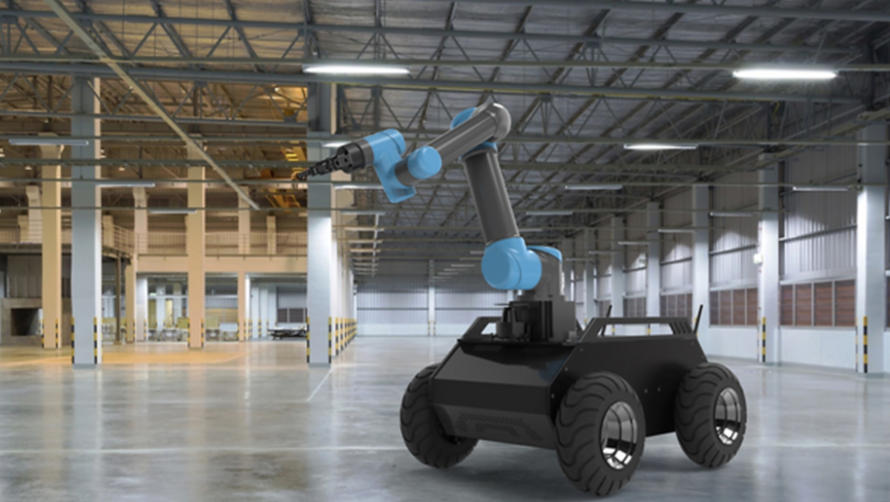
ow Does ToF Depth Sensing Improve High-Speed Mobile Robot Navigation?
As mobile robotics evolves from low-speed operations to highly dynamic environments, modern robots face growing challenges in real-time navigation, obstacle avoidance, safety control, and intelligent perception. Among all sensor technologies, Time-of-Flight (ToF) depth sensing stands out as a critical enabler of high-precision autonomous navigation and adaptive environmental awareness for fast-moving robots in both indoor and outdoor scenarios.
What Is Time-of-Flight (ToF) Depth Sensing?
ToF technology actively emits light, usually near-infrared, and measures the time it takes for the light to travel to an object and return. By calculating this flight time with the speed of light, ToF sensors generate high-resolution per-pixel depth data and real-time 3D depth maps, giving robots a true understanding of spatial geometry and environment structure at high frame rates. Unlike passive vision systems, ToF depth sensing remains robust under low-light conditions, variable lighting, and low-texture surfaces, making it ideal for high-speed navigation and autonomous decision-making.

1. Enhanced Localization & Navigation with ToF + SLAM
Reliable precision localization and real-time navigation are foundational for high-speed mobile robots. ToF depth cameras integrated with advanced multi-sensor SLAM (Simultaneous Localization and Mapping) systems improve a robot’s ability to build accurate 3D maps, localize itself, and plan optimal routes.
SLAM and Sensor Fusion
- Visual SLAM & LiDAR Integration – ToF depth data enhances SLAM algorithms by adding dense geometric information, helping robots maintain accurate pose estimation in low-texture or challenging environments such as warehouses and factories.
- GNSS & RTK-GPS Fusion – Combining ToF depth data with GNSS and RTK-GPS systems allows centimeter-level accuracy for outdoor navigation across varied terrain.
- IMU & ToF Fusion – Fusion with Inertial Measurement Units (IMUs) counteracts vibration, rapid motion, and gyro drift, stabilizing position and orientation during high-speed movement.
Together, these multi-sensor systems deliver robust 3D localization, reliable path planning, and high-efficiency navigation even in dynamic, cluttered spaces.
2. Dynamic Path Planning & Intelligent Decision Making
High-speed robots must react instantly to environmental changes. ToF depth perception provides dense spatial data that enhances real-time path planning and autonomous behavior:
- Dynamic Route Adjustment – Algorithms like A*, Dijkstra, and reinforcement learning use ToF 3D information to quickly replan safe paths around moving obstacles.
- Deep Learning-Driven Decisions – Spatial structure from ToF depth maps fuels AI models for intelligent motion strategies and context-aware decision making.
- Cooperative Multi-Robot Planning – Precise depth data supports coordinated task execution and distributed navigation strategies in multi-robot systems.
3. Real-Time Obstacle Avoidance & Safety Control
Accurate obstacle detection and avoidance is essential for high-speed autonomous systems. ToF sensors offer continuous 3D spatial awareness, enabling robots to navigate around unexpected obstacles, maintain safe distances, and execute protective maneuvers:
- 3D Obstacle Mapping – ToF depth maps allow robots to identify pedestrians, vehicles, or irregular barriers in real time.
- Sensor Fusion with LiDAR & Ultrasonics – Combining ToF data with other sensors increases perception accuracy in crowded or fast-moving environments.
- Emergency Mitigation Systems – Continuous monitoring supports braking systems and virtual safety barriers, helping robots avoid collisions.

4. Advanced Terrain Adaptability for Outdoor Robots
Autonomous robots increasingly operate outside controlled indoor areas, such as farmlands, uneven terrain, and urban delivery routes. ToF depth sensing enhances terrain awareness and all-terrain adaptability:
- Real-Time Terrain Scanning – Recognizing slopes, bumps, and ground features in 3D allows robots to navigate safely on sand, mud, or rocky ground.
- Adaptive Drive & Suspension Systems – Using ToF data, mobile robots can adjust wheel torque and chassis dynamics in real time for better stability and traction.
- Route Optimization – 3D terrain models enable robots to choose energy-efficient, safe paths and avoid rollover or entrapment risks.
5. Multimodal Perception and Intelligent Environmental Understanding
Advanced robots rarely rely on a single sensor. Multimodal perception architectures combining ToF depth cameras with LiDAR, RGB-D cameras, radar, and IMU sensors provide comprehensive environmental understanding:
- Rich 3D Semantic Mapping – ToF depth data helps robots categorize elements as traversable terrain, movable objects, or hazards.
- All-Weather Operational Resilience – ToF works in strong backlight, low light, or poor visibility, especially when fused with radar for adverse conditions.
- Point Cloud Decision Foundations – Dense ToF point clouds support SLAM, 3D reconstruction, trajectory prediction, and real-time dynamic response.
These capabilities enable robots not just to 'see obstacles,' but to understand and interact with their environment intelligently.

Why ToF Depth Sensing Is Essential for Future Robotics
As autonomous systems become faster, more versatile, and more integrated into daily life — from smart warehouses and AGVs to inspection drones and service robots — ToF depth sensing has become indispensable. Its combination of high frame rate, low latency, real-time 3D data, and environment-independent measurement makes it a cornerstone of modern navigation and autonomy strategies.
By enabling high-speed navigation, precise localization, semantic understanding, and safety-critical decision making, ToF depth sensors empower next-generation robots to operate efficiently, reliably, and safely in the real world.
ROBOSENSE Airy LIDAR digital hemispherical wide-angle 3D 96-channel / 192-channel laser radar

Our professional technical team specializing in 3D camera ranging is ready to assist you at any time. Whether you encounter any issues with your TOF camera after purchase or need clarification on TOF technology, feel free to contact us anytime. We are committed to providing high-quality technical after-sales service and user experience, ensuring your peace of mind in both shopping and using our products.




Please upload banner from store admin blog pages