Why ToF Cameras Are Essential for 3D Depth Sensing and Smart Vision
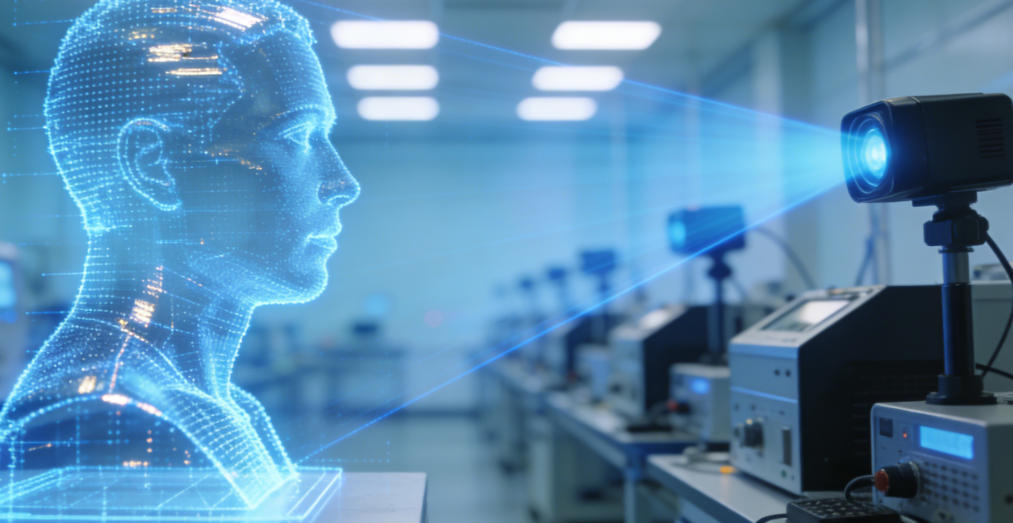
What Makes ToF Cameras the Best Choice for Depth Sensing and Smart Vision?
With the rapid development of 3D vision, machine perception, automation, and smart devices, the ToF camera (Time-of-Flight camera) has become a core technology across industries such as consumer electronics, industrial automation, autonomous driving, and robotics. Compared with traditional cameras and other depth sensing technologies, the ToF camera offers unique advantages, making it highly reliable and widely adopted in real-world applications.
What Is a ToF Camera?
A ToF (Time-of-Flight) camera, also known as a flight-time depth camera, is a high-precision sensor that captures three-dimensional spatial information based on the principle of light flight time. It emits modulated light (such as infrared or laser pulses) and measures the time it takes for the light to reflect off objects and return to the sensor, accurately calculating the distance of each pixel and generating a complete, high-resolution 3D depth map.
Unlike stereo vision systems, which rely on complex image-matching algorithms, or structured light technologies, which project precise patterns, the ToF camera directly measures depth through time-of-flight calculations. This approach reduces computational delay and significantly improves stability and accuracy in dynamic environments.
Modern ToF cameras often integrate high-speed optical sensor chips and signal processing modules, capturing the entire scene in milliseconds and supporting high frame rates. This makes them particularly suitable for real-time applications such as hand gesture recognition, human motion capture, intelligent interactions, AR/VR spatial mapping, robotic navigation, and autonomous driving assistance.
Additionally, ToF cameras provide rich point cloud and depth data, enabling AI algorithms to “understand” the environment, not just 'see' it. They maintain measurement stability even under challenging lighting or background interference, which is why they are widely adopted in consumer electronics, industrial automation, and intelligent robotics.

Key Advantages of ToF Cameras
1. Accurate and Fast Depth Measurement
ToF cameras can capture the depth information of an entire scene with high precision, calculating distances for each pixel using light travel time. They can achieve millimeter- or even micron-level accuracy, quickly generating high-resolution depth maps for small objects or large environments. This makes them ideal for gesture recognition, motion sensing, smart home devices, industrial inspection, and UAV mapping.
Compared to traditional stereo vision or structured light systems, ToF cameras reduce computational complexity and deliver more stable, efficient performance in dynamic environments and moving target detection.
2. Real-Time Response and High Frame Rate
ToF cameras support high-frame-rate output, enabling dozens to hundreds of depth frames per second. This ensures smooth, low-latency feedback in AR/VR interactions, gesture control, motion-sensing games, and SLAM (Simultaneous Localization and Mapping) systems, improving operation accuracy and user experience.
In industrial automation, ToF cameras enable fast target recognition, automated sorting, and dynamic monitoring on production lines, enhancing efficiency and reducing errors.
3. Strong Light Adaptability
Since ToF cameras actively emit light for measurement, they can operate reliably in bright sunlight, backlighting, or low-light conditions. This makes them suitable for outdoor AR navigation, autonomous driving assistance, UAV inspection, and smart security applications.
Compared to passive stereo vision or structured light cameras, ToF cameras are less affected by environmental light variations, ensuring higher measurement accuracy and reducing data loss or misdetection.
4. Simple Structure, Small Size, and Easy Integration
ToF camera modules are compact, typically consisting of a light source, ToF chip, and receiver. They can be easily integrated into smartphones, tablets, AR/VR headsets, drones, robots, and industrial inspection systems.
The small form factor also facilitates multimodal sensor fusion, combining RGB imaging, IMU data, or LiDAR for richer spatial understanding. In smart homes, retail, and robotic navigation, miniaturized ToF cameras enable high-precision environmental perception in portable devices.
5. High Cost-Effectiveness
Compared with LiDAR or complex structured light cameras, ToF cameras are more affordable to manufacture and integrate, meeting the needs of both consumer and industrial applications. Their cost-effectiveness has driven widespread adoption in smartphones, AR/VR devices, industrial automation, logistics, and smart security systems.
With continued advances in chip technology, optical design, and algorithm optimization, ToF cameras will achieve higher resolution, lower power consumption, and smaller size, expanding their applicability in consumer electronics, smart homes, robotics, and Industry 4.0.
Major Application Scenarios of ToF Cameras
Thanks to high-precision depth sensing, fast response, and strong light adaptability, ToF cameras are widely applied across industries:
-
Smartphones and Consumer Electronics
ToF cameras enhance facial recognition, bokeh effects, gesture recognition, and 3D modeling on smartphones, tablets, and wearables. They provide stable spatial awareness for AR applications, virtual try-ons, hand gesture interactions, and immersive gaming experiences. -
Gesture Interaction and Immersive Experiences
In motion-sensing games, AR/VR, smart homes, and interactive exhibits, ToF cameras can precisely detect hand movements and gestures, enabling touchless control. Combined with AI, they support multi-hand collaboration, dynamic gesture sequences, and complex action recognition, widely used in education, virtual offices, remote collaboration, and entertainment. -
Autonomous Driving and Advanced Driver Assistance Systems
ToF cameras capture real-time 3D data of roads, pedestrians, vehicles, and obstacles, enhancing environmental perception. They assist with path planning, collision warnings, and autonomous driving decisions, maintaining stable performance in low-light or complex lighting conditions. Integrated with LiDAR or radar, ToF cameras provide a reliable and cost-effective depth sensing solution for autonomous vehicles and smart transportation. -
Robotics and Industrial Automation
In manufacturing, logistics, and service robots, ToF cameras enable object detection, obstacle avoidance, path planning, and environmental mapping. Robots can quickly identify objects in their workspace for efficient material handling, sorting, assembly, and quality inspection, improving safety and operational efficiency. -
Logistics, Security, and Healthcare
In logistics, ToF cameras facilitate accurate parcel measurement, item recognition, and automated sorting, improving warehouse efficiency. In security, they enable people counting, motion monitoring, and behavior analysis. In healthcare, they support motion capture, posture analysis, and rehabilitation training, helping medical professionals conduct precise evaluations and remote monitoring.
These applications demonstrate how ToF cameras provide reliable 3D perception and drive advancements in AR/VR, intelligent interaction, autonomous driving, and industrial digitalization. With ongoing technology upgrades, their use in consumer electronics, smart cities, Industry 4.0, and healthcare will continue to expand.

Challenges and Future Trends of ToF Cameras
Despite their advantages, ToF cameras face technical and practical challenges:
-
Limited resolution and detail
Current ToF depth maps may lack sufficient resolution for small objects, intricate textures, or fine edges, potentially affecting AR/VR applications, precision industrial inspections, or gesture motion capture. -
Susceptibility to background light and multipath interference
Strong sunlight, reflective surfaces, or complex reflections can cause measurement errors. Advanced algorithms, signal filtering, optical shielding, and multi-frequency modulation are required to improve stability. -
Detection range limitations
Most consumer ToF cameras are optimized for short to mid-range measurement (typically centimeters to a few meters). Large-scale environmental scanning or long-distance detection often requires higher-performance sensors or LiDAR integration.
Future Development Trends
The ToF camera is evolving with improvements in hardware, optics, and AI algorithms:
-
Higher resolution and precise depth sensing
Capturing finer point clouds for high-precision 3D modeling, small object recognition, and complex motion capture. -
Lower power consumption and higher efficiency
Optimized for portable AR/VR devices, smartphones, and industrial systems with real-time performance. -
Miniaturization and lightweight integration
Easier integration into headsets, drones, mobile robots, wearables, and smart home devices for versatile applications. -
Enhanced AI integration
Deep learning enables automatic scene understanding, gesture recognition, human posture analysis, behavior prediction, and environmental mapping, enhancing intelligent interactions and autonomous decision-making. -
Multimodal data fusion
Combining RGB images, IMU sensors, and LiDAR for 3D reconstruction, spatial computing, and digital twin applications, achieving seamless virtual-real integration.
In summary, despite some challenges, ToF cameras are advancing rapidly through hardware improvements, algorithmic upgrades, and AI integration, becoming core 3D perception technology for AR/VR, intelligent interaction, autonomous driving, industrial automation, and smart cities.
Conclusion
With high-precision depth sensing, fast response, strong environmental adaptability, compact size, and cost-effectiveness, ToF cameras are widely used in consumer electronics, intelligent interaction, autonomous driving, industrial automation, and security systems. As optical technology, chip manufacturing, and depth perception algorithms continue to advance, ToF cameras will play an increasingly central role in intelligent vision, 3D sensing, and spatial awareness, bridging the gap between virtual and real worlds.
IHawk 100E 3D Structured Light Camera With VGA Resolution And 0.3-8 Meters Range

After-sales Service: Our professional technical support team specializes in TOF camera technology and is always ready to assist you. If you encounter any issues during the usage of your product after purchase or have any questions about TOF technology, feel free to contact us at any time. We are committed to providing high-quality after-sales service to ensure a smooth and worry-free user experience, allowing you to feel confident and satisfied both with your purchase and during product use.




Please upload banner from store admin blog pages