
Industrial LiDAR: 3D Sensing & Automation for Smart Factories
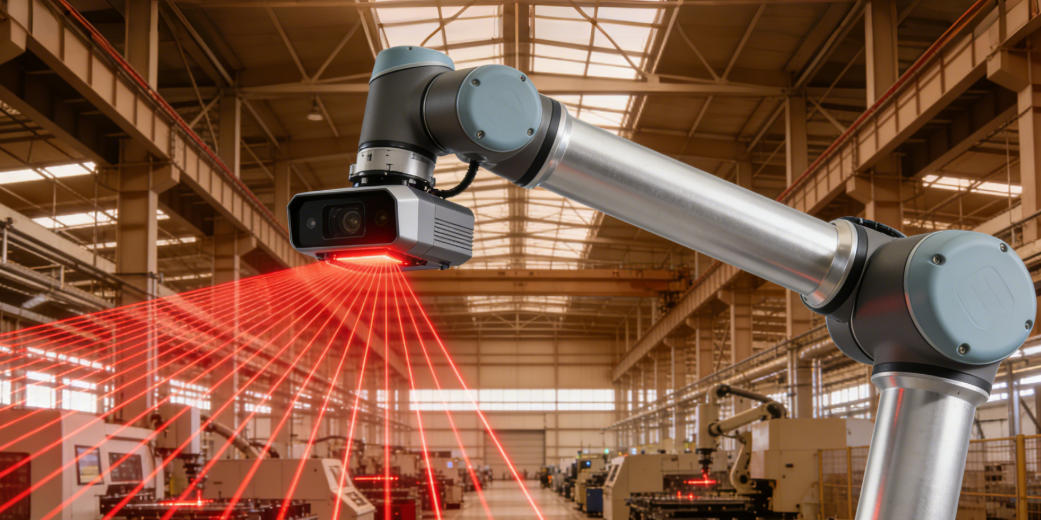
What Is Industrial LiDAR and How Can It Improve Smart Factories and Robotics?
In modern smart factories, industrial automation, and intelligent logistics, Industrial LiDAR has become a key core technology. Unlike traditional sensors, industrial LiDAR uses Light Detection and Ranging (LiDAR) technology to perform real-time, high-precision three-dimensional spatial perception and distance measurement in complex environments. It provides efficient and reliable data support for industrial automation equipment, robot navigation systems, warehouse management, and safety monitoring.
Core Advantages of Industrial LiDAR
Industrial LiDAR systems emit high-speed laser pulses and receive reflected signals, calculating the laser's time of flight (ToF) to obtain millimeter-level accurate distance data, generating precise 3D spatial information. Compared to traditional measurement methods, industrial LiDAR offers significant advantages in accuracy, response speed, reliability, and environmental adaptability, making it an essential sensor for industrial automation, smart manufacturing, and unmanned material handling.
-
High-Precision 3D Point Cloud Output
Industrial LiDAR can generate high-density, high-resolution 3D point cloud data, capturing every detail of complex industrial environments. This data can be used for industrial AR/VR visualization, robot path planning, automated production line monitoring, and industrial modeling and 3D mapping, providing precise data for smart factories, warehouse management, and automated logistics. -
Real-Time Environmental Perception and Dynamic Detection
Industrial-grade LiDAR can perform environmental scanning in milliseconds, suitable for mobile robots, AGVs (Automated Guided Vehicles), and unmanned material handling vehicles for obstacle detection and avoidance. Combined with AI algorithms, industrial LiDAR can distinguish between static and dynamic objects, enabling dynamic environment perception and improving safety and operational efficiency. -
Non-Contact Measurement and Strong Anti-Interference Capability
Industrial LiDAR uses laser ranging, performing precise measurements without contacting the target, avoiding wear and contamination issues associated with traditional sensors. Its laser wavelength and modulation technology also effectively resist strong light, dust, smoke, and industrial noise interference, ensuring stable performance in various complex industrial environments. -
Suitable for Harsh Industrial Environments
Industrial LiDAR is designed to withstand extreme conditions such as high/low temperatures, dust, humidity, and vibration, meeting IP65/IP67 protection standards. Whether in mines, ports, factory floors, or large warehouses, industrial LiDAR can continuously deliver reliable measurement data, becoming an indispensable sensor for industrial automation systems. -
Multi-Functional Integration and Data Compatibility
Modern industrial LiDAR systems not only provide raw point cloud data but also include built-in algorithms for distance, speed, direction, and shape recognition. They support Ethernet, RS485, CAN, USB, and other industrial communication protocols, seamlessly integrating with PLCs, DCS, and industrial robot control systems, meeting complex application needs in smart factories and automated production lines.

Typical Applications of Industrial LiDAR in Industrial Automation
With the rapid growth of the industrial automation LiDAR market, industrial LiDAR technology is widely applied in manufacturing, warehouse logistics, construction inspection, mining exploration, smart ports, and robot navigation. It provides high-precision 3D spatial perception, real-time monitoring, data analysis, and intelligent decision-making, offering strong support for industrial safety and operational efficiency.
1. Smart Perception in Factories and Production Lines
In smart factories and Industry 4.0 scenarios, industrial LiDAR enables automated production line monitoring, equipment status perception, and safety protection. It scans factory environments in real-time, monitors machines and personnel, and facilitates robot path planning, dynamic obstacle avoidance, and automated quality inspection. When integrated with industrial robots and PLC control systems, industrial LiDAR optimizes production workflows, reduces human error, and supports flexible manufacturing, smart assembly, and unmanned production lines, improving efficiency and safety.
2. Logistics, Warehousing, and Automated Material Handling
In smart logistics and warehouse management, industrial LiDAR is a core sensor for AGVs, unmanned material handling robots, and automated sorting systems. It captures 3D spatial data of the warehouse in real-time, accurately detecting shelves, obstacles, and moving objects, enabling navigation, path optimization, and collision avoidance. Combined with IoT and intelligent scheduling, industrial LiDAR supports indoor and outdoor warehouse automation, intelligent picking, and real-time inventory management, greatly improving efficiency and reducing labor costs.
3. Mining and Large Outdoor Environments
In mining, construction sites, ports, and other large outdoor scenarios, industrial LiDAR enables long-range scanning and high-density point cloud generation to quickly reconstruct 3D environmental models. It supports vehicle navigation, equipment monitoring, operational safety management, and terrain mapping. Industrial LiDAR maintains high-precision measurements in harsh conditions such as dust, smoke, and strong sunlight, providing reliable perception for unmanned mining vehicles, construction robots, and heavy machinery, reducing accident risks and improving site visualization and management efficiency.
4. Digital Twins and Industrial 3D Modeling
By scanning and generating high-precision 3D point clouds, industrial LiDAR enables enterprises to build digital twin models, creating virtual simulations of factories, warehouses, mines, and construction sites. Digital twins optimize factory layouts, production workflows, logistics paths, and equipment maintenance, simulate potential risks in advance, and support intelligent scheduling, predictive maintenance, and production optimization. Combined with AI analytics and big data platforms, industrial LiDAR data can produce accurate 3D maps, real-time environmental monitoring reports, and automated decision support systems, forming a foundation for Industry 4.0 and smart factory construction.
How to Choose the Right Industrial LiDAR
Selecting industrial LiDAR requires considering application scenarios, accuracy requirements, and environmental conditions. Different models vary in measurement range, resolution, interface protocols, and environmental adaptability, so understanding key parameters helps enterprises choose the most suitable device for reliable industrial automation.
Measurement Range and Resolution
- Measurement Range: Industrial LiDAR ranges from a few meters to hundreds of meters. Long-range LiDAR is ideal for mines, ports, large warehouses, and outdoor scenarios, while short-range, high-precision LiDAR suits production line monitoring, AGV navigation, and robot obstacle avoidance.
- Angular Resolution and Point Cloud Density: Higher resolution generates finer 3D point clouds, capturing small objects and complex details, suitable for industrial modeling, digital twins, and equipment inspection.
- Scanning Speed: High-speed scanning LiDAR enables real-time perception for mobile devices, particularly AGVs, unmanned material handling robots, and mobile industrial robots.
Environmental Adaptability and Protection Rating
- Dust and Water Resistance: Choose LiDAR with IP65, IP66, or IP67 protection for stable operation in dusty, humid, or wet environments.
- Temperature and Weather Tolerance: Industrial LiDAR should maintain accuracy under high/low temperatures or drastic temperature changes, suitable for indoor/outdoor warehouses, mines, construction sites, and ports.
- Anti-Interference Capability: High-quality LiDAR uses specific wavelengths and filtering technology to resist light, smoke, dust, and electromagnetic interference for reliable data.
Interfaces and Compatibility
- Communication Protocols: Industrial LiDAR typically supports Ethernet, RS485, CAN, USB, and other industrial protocols, enabling integration with existing control systems.
- System Integration: Devices should seamlessly connect with PLCs, DCS, industrial robot controllers, automated production lines, and warehouse management systems for data sharing and centralized control.
- Software Support and Expandability: Prefer systems with software support for point cloud visualization, data analysis, and algorithm development, facilitating upgrades and advanced applications like AI path planning and smart obstacle avoidance.
Other Selection Tips
- Laser Type and Safety: Choose 905nm or 1550nm laser wavelength based on application for measurement accuracy and human safety.
- Size and Mounting: LiDAR for mobile robots or AGVs should be lightweight, compact, and easy to install and maintain.
- Maintenance and Lifespan: Industrial LiDAR should provide long-term stability, low maintenance, and 24/7 operational reliability.
By evaluating these factors, enterprises can select the right industrial LiDAR based on application scenario (warehouse, factory, mine, port), accuracy requirement (millimeter or centimeter-level), and environmental conditions (indoor, outdoor, harsh conditions), providing high-precision perception for industrial automation, smart logistics, and digital twin construction.

Industrial LiDAR and Future Trends
With the rapid development of Industry 4.0, smart manufacturing, intelligent logistics, and digital twin factories, the industrial LiDAR market is expected to maintain high growth over the next decade. Particularly in industrial robot perception, unmanned vehicle navigation, warehouse automation, smart factory monitoring, and mining/port automation, industrial LiDAR will become a core sensor, providing precise, real-time environmental perception and data support.
Technology Development Trends
-
High Precision and Long-Range Fusion
Future industrial LiDAR will combine high precision with long-range detection, achieving comprehensive perception of large industrial environments and complex outdoor scenes. Millimeter-level precision and hundred-meter range will meet diverse needs from smart warehouses and production lines to open-pit mines and port operations. -
Miniaturization and Modular Design
To accommodate AGVs, unmanned material handling robots, and mobile industrial robots, industrial LiDAR is moving toward compact, lightweight, and modular designs for easier integration, installation, and maintenance. -
Integration with AI and Edge Computing
Industrial LiDAR generates massive data. Future systems will integrate artificial intelligence (AI) and edge computing for real-time point cloud analysis, smart obstacle avoidance, path planning, and automated decision-making, reducing reliance on central servers and improving operational intelligence. -
Solid-State LiDAR and Cost Reduction
Compared with traditional mechanical spinning LiDAR, solid-state LiDAR is compact, vibration-resistant, and lower cost, enabling large-scale deployment in industrial robots, AGVs, unmanned vehicles, and automated warehouses. -
Multi-Sensor Fusion
Future industrial LiDAR will combine with vision cameras, infrared sensors, and radar systems to achieve high-precision, all-weather environmental perception and safety monitoring, supporting smart factories, unmanned warehouses, and intelligent ports.
Industry Outlook
- Smart Manufacturing and Industry 4.0: Integrating industrial LiDAR with robots, AGVs, and automated production lines enables flexible production, real-time quality monitoring, and unmanned operations.
- Automated Warehousing and Logistics: Supports AGV navigation, shelf obstacle avoidance, unmanned handling, and automated sorting, improving efficiency and reducing labor costs.
- Digital Twins and Industrial Modeling: Combining 3D point clouds with AI creates real-time digital twin models for optimized factory layouts, logistics routes, and production planning.
- Mining and Port Automation: Enables vehicle navigation, equipment monitoring, and operational safety management, enhancing safety and efficiency.
Future Value and Commercial Potential
As industrial intelligence advances, industrial LiDAR will evolve from a single sensor into a key node in industrial IoT systems. It not only improves efficiency and safety but also integrates with big data analytics, AI decision systems, and industrial cloud platforms, enabling predictive maintenance, intelligent scheduling, and energy optimization, becoming a core technology for enterprise digital transformation and smart industrial upgrading.
Summary: Why Choose Industrial LiDAR?
| Advantage | Description |
|---|---|
| High-Precision Measurement | Real-time 3D point cloud generation with millimeter-level accuracy |
| Dynamic Environment Perception | Supports mobile robots and autonomous navigation |
| Strong Environmental Adaptability | Stable performance in complex industrial environments |
| Wide Industry Applications | Applicable to factories, warehouses, mining, construction, and more |
As an advanced industrial-grade LiDAR technology, industrial LiDAR has become a foundational technology in smart manufacturing and automation, enabling safer, more efficient, and intelligent industrial operations.
Okulo™ P1 Precision RGB-Depth Sensing Camera: High-Quality Imaging, Advanced Time-Of-Flight Technology,100FPS, And Robust Hardware Integration

After-sales Service: Our professional technical support team specializes in TOF camera technology and is always ready to assist you. If you encounter any issues during the usage of your product after purchase or have any questions about TOF technology, feel free to contact us at any time. We are committed to providing high-quality after-sales service to ensure a smooth and worry-free user experience, allowing you to feel confident and satisfied both with your purchase and during product use.





Please upload banner from store admin blog pages