RGB-D Camera Guide: 3D Vision for Robotics, AR/VR & Industrial Use

What is an RGB-D Camera and How Does It Enable 3D Vision in Robotics and Industry?
With the rapid development of artificial intelligence, robotics, and industrial automation, RGB-D (Red, Green, Blue + Depth) cameras have become a core sensing device in modern machine vision systems. RGB-D cameras can capture both color images and depth information simultaneously, enabling true 3D vision perception.
Unlike traditional RGB cameras that only provide 2D image data, RGB-D cameras combine color information with depth data, allowing machines to 'understand spatial structures.' They are widely used in robot navigation, 3D modeling, AR/VR, industrial inspection, and intelligent recognition systems.
What is an RGB-D Camera?
An RGB-D camera is a high-performance visual sensing device capable of capturing both RGB color image data and Depth information simultaneously. It is a key component in modern computer vision and robotic perception systems.
RGB-D cameras not only allow machines to 'see' the color and texture of objects but also 'understand' their position in 3D space, enabling true 3D perception capability.
Traditional imaging systems can only provide 2D images, while RGB-D cameras add the 'depth dimension,' allowing machines to achieve spatial understanding. This is a key technological advancement from 2D vision to 3D vision.
What Do RGB and Depth Data Represent?
RGB-D camera output consists of two main components:
-
RGB Images (Red, Green, Blue)
Provide color, texture, and brightness information to help systems recognize 'what an object looks like.' -
Depth Images
Provide the actual distance (Z-axis information) of each pixel relative to the camera, helping the system understand 'how far it is.'
By fusing RGB and Depth data (RGB-D fusion), systems can generate complete 3D point clouds, enabling accurate modeling of real-world spaces.

How Does RGB-D Technology Capture Depth?
Current RGB-D vision systems rely on three main depth sensing technologies:
1. Structured Light
Projects specific light patterns onto the object surface and calculates depth based on pattern deformation. Commonly used for short-range, high-precision applications.
2. Time-of-Flight (ToF)
Measures the time difference between emitted and reflected light to calculate distance. ToF is one of the most widely used RGB-D depth technologies, suitable for real-time and dynamic scenes.
3. Stereo Vision
Uses two cameras to simulate human binocular vision and computes depth from image disparities. Widely applied in robotics and autonomous driving.
Core Advantages of RGB-D Cameras
Compared with traditional RGB cameras or single depth sensors, RGB-D cameras offer significant benefits:
- True 3D spatial perception
- High-precision depth measurement and modeling
- Real-time environmental understanding and dynamic recognition
- Robustness in complex scenarios
- Native support for AI and machine vision algorithms (AI + Machine Vision)
Thus, RGB-D cameras have become essential hardware for modern machine vision systems and intelligent robotics.
Core Benefits of RGB-D Technology
RGB-D cameras provide the following advantages:
- True 3D perception: Captures color + depth simultaneously
- High-precision spatial modeling: Supports centimeter- or millimeter-level measurements
- Real-time processing: Suitable for dynamic scene recognition
- Non-contact measurement: Ideal for industrial and robotic applications
- AI-friendly data: Compatible with deep learning and machine vision algorithms
RGB-D cameras are therefore a critical component in modern machine vision systems.
How RGB-D Cameras Work
RGB-D cameras acquire spatial information through different depth sensing technologies. The basic workflow is:
- RGB sensor captures color images
- Depth module (ToF / Structured Light / Stereo) calculates distance
- RGB and Depth data are aligned (calibration)
- Fused RGB-D data stream is output
- AI or algorithms perform 3D scene understanding and analysis
This process allows machines to evolve from 'seeing' to 'understanding space.'
Key Application Scenarios of RGB-D Cameras
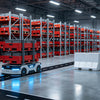
1. Robot Navigation and Environmental Perception
In service robots, industrial robots, and AMR systems, RGB-D cameras are widely used for:
- Environment mapping (SLAM)
- Obstacle avoidance and path planning
- Object detection and grasping
- Indoor localization
Depth data enables robots to accurately recognize spatial structures and enhance autonomous mobility.
2. 3D Modeling and Digital Twins
RGB-D cameras play a crucial role in 3D reconstruction:
- Architectural 3D scanning
- Industrial equipment modeling
- Virtual reality scene generation
- Digital twin systems
RGB-D cameras generate high-precision 3D models efficiently, reducing modeling costs significantly.
3. Augmented Reality (AR) and Virtual Reality (VR)
In AR/VR applications, RGB-D cameras are used for:
- Real-time spatial recognition
- Calculating occlusion between virtual and real objects
- AR furniture placement
- Immersive interactive experiences
Depth information ensures virtual content integrates realistically into physical space.

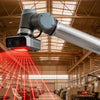
4. Industrial Machine Vision Inspection
In industrial automation, RGB-D cameras are used for:
- Product dimension measurement
- Defect detection
- Production line alignment
- Automated sorting
Compared to traditional 2D vision systems, RGB-D vision provides complete spatial information and improves inspection accuracy.
5. Intelligent Security and Human Recognition
In intelligent security applications, RGB-D cameras support:
- Human pose recognition
- Behavior analysis
- Crowd counting
- Liveness detection (anti-spoofing)
Depth data enhances recognition reliability and security.
Development Trends of RGB-D Technology
With AI and machine vision advancement, RGB-D technology is evolving toward:
- Higher resolution depth sensing
- Lower power consumption
- AI fusion (AI Vision + RGB-D)
- Multi-sensor fusion (LiDAR + RGB-D)
- Edge computing for real-time processing
RGB-D cameras will increasingly serve as the 'spatial understanding core' in intelligent systems.
Market Trends: Growing Demand for RGB-D Cameras
The RGB-D camera market is rapidly expanding due to:
- Service robot demand
- Industrial automation and machine vision adoption
- AR/VR industry growth
- AI vision system integration
RGB-D technology is transitioning from specialized equipment to widespread commercial applications.
How to Choose an RGB-D Camera
When selecting an RGB-D camera, consider:
- Depth accuracy
- RGB-Depth alignment (calibration)
- Frame rate (FPS) and real-time performance
- Field of view (FOV)
- Interface and system compatibility (USB / Ethernet / ROS)
Different applications (robotics / industrial / AR) have varying requirements for RGB-D cameras.
SL90 Structure Light RGB-D Depth Camera

Conclusion
RGB-D cameras are the next-generation core technology in machine vision, driving smart devices from 2D vision to 3D spatial understanding.
Whether for robot navigation, industrial inspection, or AR/VR applications, RGB-D vision demonstrates significant value and growth potential. With further AI integration, RGB-D cameras are set to become a standard configuration in future intelligent perception systems.



Please upload banner from store admin blog pages